
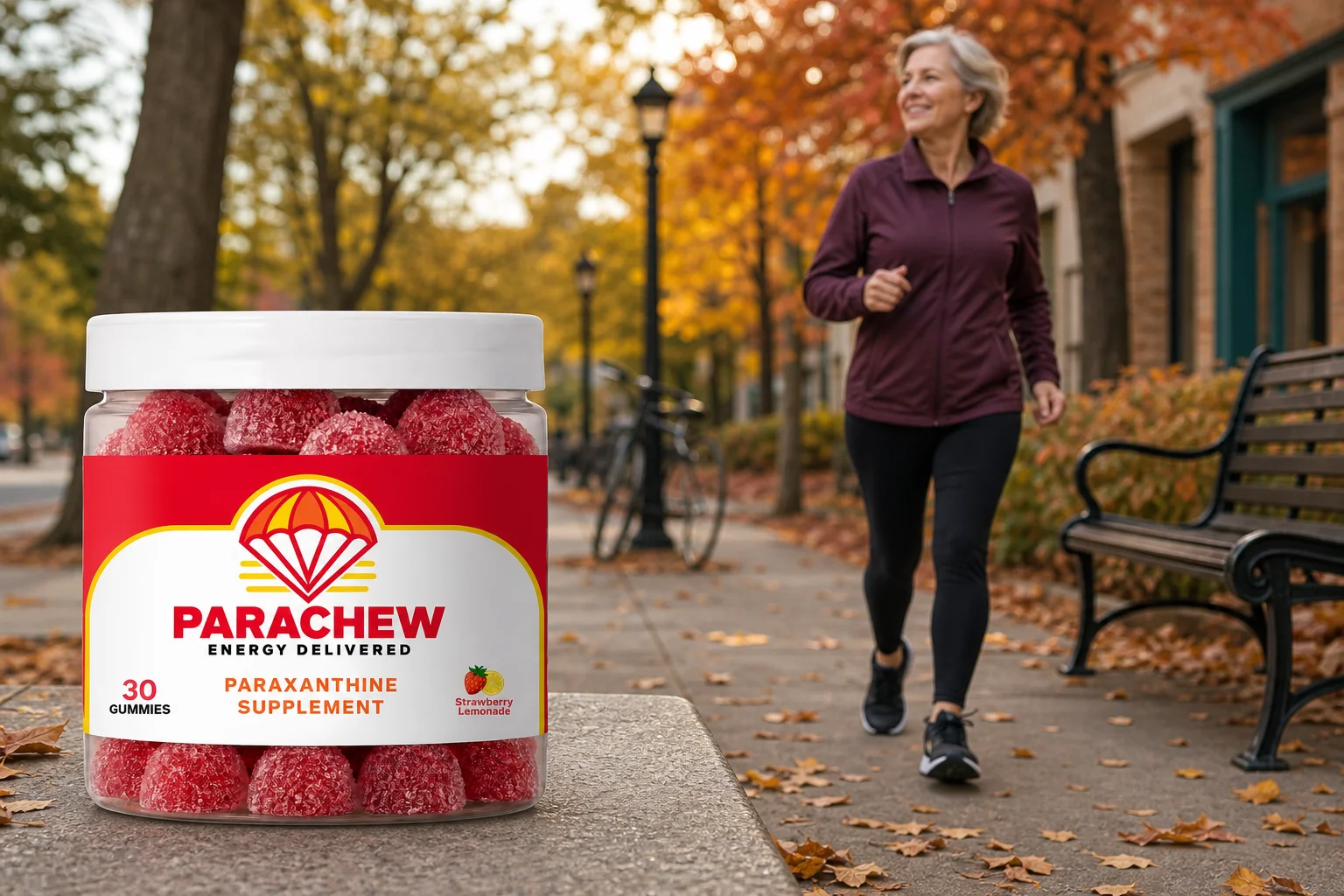
Paraxanthine and menopause intersect at one very real problem: the caffeine that used to power your mornings now leaves you wired, anxious, or wide awake at 2 a.m. As estrogen drops, caffeine clearance slows down, which is exactly why Parachew paraxanthine gummies were built to deliver clean energy without that hormonal caffeine backlash.
By Parachew Team, McAb Nutra
How Menopause Rewires Caffeine Metabolism
Somewhere around 50, a lot of women notice their afternoon coffee habit stops feeling like a habit and starts feeling like a mistake. The jitters hit harder. The 3 p.m. cup keeps you up until midnight. This isn't in your head, it's biology.
Caffeine is broken down almost entirely by the liver enzyme CYP1A2, and estrogen has a documented influence on how actively that enzyme works. As estrogen levels decline during perimenopause and menopause, CYP1A2 activity can slow, meaning caffeine lingers in the body longer than it did in your 30s. The result: the same cup of coffee that once felt fine now produces effects caffeine never used to cause for you, racing heart, disrupted sleep, and next-day fatigue.
This is where understanding your body's own chemistry becomes useful, not just for cutting back, but for choosing a smarter source of energy in the first place. Caffeine sensitivity after 50 is common enough that it deserves a real explanation, not just a shrug.
Paraxanthine and Menopause: The Hormone Metabolite Connection
Paraxanthine and menopause matter to each other because paraxanthine is not a separate stimulant you're adding to caffeine, it's what your body already turns caffeine into. This caffeine paraxanthine conversion happens whether you're 25 or 55: your liver converts roughly 80 percent of what you drink into paraxanthine, caffeine's primary metabolite and the compound doing much of the work you actually feel as alertness. Researchers increasingly describe paraxanthine primary role as caffeine's cleaner-burning replacement, since it's essentially the metabolite caffeine leaves behind once your liver finishes processing it.
The paraxanthine caffeine ratio (how much paraxanthine circulates relative to caffeine still in your blood) is a marker researchers use to gauge CYP1A2 activity. When menopause slows that enzyme, more unconverted caffeine stays in your system, and that lingering caffeine, not paraxanthine, is what's associated with jitters, anxiety spikes, and fragmented sleep. Supplementing with purified paraxanthine sidesteps the problem entirely, giving you the benefits of alertness without waiting on an enzyme that hormones have already made less reliable.
Milligram for milligram, the two aren't a straight swap: since only about 80 percent of caffeine converts to paraxanthine, matching doses ounce for ounce overstates how much active paraxanthine a given amount of coffee is actually delivering, and coffee's own caffeine content shifts with bean, roast, and brew method in a way a measured dose does not. That conversion math is worth understanding before comparing paraxanthine and caffeine dosing directly.

Why Caffeine Sensitivity Climbs After 50
Reduced estrogen isn't the only factor. Sleep architecture changes during menopause too, hot flashes and night sweats already fragment deep sleep, so any additional stimulant that lingers in the bloodstream compounds an existing problem. Add hormonal shifts in the adenosine receptors caffeine and paraxanthine both interact with, and you get a nervous system that responds to the same dose very differently than it did a decade earlier.
Adenosine is the neurotransmitter that builds up throughout the day and makes you feel sleepy. Caffeine and paraxanthine both work by temporarily blocking adenosine receptors, which is what produces the feeling of alertness. Caffeine's blockade tends to be sharper and shorter, producing the classic spike-and-crash. Paraxanthine's binding profile is gentler, which is part of why compared caffeine head to head, paraxanthine is more often described as steady rather than jittery. That gentler receptor binding is also why paraxanthine's effect tends to taper off gradually instead of dropping sharply, the flatter curve people usually notice when they put a paraxanthine caffeine comparison side by side with a typical caffeine crash.
Practical Ways to Steady Your Energy During Menopause
Beyond swapping coffee for a paraxanthine source, a few small habits make caffeine sensitivity easier to manage during perimenopause and menopause. None of these require giving up your morning ritual entirely, they just reduce the odds that your afternoon or evening gets hijacked by lingering stimulant load.
First, shift your last caffeine intake earlier in the day. Because CYP1A2 activity is already slower, caffeine consumed after lunch has more time to interfere with the deep sleep stages that hot flashes and night sweats already disrupt. Second, pay attention to hydration and blood sugar stability, both influence how your nervous system responds to any stimulant, caffeine or otherwise. Third, track how you actually feel rather than assuming your tolerance is fixed. Hormone levels fluctuate week to week during perimenopause, so what felt fine last month may not this month.
Finally, consider separating "energy" from "caffeine" as concepts entirely. A body going through hormonal transition often needs a source of alertness that doesn't ask the liver to do extra work it's already struggling to keep up with. That's the practical case for paraxanthine: it delivers the wakefulness people associate with coffee while sidestepping the enzyme bottleneck that makes caffeine unpredictable after 50.
What Makes Paraxanthine Different From Caffeine Itself
It helps to remember that caffeine belongs to a family of methylxanthine compounds, including theobromine theophylline, and paraxanthine is simply the metabolite your body produces the most of. Caffeine breaks down into several metabolites on its way out of your system, but paraxanthine is the one responsible for most of what you feel. Unlike caffeine, paraxanthine doesn't build up the same way in fatty tissue, which researchers believe is part of why it clears more predictably and doesn't carry the same load into your next dose.
For women managing menopause symptoms alongside a training schedule, gym sessions, muscle recovery, hiking, whatever keeps you moving, that predictability matters. At typical doses, paraxanthine supports steady cognitive focus and physical performance without spiking cortisol on top of hormonal fluctuations that are already doing that. It's one reason paraxanthine is gaining traction among healthy adults looking for a cleaner performance edge without stacking more caffeine on top of an already caffeine-sensitive system.
If your CYP1A2 activity has always run slow, even before menopause, that baseline compounds with the hormonal slowdown rather than replacing it, which is why some women notice a much sharper shift in caffeine sensitivity than others going through the same hormonal changes. Genetics sets your starting point, menopause moves enzyme activity down from wherever that starting point was, so someone who was already a slow metabolizer at 30 has further to fall than someone who started out fast. Understanding where your own caffeine metabolizer genetics put you before menopause makes it easier to predict how much your tolerance will shift now.
Finding Your Right Dose After 50
Every Parachew gummy delivers 200mg of paraxanthine, with a daily maximum of 400mg (two gummies) per the label. Unlike a cup of coffee, where the actual caffeine content varies by bean, roast, and brew method, the Parachew gummy formula keeps every dose exact and easy to track, particularly useful when your body's own conversion rate is a moving target thanks to menopause.
Women just starting to feel more sensitive to their usual caffeine intake often do best starting with a single gummy and assessing how they feel before considering a second. A simple way to calibrate that first week is to hold at one gummy for several days, noting how energy, focus, and evening sleep feel, rather than adding the second gummy on a fixed schedule. Because CYP1A2 activity can keep shifting during perimenopause, the right dose one week may need a small adjustment the next, so treating the first week as a feel-it-out period works better than locking in a routine right away. That kind of week-by-week starting dose calibration tends to serve women whose sensitivity is still in flux better than jumping straight to two gummies.
Nutrition-minded women managing menopause often already track blood sugar, sleep, and hydration closely, adding a predictable, dose-controlled source of energy fits that same instinct for consistency. The deciding factor for most women comes down to predictability: a measured 200mg dose behaves the same way every time, while a cup of coffee's actual caffeine content, and how long it lingers once CYP1A2 activity slows, shifts with bean, roast, and brew in ways that are hard to account for day to day. That predictability is the practical case for making the switch, one worth reviewing in the data driven caffeine comparison.
Frequently Asked Questions
Does menopause actually make you more sensitive to caffeine? Many women report increased caffeine sensitivity during perimenopause and menopause, and it lines up with what's known about estrogen's role in CYP1A2 enzyme activity, the same enzyme responsible for clearing caffeine from the body. Slower clearance means caffeine stays active longer, which can intensify jitters, anxiety, and sleep disruption.
Is paraxanthine the same thing as caffeine? No. Paraxanthine is the metabolite your liver produces after breaking down caffeine, it's already the compound responsible for much of caffeine's alertness effect. Taking purified paraxanthine directly means you get that focus and energy without depending on an enzyme that hormonal changes have made less predictable.
Can paraxanthine help with menopause-related sleep issues? Paraxanthine is designed to support steady, non-jittery energy during the day rather than to treat sleep issues directly. Its more even interaction with adenosine receptors, compared with caffeine, means it's less likely to linger into the evening and interfere with sleep onset the way delayed caffeine clearance can.
How much paraxanthine should women over 50 take? Each Parachew gummy contains 200mg of paraxanthine, with a daily maximum of 400mg (two gummies) per the label. Many women new to paraxanthine start with one gummy to see how their body responds before considering a second.
Why does the same amount of coffee feel different after 50? Estrogen decline slows CYP1A2 enzyme activity, the pathway responsible for metabolizing caffeine. That means caffeine stays in your system longer, amplifying effects like jitters and disrupted sleep, even if your actual coffee intake hasn't changed at all.
Feel Steady Energy Again With Parachew
Menopause changes how your body handles caffeine, but it doesn't have to change how steady your energy feels. Reach Parachew support if you have questions about finding your right dose.


