
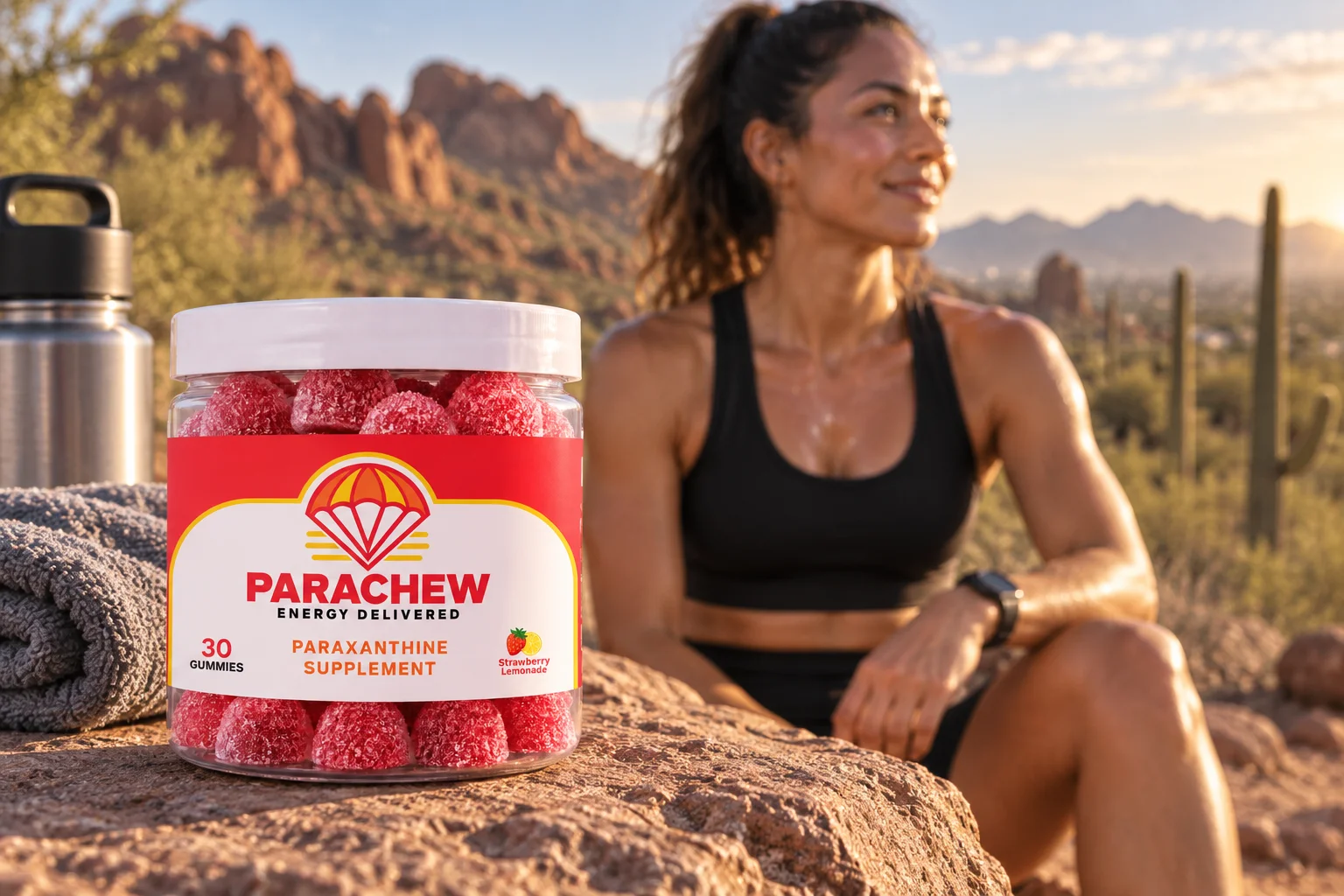
Paraxanthine and hydration is a fair question for anyone swapping coffee for Parachew energy gummies: caffeine's diuretic reputation is well earned, but paraxanthine, the metabolite behind that clean energy feel, works through a different pathway and doesn't pull water from your system the same way.
By McAb Nutra, McAb Nutra
The Diuretic Question: How Paraxanthine Compares to Caffeine
For decades, coffee drinkers have been told to chase every cup with a glass of water to offset fluid loss. That advice traces back to caffeine's mild diuretic action, and it's a fair starting point for anyone asking about paraxanthine and hydration. Paraxanthine is the primary metabolite your liver produces when it breaks down caffeine into paraxanthine, and while the two molecules are chemically related, they don't behave identically once they're circulating in your body. Paraxanthine's diuretic effect, or lack of one, is really the whole story here: when paraxanthine's fluid response is compared to caffeine, human research hasn't shown the same reliable diuretic pattern, which is one reason athletes and high performers are shifting toward it for daily energy. Side effects tied to caffeine, jittery hands, a racing heart, a mid-afternoon crash, are largely a function of how caffeine binds adenosine receptors; paraxanthine binds those same receptors but clears differently, which is part of why it's positioned as the smoother option. Because the caffeine to paraxanthine conversion happens so early in digestion, most of what you feel afterward is paraxanthine doing the work, not the caffeine you originally consumed.
Why Caffeine Pulls Water From Your System (and Where Paraxanthine Diverges)
Caffeine's mild diuretic effect comes from how it interacts with adenosine receptors in the kidneys, briefly reducing the reabsorption of sodium and water. In regular coffee or energy drink users, that effect is small and tends to fade with tolerance, a point the International Society of Sports Nutrition has made in its guidance on caffeine and exercise performance. Paraxanthine over caffeine is the trade a lot of Parachew users are making specifically because paraxanthine engages adenosine receptors without producing the same downstream signal to the kidneys to offload fluid. That's the core distinction between the two: caffeine's jittery, crash-prone energy comes with a fluid cost that paraxanthine is built to sidestep, delivering alertness through a cleaner receptor interaction instead of a stress hormone spike.
Fluid Balance and Electrolyte Levels on Paraxanthine
Fluid balance depends on more than water intake alone; sodium, potassium, and magnesium all shift as you sweat, and any ingredient that changes urination frequency can, in theory, tug at that balance too. The effects of paraxanthine on fluid and electrolyte handling haven't shown the same pattern researchers associate with caffeine's mild diuresis, which is a meaningful distinction for anyone training outdoors or logging long shifts on their feet.
Electrolyte Levels During Exercise and Sweating
Sweat losses of sodium and potassium during a hard workout are usually driven by heat, intensity, and how well acclimated you are, not by what's in your energy supplement. Because paraxanthine hasn't been shown to trigger the fluid offloading response tied to caffeine, it doesn't add an extra electrolyte drain on top of what exercise already asks of your body. Athletes who sweat heavily may still want an electrolyte mix alongside plain water, but that's a training and climate variable, not something specific to paraxanthine and hydration.

How Much Water You Need Daily With Parachew Energy Gummies
There's no special water requirement stamped on a jar of Parachew energy gummies, and paraxanthine doesn't create one. Standard daily hydration guidance, generally cited as somewhere around half an ounce to an ounce of water per pound of body weight and adjusted for climate and activity, still applies. If you're already meeting that baseline, taking your gummies alongside a normal glass of water is enough. People who train hard, work outdoors, or live in hot climates typically need more fluid regardless of whether their energy comes from coffee, an energy drink, or paraxanthine, so it's worth treating hydration as its own habit rather than something to solve through a supplement choice.
If you're training for an event and want your fluid and timing plan dialed in around your gummies, reach Parachew support for direct guidance rather than guessing on your own.
Paraxanthine and Hydration During Exercise: Before, During, and After
Taking paraxanthine before or during a workout doesn't require a different hydration protocol than any other pre-workout habit. Since paraxanthine's cardiovascular profile doesn't carry caffeine's diuretic tendency, most people can drink water on their normal schedule, before, during, and after training, without compensating for extra fluid loss from their gummies. That said, anyone with a heart condition, blood pressure concerns, or another health condition should talk with their doctor before adding any new stimulant-adjacent ingredient to a workout routine, paraxanthine included. For most healthy adults chasing steady, jitter-free output, paraxanthine and hydration work well together precisely because the ingredient isn't fighting your fluid balance the way caffeine can.
What the Research Says: Paraxanthine and Hydration vs. Caffeinated Drinks
Published human research on paraxanthine is newer than the decades of caffeine data, but it's growing. When you weigh caffeine, paraxanthine, and hydration together, the pattern researchers describe is fairly consistent: a research team including Choongsung Yoo, Dan Xing, and Drew Gonzalez, often shorthanded as Yoo, Xing, and Gonzalez in citations, has studied paraxanthine's effects on cardiovascular measures, mood, and cognitive function in exercise-trained adults, and hydration-specific markers like urine volume haven't been the headline finding in what's been published so far. Researchers also track the paraxanthine to caffeine ratio in blood or saliva as a marker of individual metabolism speed, though that's a separate measurement from anything Parachew's formulation changes. That's actually informative on its own: if paraxanthine triggered a caffeine-level diuretic response, it's the kind of side effect researchers would be flagging directly, the same way caffeine's fluid effects have been well documented for years. Sports nutrition researchers generally frame paraxanthine's advantage as smoother energy delivery rather than a hydration-specific benefit, so treat "gentler on fluid balance" as a reasonable inference from the mechanism, not yet a headline finding from a dedicated hydration trial.
Is Paraxanthine Gentler on Hydration Than Coffee or Energy Drinks?
Coffee and most energy drinks combine caffeine with other ingredients, sugar alcohols, high sodium, added B-vitamin megadoses, that can independently affect fluid balance on top of caffeine's own mild diuretic action. A jar of Parachew energy gummies is built around paraxanthine alone, without stacking in those extras, so there's less going on that could compound fluid loss. That doesn't mean coffee or energy drinks will leave you dehydrated after one serving, moderate caffeine intake generally doesn't cause meaningful dehydration in habitual users, but it does mean paraxanthine has fewer variables working against your hydration status by design.
Frequently Asked Questions
Does paraxanthine make you urinate more than usual? Most people don't notice a change in urination frequency from paraxanthine the way they might after a large coffee. Paraxanthine doesn't appear to trigger the same renal response that produces caffeine's mild diuretic effect, so a normal Parachew serving generally fits into your regular fluid routine without adding extra bathroom breaks tied specifically to the ingredient.
Does paraxanthine dehydrate you? There's no established evidence that paraxanthine causes dehydration on its own. Because it doesn't produce caffeine's characteristic diuretic pull, taking Parachew gummies alongside your normal water intake is generally enough for most healthy adults. As with any energy product, staying ahead of your fluid needs during exercise, heat, or long workdays matters more than what's in the gummy itself.
How much water should I drink with paraxanthine gummies? There's no special hydration protocol tied to paraxanthine. Each Parachew gummy delivers 200 mg of paraxanthine, with a label maximum of 400 mg, or two gummies, per day, and normal daily water intake, generally scaled to body weight, climate, and activity level, covers it. Pair your gummies with a glass of water out of habit, not because paraxanthine demands it.
Can I take paraxanthine before exercise without affecting my hydration? Yes, for most healthy adults. Paraxanthine doesn't carry caffeine's mild diuretic tendency, so pre-workout timing doesn't require extra fluid planning beyond your normal routine. Athletes with underlying heart or blood pressure conditions should check with a physician before adding any new energy ingredient, paraxanthine included, ahead of training.
Fuel Up Without Second-Guessing Your Water Bottle
If clean, jitter-free energy that doesn't fight your hydration is what you're after, the Parachew product page has the full flavor lineup and dosing details for Caramel Coffee and Strawberry Lemonade.


