
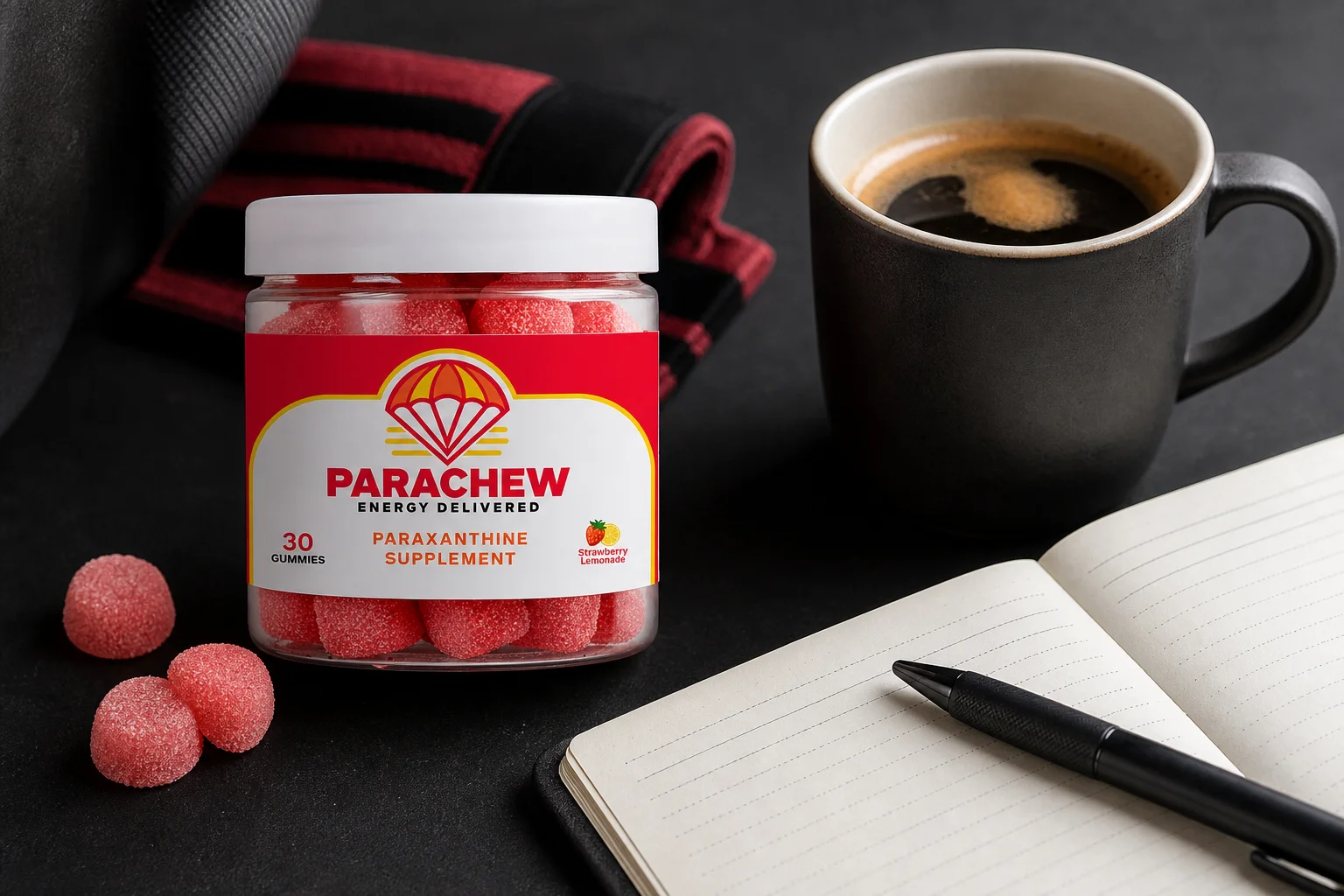
Paraxanthine vs caffeine dosage comes down to potency per milligram, how your body clears each compound, and your personal tolerance. Paraxanthine produces comparable energy and alertness at doses similar to caffeine, but without the jitters or anxiety spike, because it targets adenosine receptors with greater selectivity, making dose-for-dose comparisons more nuanced than most high-performers expect.
How Caffeine Moves Through the Body
When you drink coffee or crack open one of the popular energy drinks, you are dosing yourself with caffeine. Caffeine is rapidly absorbed into the bloodstream and travels to the brain, where it binds at adenosine receptors and blocks the brain's natural fatigue signal. The result is that familiar surge of energy and alertness. Effective caffeine doses in human studies typically fall between 100mg and 400mg per day, with performance research pointing to roughly 3 to 6 mg per kilogram of body weight as a useful range for athletes.
The challenge is that caffeine metabolism is not uniform. Genetics, liver enzyme activity, and body composition all affect how quickly any individual clears caffeine. This variability makes precise dosing harder than most people realize, and it is a key reason why the caffeine paraxanthine comparison is worth understanding before you set your own daily dose.
Paraxanthine: The Primary Metabolite Behind the Energy
Paraxanthine is the primary metabolite of caffeine and the compound most directly associated with alertness, focus, and memory benefits that make stimulants useful for performance. When your liver metabolizes caffeine, roughly 84% of it converts to paraxanthine. The remaining portion becomes theobromine and theophylline, each with its own distinct effects on the body.
Research by Dr. Daniel Guest and colleagues, published in Nutrients (2021), found that direct paraxanthine supplementation at 200mg produced cognitive performance improvements, including reaction time and memory recall, that were similar to equivalent caffeine doses, but with a cleaner side effect profile. The mechanism is the same: both compounds block adenosine receptors to suppress fatigue and promote wakefulness. Paraxanthine does this without triggering the anxiety or cardiovascular side effects associated with caffeine at higher doses.
Dosage Compared: What Human and Animal Studies Show
When you compare paraxanthine vs caffeine dosage directly, the research picture is consistent. Human studies suggest that paraxanthine is effective at doses similar to caffeine, with 200mg appearing as a well-tolerated and effective amount across multiple trials. Animal studies have further established that paraxanthine binds adenosine receptors with comparable affinity to caffeine while producing fewer cardiovascular effects at equivalent doses.
For caffeine, most performance guidance caps daily doses at 400mg. A typical energy drink contains between 80mg and 300mg of caffeine per serving, and stacking multiple servings across the day is how most people unknowingly push past the recommended ceiling. The jitters and restlessness that some people associate with energy drinks are often linked to these compounding caffeine loads.
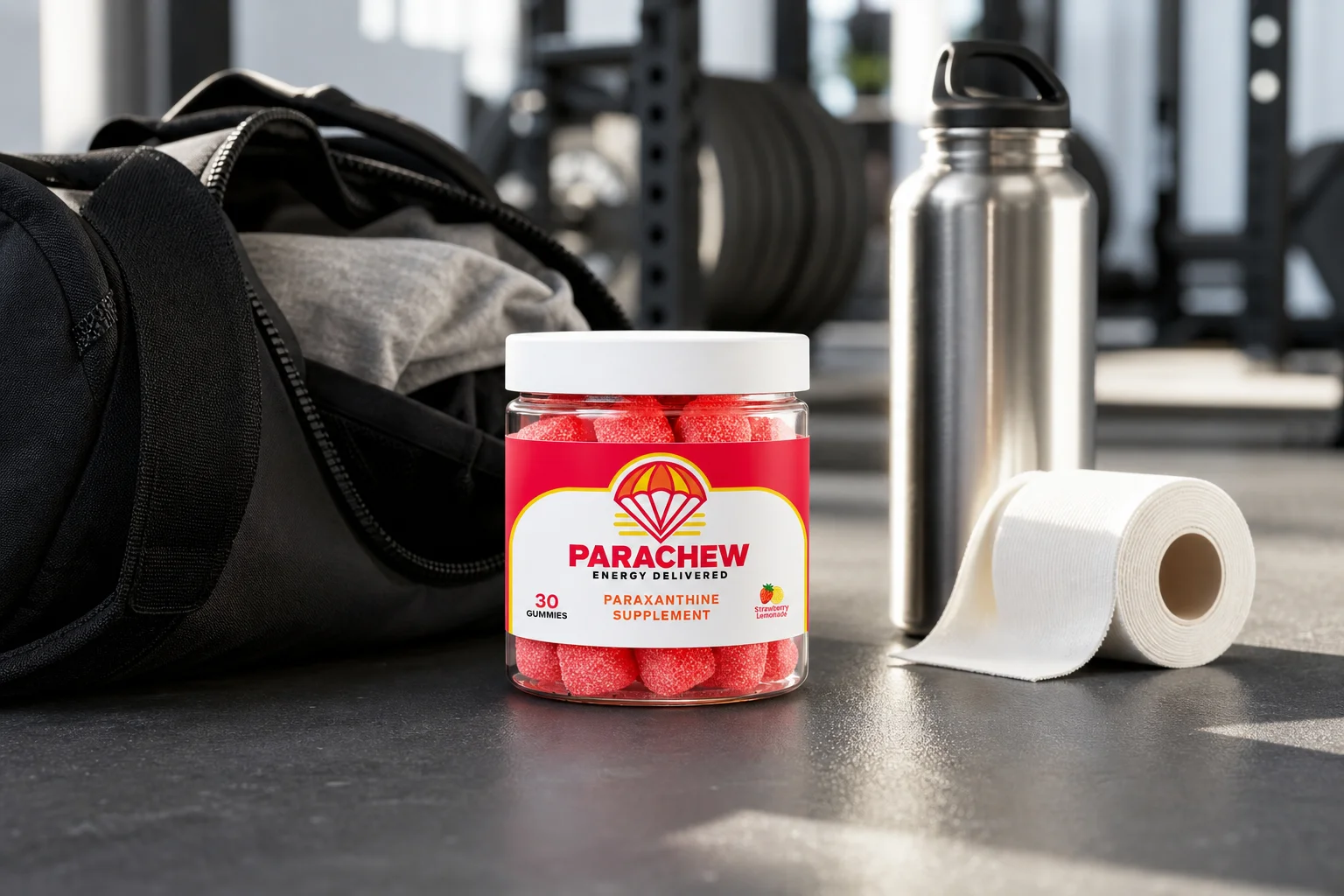
Paraxanthine at 200mg to 400mg per day covers the same effective performance range as compared caffeine doses, with more predictable effects. Parachew Energy Gummies deliver exactly 200mg of paraxanthine per gummy, with a daily maximum of 400mg (two gummies), aligning precisely with the dose range that suggests the strongest performance benefit in available research.
Theobromine, Theophylline, and Why the Metabolite Mix Matters
Most people understand caffeine as a single compound, but caffeine metabolism produces a stack of biologically active molecules. Theobromine and theophylline are the two metabolites that appear alongside paraxanthine when caffeine breaks down in the liver.
Theobromine is a mild stimulant found naturally in cacao. It has a longer half-life than both caffeine and paraxanthine and is associated with mild bronchodilatory effects. Theophylline is more potent, used clinically for respiratory conditions at prescription doses, though it appears in small amounts as a caffeine metabolite. The combination of theobromine theophylline and paraxanthine in your system after coffee means your morning cup is delivering a multi-compound stimulant mix, not a single clean signal.
Taking paraxanthine directly, as in a Parachew gummy, means you are getting the primary compound responsible for caffeine's energy and alertness benefits without stacking theobromine and theophylline on top. For individuals sensitive to caffeine's full metabolite profile, this targeted approach offers real health and performance advantages.
Practical Dosing Strategy for High Performers
Knowing the research is only half the equation. The other half is building a dosing approach that fits your schedule, caffeine habits, and performance goals.
The paraxanthine caffeine dosage relationship comes down to this: paraxanthine is the compound your body ultimately uses for energy and alertness, so supplementing it directly removes one layer of metabolic variability. When you drink coffee, you get caffeine that your body will convert to paraxanthine, along with theobromine and theophylline as byproducts. When you take paraxanthine directly, you skip straight to the active compound.
Start by accounting for all caffeine sources in your day: coffee, pre-workout drinks, tea, and any energy drink you consume all factor into your total stimulant load. Because caffeine metabolism produces paraxanthine, those sources already contribute to your paraxanthine exposure. Adding a direct paraxanthine supplement on top of a heavy caffeine intake increases total stimulant load and should inform how you structure your daily stack. For most high-performers targeting consistent energy without variability, consolidating around a controlled paraxanthine source and reducing background caffeine keeps the 200mg to 400mg daily range most effective.
Frequently Asked Questions
Is paraxanthine stronger than caffeine milligram for milligram?
Research suggests paraxanthine produces alertness and cognitive performance benefits comparable to caffeine at similar doses. The 2021 Guest et al. study in Nutrients found 200mg of paraxanthine matched caffeine's performance improvements with fewer side effects, making the two roughly equivalent in effective strength on a per-milligram basis, with paraxanthine offering a more consistent and predictable experience.
What is the daily maximum dose of paraxanthine?
Current dosing guidance, including Parachew's label, sets the daily maximum at 400mg of paraxanthine (two gummies per day). Human studies have focused primarily on doses of 100mg to 400mg. Start with 200mg to assess your individual response before increasing to the daily maximum, especially if you are also consuming coffee or other caffeinated drinks.
Does paraxanthine help with memory and cognitive performance?
Yes. Research including the Guest et al. Nutrients (2021) study indicates paraxanthine supports improvements in memory recall and reaction time compared to placebo. The mechanism involves blocking adenosine receptors in the brain, which reduces fatigue signaling and sharpens alertness and cognitive performance without the jitters associated with caffeine at higher doses.
What happens when caffeine metabolizes in the body?
Your liver breaks caffeine down into three primary metabolites: paraxanthine (roughly 84%), theobromine, and theophylline. Each has distinct effects. Paraxanthine is primarily responsible for the energy and alertness benefits. Theobromine and theophylline contribute milder stimulant and bronchodilatory effects. Taking paraxanthine directly skips the full metabolite cascade and delivers only the primary performance compound.
Can I use paraxanthine if I still drink coffee?
Yes, but track your total stimulant load. Caffeine in coffee converts to paraxanthine during metabolism, so your morning coffee already contributes to your daily paraxanthine exposure. If you add a Parachew gummy (200mg paraxanthine), account for that alongside your coffee intake and stay within the 400mg daily maximum. For personalized guidance, contact the Parachew team directly.
For a precise, research-backed dose of paraxanthine without the guesswork of stacking multiple drinks, try Parachew Energy Gummies and find out what clean, jitter-free performance energy actually feels like.


