
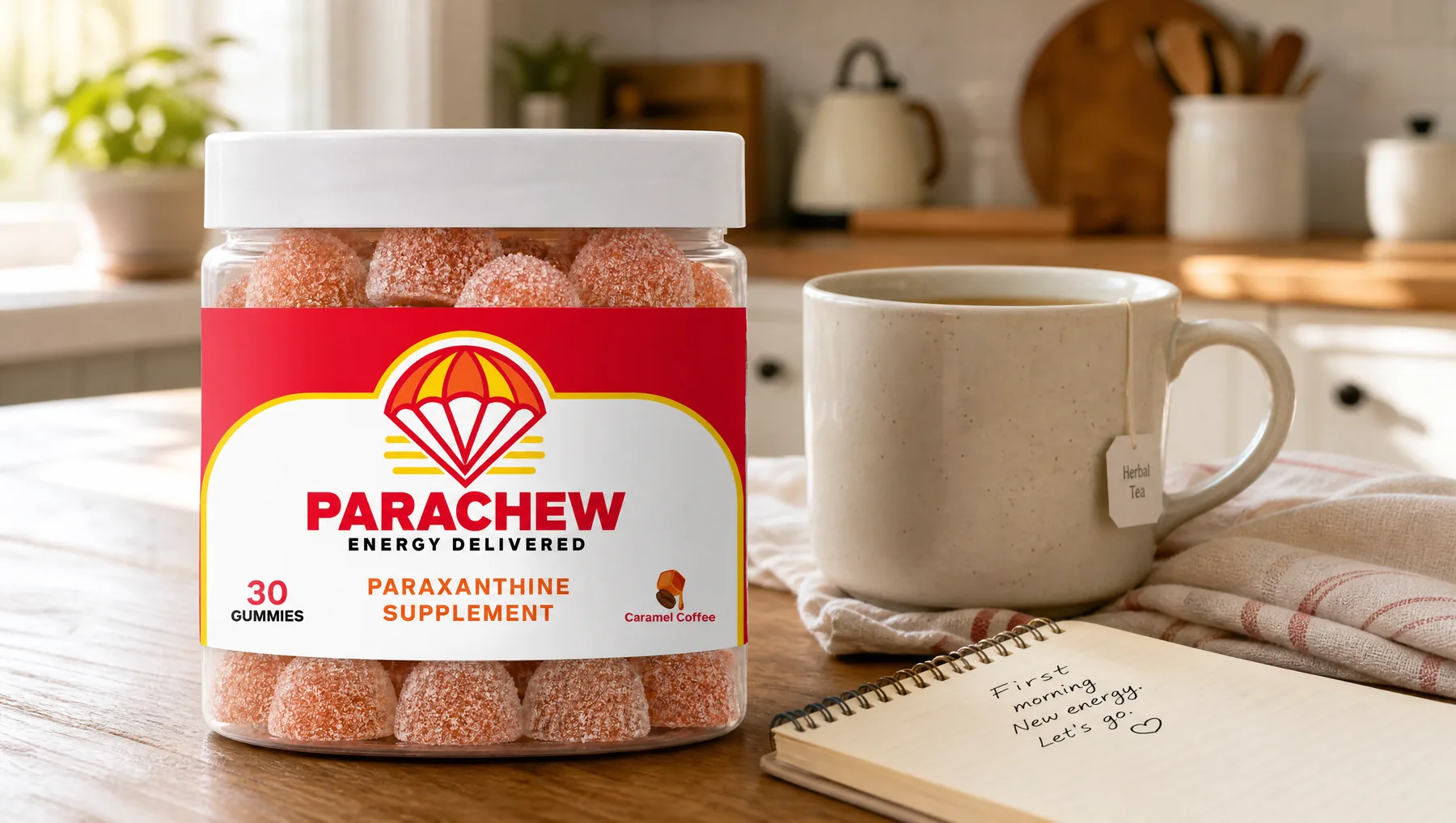
The paraxanthine starting dose for caffeine-sensitive adults is 200mg, backed by human crossover trial data showing measurable cognitive gains and fewer side effects than equivalent caffeine doses. Parachew paraxanthine gummies deliver exactly that dose per gummy, giving first-time users a research-grounded entry point without jitters, blood pressure spikes, or the crash that follows too much coffee.
By Parachew Team, McAb Nutra
What Paraxanthine Is and Why Sensitive Adults Are Paying Attention
Paraxanthine is the primary metabolite caffeine converts to inside the human body. When you drink coffee or take a caffeine supplement, your liver enzymes (primarily CYP1A2) break down roughly 84% of that caffeine into paraxanthine, with the remaining fraction splitting into theobromine and theophylline. This theobromine theophylline fraction is responsible for many of the cardiovascular side effects caffeine-sensitive adults recognize: elevated blood pressure, heart pounding, and the agitated, wired feeling that makes a second cup of coffee feel like a mistake.
Researchers began asking whether you could deliver the metabolite caffeine becomes directly, bypassing the conversion entirely. Since paraxanthine is doing most of the cognitive and physical performance work anyway, cutting out the conversion step also removes the unpredictability that comes with individual variation in CYP1A2 enzyme activity. People with slow CYP1A2 metabolism keep caffeine and its full theobromine theophylline byproduct load in their system for hours longer than fast metabolizers, which explains why some people feel terrible from a single cup of coffee while others drink three without issue. Delivering paraxanthine directly sidesteps that metabolic variable entirely.
What the Crossover Trial Data Shows at 200mg
The primary human evidence on paraxanthine dosing comes from a randomized, double-blind crossover trial by Yoo et al., published in the journal Nutrients in 2021. Participants received 200mg of paraxanthine, 200mg of caffeine, or placebo in a controlled three-period design. Because each participant rotated through all three conditions, the crossover trial design controlled for individual baseline differences, making the comparative data unusually reliable.
Results showed the 200mg paraxanthine dose produced significant improvements in reaction time, short-term memory, and sustained attention compared to placebo. The paraxanthine side effects profile was meaningfully cleaner than in the caffeine condition: the paraxanthine group reported fewer jitters and showed smaller blood pressure increases than participants in the caffeine group. This caffeine paraxanthine comparison is central to why 200mg has become the reference dose, delivering real performance benefits without the physiological cost.
A second crossover trial by Yoo et al., published in the Journal of the International Society of Sports Nutrition (2021), tested the same 200mg dose in a physical performance context. Muscular endurance improved significantly in the paraxanthine condition, and blood pressure readings were again notably lower than in the caffeine group. For caffeine-sensitive adults who have avoided stimulants due to cardiovascular sensitivity, this paraxanthine caffeine contrast in blood pressure outcomes is one of the most clinically relevant data points available.
For more context on how the doses compare between these two compounds, see our guide to paraxanthine vs caffeine dosage how much of each.
How Paraxanthine Interacts with Adenosine Receptors
Both caffeine and paraxanthine work by blocking adenosine receptors in the brain. Adenosine is the compound that accumulates throughout your waking hours and binds to receptors to generate the fatigue signal. When adenosine receptors are blocked, that fatigue signal cannot land, producing the focus, attention, and cognitive performance benefits associated with both compounds.
The critical difference is what else each stimulant does. Caffeine also inhibits phosphodiesterase enzymes and triggers an adrenergic cascade, raising epinephrine and producing the jitters, elevated blood pressure, and anxious energy that many caffeine-sensitive adults want to avoid. Paraxanthine is more selective in its adenosine receptor activity. It does not trigger the same broad adrenergic response, which is why clinical doses tested for paraxanthine produce consistently fewer and milder side effects than caffeine at equivalent doses.
This selectivity makes paraxanthine a distinct stimulant compound, not simply a milder version of caffeine. The mechanism is narrower and the doses required to achieve meaningful cognitive performance improvements are well within a range that delivers clean, focused energy. For a full breakdown of how paraxanthine performs against caffeine in head-to-head clinical testing, Paraxanthine Vs Caffeine The Head To Head Comparison covers the key studies in detail.
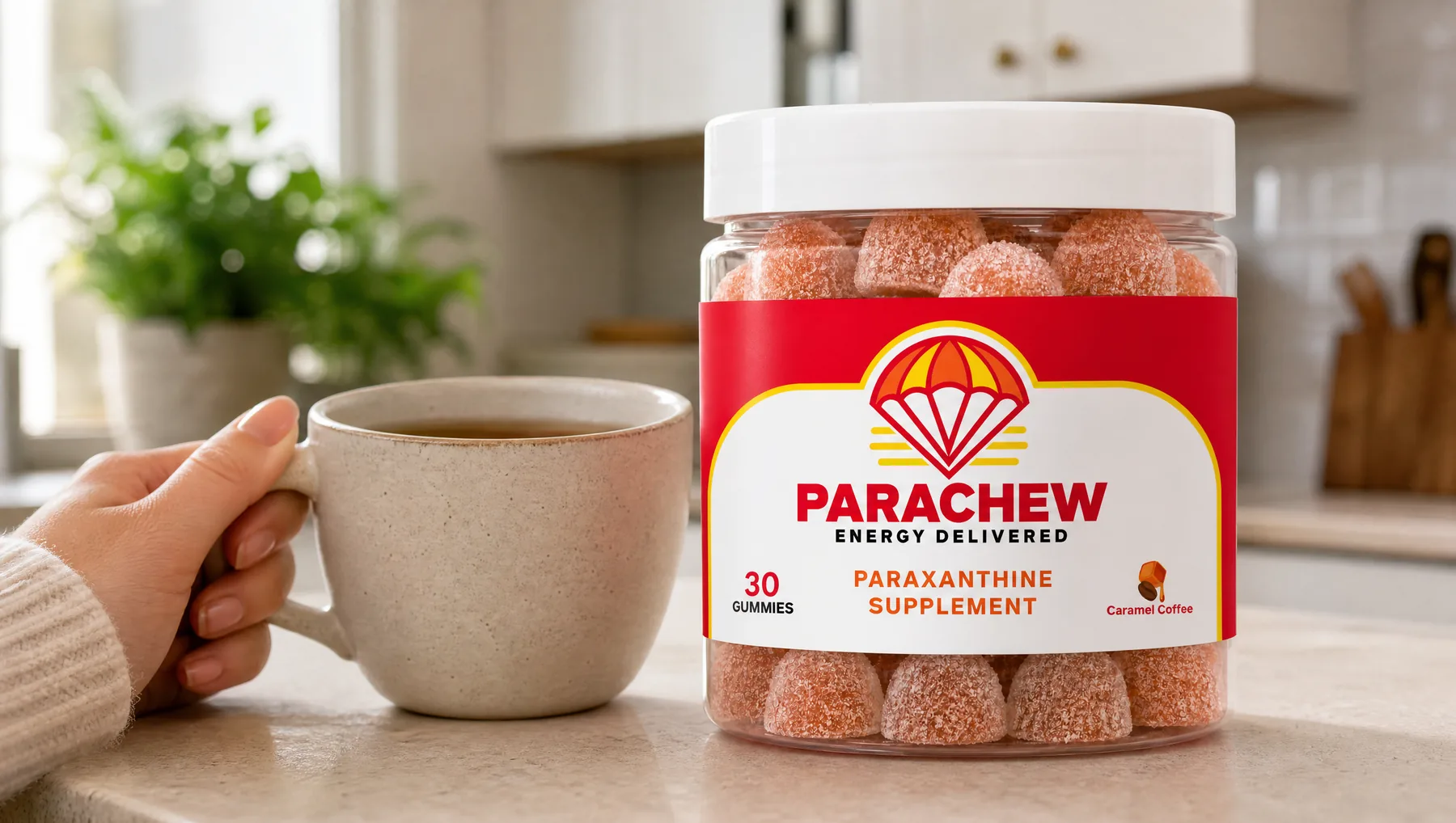
The Paraxanthine Starting Dose for Caffeine-Sensitive Adults: A Practical Protocol
The paraxanthine starting dose for caffeine-sensitive adults recommended by clinical data is 200mg per session, one Parachew gummy. The daily label maximum is 400mg, or two gummies. First-time users should begin at 200mg, observe their individual response over 48 to 72 hours, and add a second daily dose only after confirming how the first dose sits.
Timing matters for caffeine-sensitive adults because sleep disruption is one of the most common complaints with caffeine and stimulants taken too late in the day. Paraxanthine clears from the body faster than caffeine in most users, reducing the likelihood of late-day interference with sleep onset. Taking your starting dose in the morning or early afternoon gives the compound room to clear before your sleep window. For a deeper look at how clearance speed affects caffeine-sensitive users, Paraxanthine Half-Life for Caffeine-Sensitive Drinkers: Why It Clears Cleaner explains the half-life mechanics in full.
If you have a diagnosed cardiovascular condition or are currently taking blood pressure medication, the clinical profile of paraxanthine is encouraging, but discussing any new stimulant with a healthcare provider before starting is the right step. The paraxanthine starting dose for caffeine-sensitive adults is well-tolerated in healthy populations per the research, and individual responses always vary.
Paraxanthine vs Coffee: Understanding the Numbers
A standard 8-ounce cup of coffee contains roughly 80 to 100mg of caffeine. Your liver then metabolizes approximately 84% of that into paraxanthine, alongside theobromine and theophylline as byproducts. If you drink two cups per day, your body is producing roughly 130 to 170mg of paraxanthine naturally anyway, layered with the full conversion chain and all its associated side effects.
A 200mg paraxanthine product dose delivers the active metabolite caffeine produces, directly and precisely, without the theobromine theophylline byproducts and without the adrenergic response that caffeine triggers. For caffeine-sensitive adults, this reframes why they may react differently to one cup versus two. You may already know your natural paraxanthine threshold through your coffee behavior. The Parachew product lets you hit that threshold precisely, without the noise.
Users who enjoy the cognitive lift and improved attention from coffee but dislike the physical experience will find this profile immediately familiar. The focus, the short-term memory sharpness, the better reaction time: these come from paraxanthine. The jitters and blood pressure spike are caffeine's delivery cost, and paraxanthine removes most of that cost.
For comparisons with other clean stimulant options, our guide to paraxanthine vs theacrine for caffeine-sensitive adults puts both compounds in full context.
Frequently Asked Questions
Is 200mg of paraxanthine safe as a starting dose for caffeine-sensitive adults?
Yes. The crossover trial by Yoo et al. (Nutrients, 2021) used 200mg as the primary human dose and found significant cognitive performance improvements alongside a side effects profile that was cleaner than caffeine at the same dose. Blood pressure increases were smaller and jitter reports were fewer in the paraxanthine group. One Parachew gummy delivers exactly this evidence-based starting dose.
Does paraxanthine raise blood pressure?
Paraxanthine produces smaller blood pressure increases than equivalent caffeine doses, per the crossover trial data from Yoo et al. (2021). In both cognitive and physical performance conditions, blood pressure changes in the paraxanthine group were statistically smaller than in the caffeine group. For caffeine-sensitive adults who have avoided stimulants because of blood pressure concerns, this is one of paraxanthine's most relevant clinical distinctions.
Will paraxanthine cause jitters?
No. Jitters are a characteristic of caffeine, not of paraxanthine. Paraxanthine's selective adenosine receptor activity does not trigger the same broad adrenergic response that caffeine does. Clinical participants in paraxanthine crossover trial conditions consistently report fewer jitters than participants in caffeine conditions at equivalent doses. Caffeine-sensitive adults who switch to avoid jitters report a noticeably cleaner energy experience.
Does paraxanthine improve short-term memory?
Yes, according to human crossover trial data. Yoo et al. (Nutrients, 2021) found statistically significant improvements in short-term memory tasks in the paraxanthine condition compared to placebo, with results comparable to or better than the caffeine condition, alongside a cleaner side effects profile. This makes paraxanthine particularly useful for cognitive use cases where short-term memory and attention are the priority.
What is the maximum daily dose of paraxanthine in Parachew?
The label maximum is 400mg per day, which equals two Parachew gummies, each delivering 200mg of paraxanthine. For caffeine-sensitive adults beginning for the first time, starting at one gummy and waiting 48 to 72 hours before adding a second is the research-aligned approach. Do not exceed the 400mg daily maximum or combine with large additional caffeine sources.
Start Your Paraxanthine Protocol on Solid Footing
The crossover trial evidence for 200mg as the paraxanthine starting dose for caffeine-sensitive adults is among the most robust in the clean stimulant category. The Parachew gummy formula delivers that exact dose per gummy, and if you have questions before you begin, reach Parachew support any time.


