
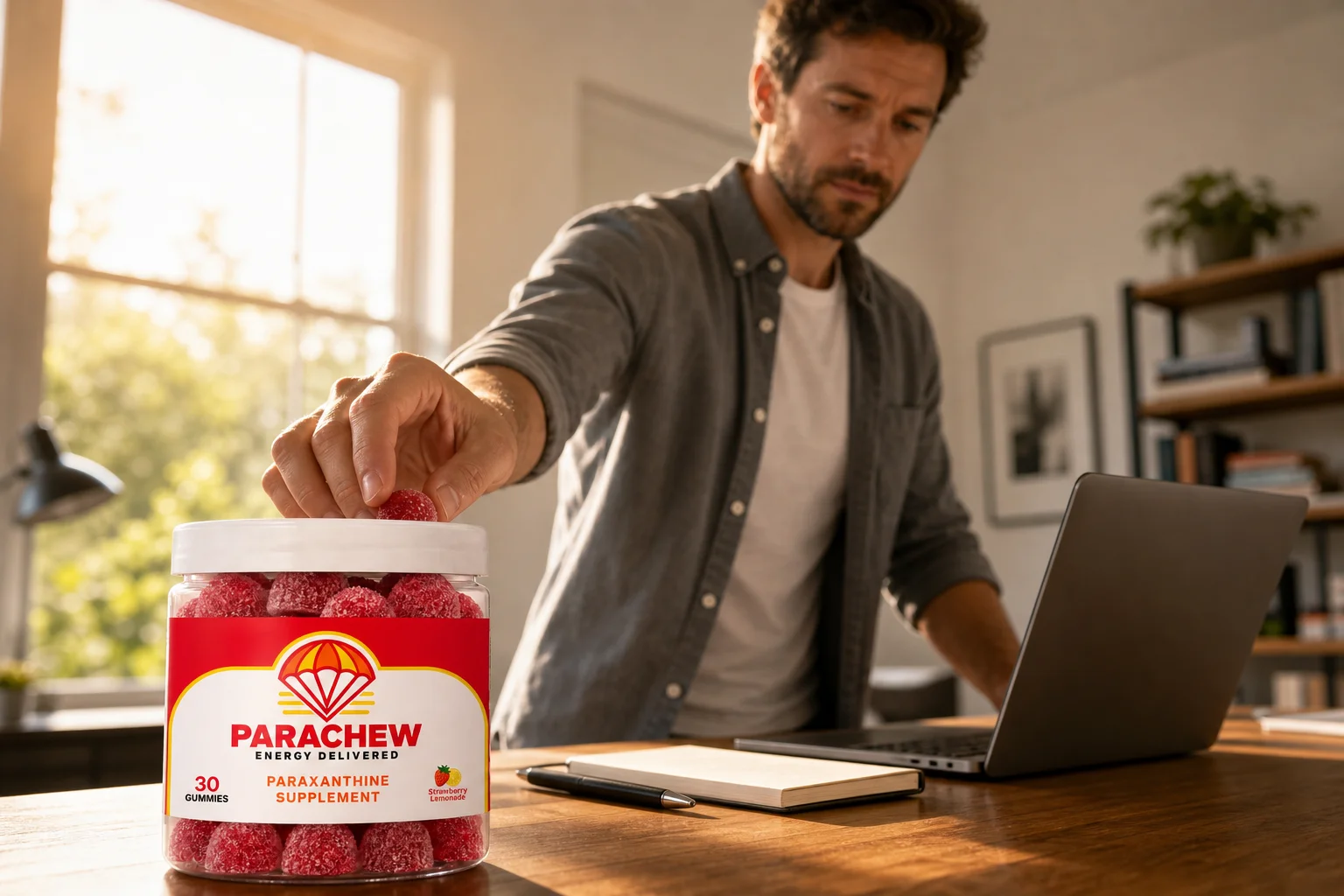
Alani Nu vs Parachew comes down to two stimulant sources doing a similar job through very different chemistry: roughly 200 mg of caffeine in a can against 200 mg of paraxanthine in Parachew paraxanthine gummies. Same rough number on paper, but the two compounds move through your body in noticeably different ways.
By McAb Nutra, McAb Nutra
What's the Real Difference Between Alani Nu's Caffeine and Parachew's Paraxanthine?
Caffeine is the stimulant most energy drinks are built around, and it works by blocking adenosine receptors in the brain, the receptors that build up sleep pressure over the course of a day. Paraxanthine is caffeine's primary metabolite: it's the compound your liver actually converts caffeine into once you drink it. Caffeine metabolism research recognized by the National Institutes of Health identifies paraxanthine as one of the main breakdown products of caffeine in humans, and it's the piece of that pathway associated with alertness, without carrying the same full load on the nervous system that raw caffeine does.
When you frame Alani Nu vs Parachew as a caffeine-versus-paraxanthine question, the real difference isn't really the number on the label, it's which molecule your body is working with directly. An energy drink hands you caffeine and lets your liver do the converting over the next few hours; the Parachew gummy formula hands you the metabolite itself, already in its more refined form.
How Much Caffeine Does Alani Nu Have Compared to Parachew's 200 mg Dose?
Alani Nu's 12 oz energy drinks list 200 mg of caffeine per can (its Mini Energy cans list 100 mg), whether you're reaching for a fan-favorite Alani flavor like Hawaiian Shaved Ice, Cotton Candy, or Watermelon Wave. That's a full can of caffeine delivered all at once, absorbed as the raw compound.
Parachew's dose is also 200 mg, but it's 200 mg of paraxanthine in a single gummy, with a labeled daily maximum of 400 mg, or two gummies. The headline numbers look similar side by side, but caffeine from an energy drink arrives as the raw stimulant your body still has to process, while Parachew's paraxanthine skips the step your liver would otherwise have to do on its own.
Does 200 mg of Paraxanthine Feel Different Than 200 mg of Caffeine?
Yes, and the difference tends to show up in the first twenty to thirty minutes. Caffeine triggers a broad stimulant response: it raises adrenaline alongside the alertness, which is where the wired, slightly on-edge feeling comes from. Paraxanthine occupies many of the same adenosine receptors, so you still get the wakefulness, but without stacking that adrenaline surge on top of it. The paraxanthine vs caffeine comparison really comes down to that adrenaline spike, not the alertness itself, since both compounds are working toward the same basic outcome.
Paraxanthine is often described as a steadier climb into focus than a can of caffeine: less of a jolt, more of an even climb.

Jitters, Anxiety, and the Crash: Why Parachew Skips What Alani Nu Doesn't
Jitters, anxiety, and the mid-afternoon crash are caffeine characteristics, not something inherent to stimulation itself. They come from the way caffeine floods the nervous system all at once and then clears out just as abruptly. Paraxanthine sidesteps that pattern: because it doesn't carry caffeine's adrenaline load, most people report a noticeably calmer ride up and a softer landing on the way down, the kind of steady stretch you get on a day without the caffeine crash.
If the shakier side of an energy drink is what sent you looking for an alternative in the first place, that's exactly the gap paraxanthine is built to close, not by removing the stimulation, but by removing the part of caffeine's response that made it uncomfortable.
How Long Does Parachew's Energy Last Compared to Alani Nu?
Caffeine's effects typically taper off within a few hours as it clears the bloodstream, which is when some energy drink users reach for a second can. Paraxanthine tends to clear on a broadly comparable timeline, but because it isn't stacking that adrenaline spike on top of the alertness, the experience reads as more of a plateau than a peak-and-drop.
Instead of a hard stimulant wall you have to refuel against, the energy from a Parachew gummy tends to fade out gradually, closer to how your body naturally winds down attention over a few hours than to a sudden stimulant cliff. That gentler taper is also why fewer people report needing a second gummy just to get through the afternoon.
Alani Nu vs Parachew: Switching Without Withdrawal
If you're moving from a daily Alani Nu habit to Parachew, you're not giving up stimulation, you're changing which molecule delivers it. Most people can taper by simply swapping their usual can for a gummy at the same point in the day and paying attention to how they feel, rather than treating it like a hard cutoff. Because paraxanthine still engages the same adenosine pathway caffeine does, it can ease the flat feeling some people report when cutting caffeine cold, without the harsher stimulant load caffeine carries.
A conservative starting dose for caffeine-sensitive adults is worth reading first if you're unsure how your body will respond, and if questions come up after that, it's easy to reach Parachew support directly.
Frequently Asked Questions
Can I take Parachew and Alani Nu on the same day? You can, but treat it as one stimulant day rather than two separate ones. Parachew's label caps paraxanthine at 400 mg, or two gummies, per day, and that limit is set with total intake in mind. If you're also drinking Alani Nu, count that caffeine toward your overall stimulant load for the day rather than adding Parachew on top without thinking about the total.
Is paraxanthine the same thing as caffeine? No. Paraxanthine is the compound your body produces when it metabolizes caffeine, so the two are closely related but chemically distinct. Caffeine is the raw stimulant behind the adrenaline response tied to jitters and crashes; paraxanthine occupies many of the same receptors without carrying that same load, which is why Parachew is built on paraxanthine directly rather than on caffeine itself.
Is Parachew stronger than Alani Nu? "Stronger" depends on what you're measuring. Both deliver roughly 200 mg of their respective active compound, so the alertness itself lands in a similar range. What differs is how that alertness feels: Alani Nu delivers its 200 mg as caffeine, while Parachew delivers 200 mg of paraxanthine, and many people describe the paraxanthine lift as steadier, building more evenly and tapering more gently.
Which is better for focus, Alani Nu or Parachew? Both can support focus, since alertness is alertness. The difference shows up in how long that focus holds together. Because paraxanthine doesn't carry caffeine's adrenaline spike, many people find it easier to stay locked in for a longer stretch, rather than sharp for thirty minutes and scattered once the jitters or the crash set in.
Does Parachew have caffeine in it at all? Parachew is built on paraxanthine, not on added caffeine. Paraxanthine is the compound caffeine breaks down into naturally, so it engages a related pathway without the brand formulating the product around caffeine itself. That's the core distinction between reaching for an energy drink and reaching for a Parachew gummy: one starts with caffeine, the other starts with what caffeine becomes.
Feel the Alani Nu vs Parachew Difference for Yourself
If you're ready to see the Alani Nu vs Parachew difference for yourself, the easiest way is to try a gummy on a day you'd normally reach for a can. Parachew energy gummies are formulated around 200 mg of paraxanthine per serving, so you can compare the two head to head.


