
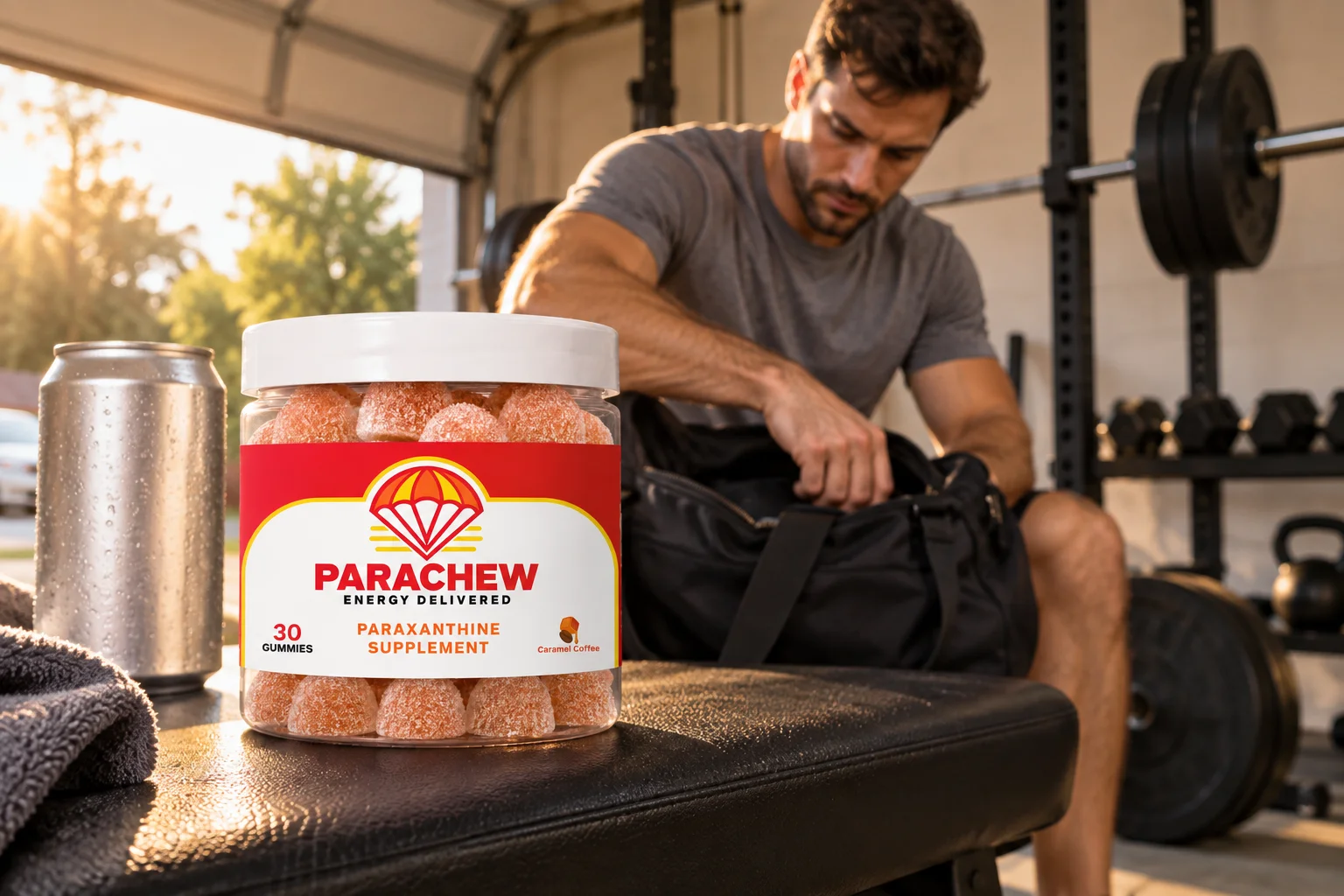
If you're picking between Update Energy vs Parachew, the short answer comes down to format and control: Update Energy is a canned, ready-to-drink option, while Parachew paraxanthine gummies are dosed at exactly 200 mg per chew so you always know your total.
By McAb Nutra, McAb Nutra
Update Energy vs Parachew: What Is Update Energy and How Is It Different?
Update Energy is a zero-caffeine canned energy drink built on 300 mg of enfinity paraxanthine per 12 oz can, plus 315 mg of Alpha-GPC and L-theanine, sold ready to drink in 12 fl oz cans online and at retail. Parachew takes a different approach: a caffeine-free energy gummy made by MCAB Nutraceuticals LLC and founded by Noah McCashland around the idea that paraxanthine, caffeine's primary dimethylxanthine metabolite, could deliver the same alertness that coffee energy drinks chase without the volatility that comes with raw caffeine. Parachew ships in a short, clear jar with a red wraparound label, in Caramel Coffee and Strawberry Lemonade flavors, with each gummy holding a labeled 200 mg dose. The core difference isn't the ingredient category so much as the format and the dose: a 12 oz can with 300 mg of paraxanthine versus a gummy with 200 mg, and how each one fits into your total for the day.
How Does Update Energy's Paraxanthine Dose Compare to Parachew's 200 mg Gummy?
When you line up Update Energy vs Parachew on dosing, both labels give you a number. UPDATE lists 300 mg of paraxanthine per 12 oz can, while Parachew lists 200 mg per gummy, so one can carries more paraxanthine than one gummy and less than two. Parachew's daily maximum is 400 mg, or two gummies, printed clearly on the jar. The practical difference is how you build your day: a can is one 300 mg serving, while Parachew lets you take 200 mg and stop there, or add a second gummy for 400 mg. The figure is printed on every UPDATE can, 300 mg of paraxanthine per 12 fl oz, so whichever you choose, you can add up your paraxanthine for the day down to the milligram.
Canned Energy Drink vs Paraxanthine Gummy: Which Format Kicks In Faster?
This canned energy drink vs paraxanthine gummy question really comes down to absorption mechanics. Liquids generally reach the bloodstream a little faster than a chewable because there's no chewing or breakdown step before absorption begins, so a canned energy drink can have a slight head start on paper. That said, many Parachew reviews report noticeable focus and alertness within 20 to 30 minutes of chewing, which is fast enough to time before a lift, a meeting, or a long drive. Neither format is instant, and both depend on whether you're on an empty or full stomach, plus your own metabolism, so if speed is the single deciding factor, a can may edge out a chew by minutes, not hours.

Which Gives Cleaner Energy Without Jitters or a Crash: Update Energy or Parachew?
Both products build on the same underlying idea: paraxanthine works on adenosine receptors much like caffeine does, but it clears out at a greater total plasma clearance rate, meaning it doesn't linger and build the way caffeine can when cups stack up over a day. That difference is why paraxanthine, accounting for roughly 80 percent of how the body naturally breaks caffeine down, is positioned as the smoother of the two molecules, offering alertness without the jitters, anxiety, or crash that coffee energy drinks built on raw caffeine are known for. Since Update Energy and Parachew both lean on paraxanthine rather than straight caffeine, the format you pick matters less here than making sure whichever product you choose is actually paraxanthine-first, not just caffeine with a new label. Either way, the goal is the same: alertness that fits your training or work schedule without a mid-afternoon crash forcing a second dose.
Can You Take Update Energy and Parachew on the Same Day?
Because both Update Energy and Parachew are built around the same active compound, treating them as two separate allowances is where people get into trouble. Parachew's label caps daily paraxanthine at 400 mg, or two gummies, and that ceiling applies to your total intake, not just what's in the jar. One UPDATE can lists 300 mg of paraxanthine, so a single Parachew gummy on top would put you at 500 mg, above Parachew's 400 mg daily maximum. Pick one or the other for the day: if you've already had an UPDATE can, save Parachew for tomorrow, and on a Parachew day, skip the can. Going over a labeled daily maximum defeats the point of choosing a clean energy source in the first place.
Which Is Easier to Take On the Go: Update Energy's Can or Parachew's Gummy?
A can needs to stay cold, takes up more room in a bag, and has to be opened and finished in one sitting once it's cracked, which isn't always practical between meetings or sets. A Parachew jar rides in a gym bag, backpack, or glovebox at room temperature, and a gummy or two fits into a busy training schedule or workday without needing a fridge, a bottle opener, or a trash can nearby. The same tradeoff shows up elsewhere too: a pre-workout can or chew still comes down to fridge space against pocket space, and the shot versus chew tradeoff is really about speed against how easy something is to carry, not which one is universally better. For anyone who trains, travels, or works odd hours, the format that survives a bag, a desk drawer, or a car console without spoiling tends to win out for total convenience.
Frequently Asked Questions
Is Update Energy the same as Parachew? No. Update Energy is a canned, ready-to-drink beverage, while Parachew is a caffeine-free energy gummy with a labeled 200 mg paraxanthine dose per chew and a 400 mg daily maximum. Both lean on paraxanthine rather than raw caffeine, but the format, the dose per serving (300 mg per UPDATE can, 200 mg per Parachew gummy), and the full ingredient list behind each product differ enough that they shouldn't be treated as interchangeable, especially if precise dosing or flavor options like Caramel Coffee matter to you.
Which has more paraxanthine, Update Energy or Parachew? Per serving, UPDATE has more: 300 mg of paraxanthine per 12 oz can against 200 mg per Parachew gummy. Parachew's daily maximum is 400 mg, or two gummies, and because one can plus one gummy would reach 500 mg, the two shouldn't be combined on the same day.
Can I switch from Update Energy to Parachew? Yes. Since both products are built around paraxanthine rather than caffeine, switching mainly means adjusting to a chewable format and a 200 mg per gummy dose instead of a 300 mg can. Start with one gummy on a day you haven't had an UPDATE can, stay under the 400 mg daily maximum, and give yourself a few days on the new schedule to notice how the format and flavor fit your routine before judging it against your old can.
Does Parachew work as fast as Update Energy? A liquid can generally starts absorbing a little sooner than a chewable simply because there's no chewing step first. In practice, many Parachew users report noticeable alertness within 20 to 30 minutes, which is close enough to plan around a workout, meeting, or drive, even if a can technically has a small head start on absorption.
Which is better for avoiding caffeine jitters, Update Energy or Parachew? Since both products are paraxanthine-based rather than straight caffeine, both are positioned around the same advantage: alertness without the jitters, anxiety spikes, or crash that raw caffeine can cause. Both are caffeine-free, so the choice is format and dose size: 300 mg per can or 200 mg per gummy. A 200 mg gummy lets you start smaller and add a second only if you want it, which matters most on days you're already watching your total intake.
Choose Your Clean Energy Format
Whether you're weighing Update Energy vs Parachew for your next workout, morning shift, or long drive, the deciding factor usually comes down to format and how much paraxanthine you want per serving. Compare flavors, dosing details, and current pricing on the Parachew product page before you decide what fits your day.


