
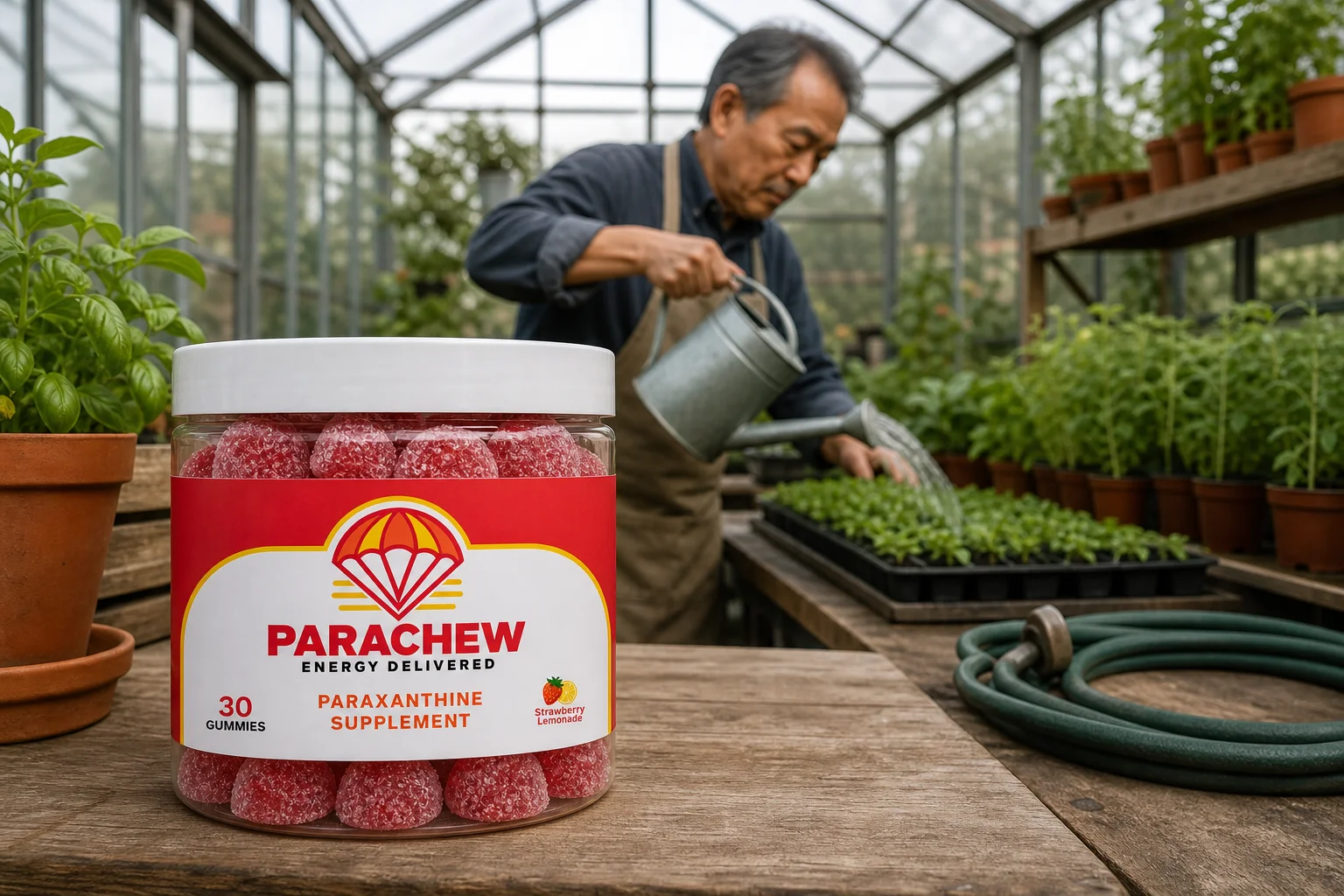
Comparing paraxanthine vs rhodiola rosea comes down to one core distinction: paraxanthine, the compound behind Parachew paraxanthine gummies, is caffeine's natural metabolite and functions as a direct stimulant, while rhodiola rosea is a plant adaptogen that supports the body's stress response instead of driving alertness on its own.
By Parachew Team, McAb Nutra
What Is Paraxanthine? Caffeine's Metabolite Explained
Paraxanthine is the primary metabolite caffeine produces once it reaches the liver. About 80 percent of the caffeine you drink converts into paraxanthine within a few hours, which means most of what athletes and entrepreneurs feel from a cup of coffee or an energy drink is actually paraxanthine at work, not caffeine itself. Where the caffeine paraxanthine relationship gets interesting is at the receptor level: both compounds block adenosine receptors in the brain, which is what produces the alert, awake feeling associated with stimulants. Caffeine binds broadly and lingers, which is part of why it can trigger anxiety, disrupted sleep, or an afternoon crash in sensitive people. Paraxanthine binds more selectively and clears the body faster, which is the biochemical reason it can deliver the wakefulness of caffeine without the same downstream side effects. This is the core idea behind the Parachew gummy formula: isolate the metabolite that does the work, and dose it directly instead of waiting on the body to convert caffeine first.
What Is Rhodiola Rosea? An Adaptogen Rooted in Traditional Medicine
Rhodiola rosea is a flowering plant that grows in cold, mountainous regions across Europe and Asia, and it has a long history in traditional medicine for fighting fatigue and supporting endurance. Unlike a stimulant, rhodiola rosea is classified as an adaptogen: a category of botanicals believed to help the body normalize its response to stress rather than pushing the nervous system into a heightened state. Researchers have studied the plant's active properties, particularly rosavins and salidroside, for their potential role in reducing perceived stress, supporting mood, and easing physical and mental fatigue during demanding periods. The National Center for Complementary and Integrative Health notes that rhodiola has been used in Russian and Scandinavian folk medicine for centuries, and modern interest has grown around its potential to support mental performance under stress without acting as a direct stimulant. Because rhodiola rosea works gradually and doesn't bind adenosine receptors the way caffeine and paraxanthine do, its benefits tend to build over consistent daily use rather than arriving as an immediate hit of energy.
Paraxanthine vs Rhodiola Rosea: Comparing Mechanism of Action
The clearest way to separate these two compounds is mechanism. Paraxanthine caffeine comparisons matter here because paraxanthine works the same way caffeine does, by blocking adenosine receptors so the brain doesn't receive the usual signal to slow down. That is a stimulant mechanism, plain and simple, and it's why the effects caffeine has on alertness show up quickly, and why paraxanthine can deliver that same fast onset with a cleaner profile. Rhodiola rosea doesn't touch adenosine receptors at all. Instead, it appears to influence the body's stress response systems, including cortisol regulation, which is why its effects show up as reduced fatigue and improved stress tolerance rather than a jolt of energy. Put simply, paraxanthine is a stimulant that happens to avoid the rough edges of caffeine, and rhodiola rosea is an adaptogen that supports the systems stimulants can wear down. They aren't competing for the same job, they're solving two different problems in the same performance stack. The distinction comes down entirely to receptor binding, not perceived energy, a mechanism explored further in paraxanthine's stimulant mechanism.
Cognitive Performance and Reaction Time: What Each One Actually Improves
For entrepreneurs and athletes, the numbers that matter most are cognitive performance and reaction time. Because paraxanthine engages adenosine receptors directly, it tends to sharpen the same measures caffeine is known for: faster reaction time, improved focus, and the ability to sustain attention through long meetings, workouts, or study sessions. This is different from the effects rhodiola doesn't share, since rhodiola rosea's benefits show up on a separate timeline. Rhodiola is more often studied for its ability to improve cognitive function during periods of mental and physical fatigue, such as exam stress or sleep deprivation, rather than for boosting peak performance in a rested state. Memory and mental clarity under stress are where rhodiola tends to shine, while raw alertness and reaction time are where paraxanthine does the heavy lifting. Stacked together, the two cover both ends of the performance curve: immediate cognitive performance from paraxanthine, and steadier resilience from rhodiola over the following hours. Athletes tracking their own numbers can dig deeper into the paraxanthine to caffeine ratio to see how conversion timing affects when those reaction time gains actually show up.

Side Effects, Dosing, and How Much of Each You Actually Need
One of the biggest reasons people search paraxanthine vs rhodiola rosea is to figure out which one is gentler on the body, and the honest answer is that paraxanthine was specifically isolated because of its favorable side effects profile compared to caffeine. Because it clears the body faster and binds adenosine receptors more selectively, it's associated with less anxiety, fewer sleep disruptions, and none of the crash that heavier caffeine or energy drink habits can cause. Each Parachew gummy delivers 200mg of paraxanthine, and the label caps daily intake at 400mg, or two gummies, which keeps energy steady without pushing into territory where any stimulant's side effects become more likely. Rhodiola rosea doses studied for stress and fatigue support commonly range from roughly 200mg to 600mg per day of a standardized extract, though levels vary by product concentration, and anyone adding a new adaptogen to a routine that includes prescription medicine should check with a doctor first. Staying within labeled doses for both compounds is the simplest way to get consistent performance without guessing.
Stacking Paraxanthine and Rhodiola Rosea With Other Nootropics
Because paraxanthine and rhodiola rosea solve different problems, they show up together often in nootropic stacks designed to enhance both immediate energy and long term stress resilience, alongside adaptogens like bacopa monnieri, an Ayurvedic plant studied for its potential to improve memory and support cognitive function over weeks of consistent use. Bacopa works on a different timeline than either paraxanthine or rhodiola, building benefits gradually rather than delivering same day effects, which is why biohackers often layer a fast acting compound like paraxanthine on top of slower building botanicals like rhodiola and bacopa. If you're weighing whether to swap your usual energy drink for something with a cleaner profile, it helps to understand the mechanism first. Whichever combination you land on, the goal is the same: increases in alertness and stress resilience that hold up over a full day, not just a short lived spike. To ask questions about which combination fits your routine, contact the Parachew team and get a straight answer instead of guesswork.
Frequently Asked Questions
Is paraxanthine the same as caffeine? No. Paraxanthine is caffeine's primary metabolite, meaning it's what caffeine converts into after your liver processes it. Both compounds block adenosine receptors, but paraxanthine binds more selectively and clears faster, which is why it can deliver similar alertness and improved cognitive performance without the same jitters, anxiety, or crash that heavier caffeine intake can cause.
Can I take paraxanthine and rhodiola rosea together? Yes, many people combine them because they work through different systems. Paraxanthine engages adenosine receptors for immediate alertness, while rhodiola rosea supports the body's stress response over time. Stick to labeled doses, 200mg per Parachew gummy up to 400mg daily, and standard rhodiola serving sizes, and check with a doctor if you take other medicine.
Does rhodiola rosea have side effects like caffeine does? Rhodiola rosea is generally well tolerated at studied doses and doesn't produce the stimulant driven side effects associated with caffeine, since it isn't acting on adenosine receptors the way caffeine or paraxanthine do. Some people report mild digestive upset or restlessness at higher doses, so starting at the lower end of a standardized extract range is the simplest approach.
Which is better for reaction time, paraxanthine or rhodiola rosea? Paraxanthine is the better fit for reaction time and short term cognitive performance because it works the same way caffeine does, through adenosine receptors, producing a fast, noticeable lift in alertness. Rhodiola rosea is better suited for sustained attention and mental resilience across a stressful day rather than an immediate reaction time boost.
How much paraxanthine is in Parachew energy gummies? Each Parachew gummy contains 200mg of paraxanthine, formulated to deliver caffeine like alertness without the jitters or crash. The label caps daily intake at 400mg, or two gummies, which keeps energy steady while staying within a dose range studied for favorable effects on cognitive performance and reaction time.
Feel the Difference With Parachew Energy Gummies
If you're ready to trade the unpredictable highs and crashes of regular caffeine for something built on cleaner biochemistry, Parachew energy gummies are formulated around exactly that idea. That cleaner profile comes down to the conversion process covered above: caffeine converting into paraxanthine in the liver, then binding adenosine receptors more selectively and clearing the body faster than caffeine itself.


