
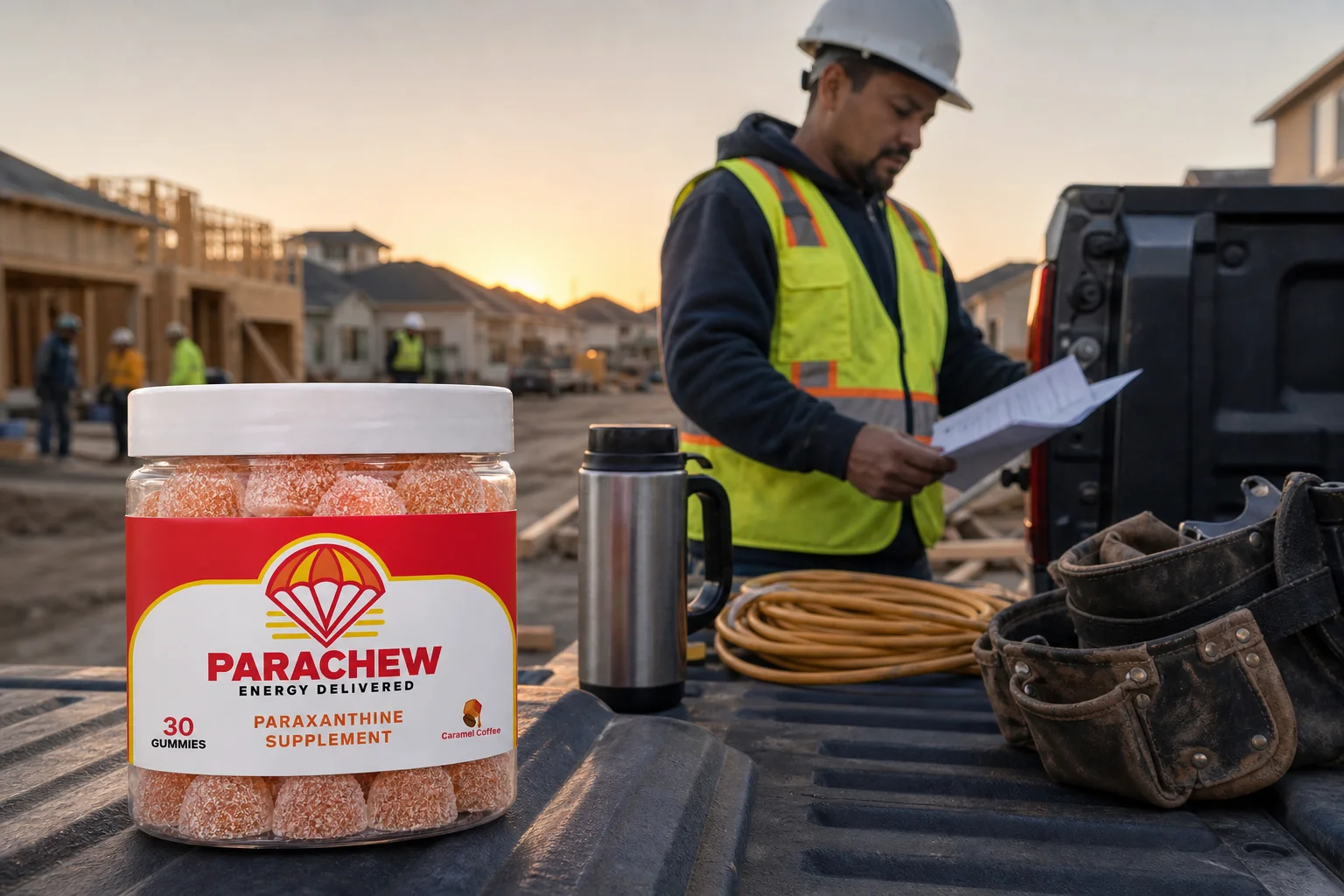
Early call times mean trade workers need clean energy before sunrise, not caffeine jitters on a ladder. Paraxanthine on the job site delivers steady alertness without the crash, using Parachew energy gummies to help crews stay sharp from the first swing of the hammer to the last.
By Parachew Team, McAb Nutra
The 4 A.M. Alarm and What It Does to Your Nervous System
A 4 a.m. alarm doesn't care that your body wanted another two hours of sleep. Overnight, a compound called adenosine builds up in the brain and binds to adenosine receptors, creating the heavy, foggy pull you feel the moment the alarm goes off. Coffee and energy drinks work by blocking those same adenosine receptors, which is why a cup feels like flipping a switch, but that blocking action is also tied to the jitters, racing heart, and blood pressure spikes crews complain about on scaffolding and rooftops before 6 a.m. The side effects caffeine brings before a shift, shaky hands on a nail gun, a spike in heart rate on a ladder, aren't a fair trade for staying awake, and they're exactly what paraxanthine on the job site is built to avoid.
Caffeine Paraxanthine: The Metabolite Behind Cleaner Energy
When your liver processes a cup of coffee, it doesn't stay as caffeine for long. Within a few hours, the caffeine paraxanthine pathway converts most of what you drank into paraxanthine, the metabolite caffeine leaves behind as it clears your system. Paraxanthine caffeine research points to a compound that still blocks adenosine receptors, still supports dopamine activity tied to motivation and mood, and still shows up in nitric oxide signaling linked to healthy blood flow. This is the part of the effects caffeine has on your body that actually feels good on a job site: mental sharpness, steady output, and attention that stays where it should instead of drifting. What paraxanthine skips is caffeine's shorter half-life and its heavier grip on the receptors tied to overstimulation, which is why crews who switch describe the lift as smoother, not sharper-edged.
How Paraxanthine Stacks Up Against Caffeine and Theobromine
Caffeine, paraxanthine, and the theobromine theophylline family are all part of the same dimethylxanthine group of metabolites, naturally found in coffee tea and cacao. As a paraxanthine dimethylxanthine compound, it shares a core structure with caffeine, which is part of why it still acts like caffeine on alertness and focus. Available data suggest paraxanthine increases mental performance markers similar to what caffeine produces, without the same grip on receptors associated with the wired, anxious side effects caffeine is known for on an early shift.
Why Trade Crews Are Swapping Energy Drinks for a Caffeine Alternative
Energy drinks dominate site coolers because they're fast and familiar, but most stack sugar and 200 to 300 milligrams of caffeine on top of a body that's already running on four or five hours of sleep. As a caffeine alternative, paraxanthine supplementation gives crews a dose they can actually plan around: each gummy in the Parachew gummy formula carries 200mg of paraxanthine, and the product carries a label maximum of two gummies (400mg) a day. That built-in ceiling matters on a job site, where reaching for a second energy drink usually just means a second crash mid-shift. Choosing paraxanthine on the job site means picking a dose you can rely on before the truck even leaves the yard, not guessing at a new can every morning. Crews running a full 8-hour install and wondering how far one dose stretches usually find that a single 200mg gummy carries a standard morning through the midpoint of the shift, while the second gummy is there for the jobs that run long, keeping the day at the 400mg label maximum instead of an unplanned extra can. The slump that tends to hit right after lunch on a long pour is the same afternoon dip office workers feel at their desks, and timing that second gummy to land just before it, rather than after energy has already dropped, keeps output level through the rest of the pour.

Staying Sharp at Height: Attention, Coordination, and Safety
Fall protection and ladder training assume a crew that's alert, but early call times work against that baseline. Sustained attention, the kind needed to notice a missing guardrail or a frayed strap, depends on steady cognitive function in the brain, not a jittery spike that fades by 9 a.m. Rotating schedules compound this problem: a body that never settles into one consistent wake time is already fighting its own circadian rhythm, so focus and coordination take a bigger hit than they do for a crew working a fixed early shift. Anchoring the dose to time since waking, rather than to a fixed clock hour, helps rotating crews hold that same steadiness shift to shift. Clean, steady energy supports safety in a way a jitter-crash cycle never will, because a steady crew is a crew that catches problems before they turn into incidents.
Making Paraxanthine on the Job Site a Daily Habit
Consistency beats intensity when your call time never moves. Most crews take one Parachew gummy about 30 to 45 minutes before clocking in, giving the paraxanthine time to build to steady levels before the first task of the day. On longer pours or a double shift, the label allows a second gummy for a 400mg daily maximum, never more, and never stacked with an extra energy drink on top. If your schedule rotates week to week instead of holding steady, the same 30 to 45 minute window still applies, it just moves with you: take the gummy 30 to 45 minutes after waking whether that wake time is 4 a.m. for an early call or 8 p.m. ahead of a night shift, so the timing stays anchored to your body's clock instead of the calendar.
Related reading from our blog:
Frequently Asked Questions
Is paraxanthine on the job site safe to take before an early shift? Paraxanthine is the metabolite your body already produces when it processes caffeine, so it works with a pathway your system knows well. Each Parachew gummy contains 200mg, with a label maximum of 400mg (two gummies) per day. Sticking to that daily maximum, and skipping additional caffeine on top, is the guideline every crew member should follow.
Does paraxanthine cause the same side effects as caffeine? No. Paraxanthine is specifically known for stepping around the side effects caffeine causes, jitters, a racing heart, and anxious energy, because of how it interacts with adenosine receptors compared to caffeine. Crews report smoother, steadier alertness instead of a spike-and-crash pattern, which is the main reason trade workers reach for it over a standard energy drink before sunrise calls.
How is paraxanthine different from the caffeine in coffee or energy drinks? Caffeine converts into paraxanthine inside the liver, so the two are closely related, but paraxanthine has its own profile once it's active in the body. Compared to caffeine, paraxanthine is associated with a steadier hold on focus and mood, without the same swings in blood pressure or the sharp drop-off crews describe after an energy drink wears off mid-morning.
Can paraxanthine help with the afternoon slump on a long install? Yes. A single morning gummy often isn't enough to cover an install that runs past lunch. Many crews time a second gummy, staying within the 400mg daily maximum, to bridge the stretch when energy typically dips mid-afternoon, keeping output steady instead of letting a slump turn into a spike-and-crash cycle later in the day.
Is paraxanthine supplementation different from just drinking more coffee? Yes. Coffee delivers a large, variable dose of caffeine that the body then has to convert into paraxanthine over time, with a half-life and metabolism speed that differs person to person. Paraxanthine supplementation delivers the metabolite directly, in a measured 200mg dose per gummy, so crews get consistent effects without waiting on individual caffeine metabolism to catch up.
Fuel Your Crew Before the Next Sunrise Shift
Long before the first truck door slams, paraxanthine on the job site can be the difference between a foggy first hour and a sharp one, no jitters, no crash, just steady output through the whole shift. Ready to build it into your crew's routine? Reach out and contact the Parachew team for bulk options or questions about fitting it into an early-call schedule.


