
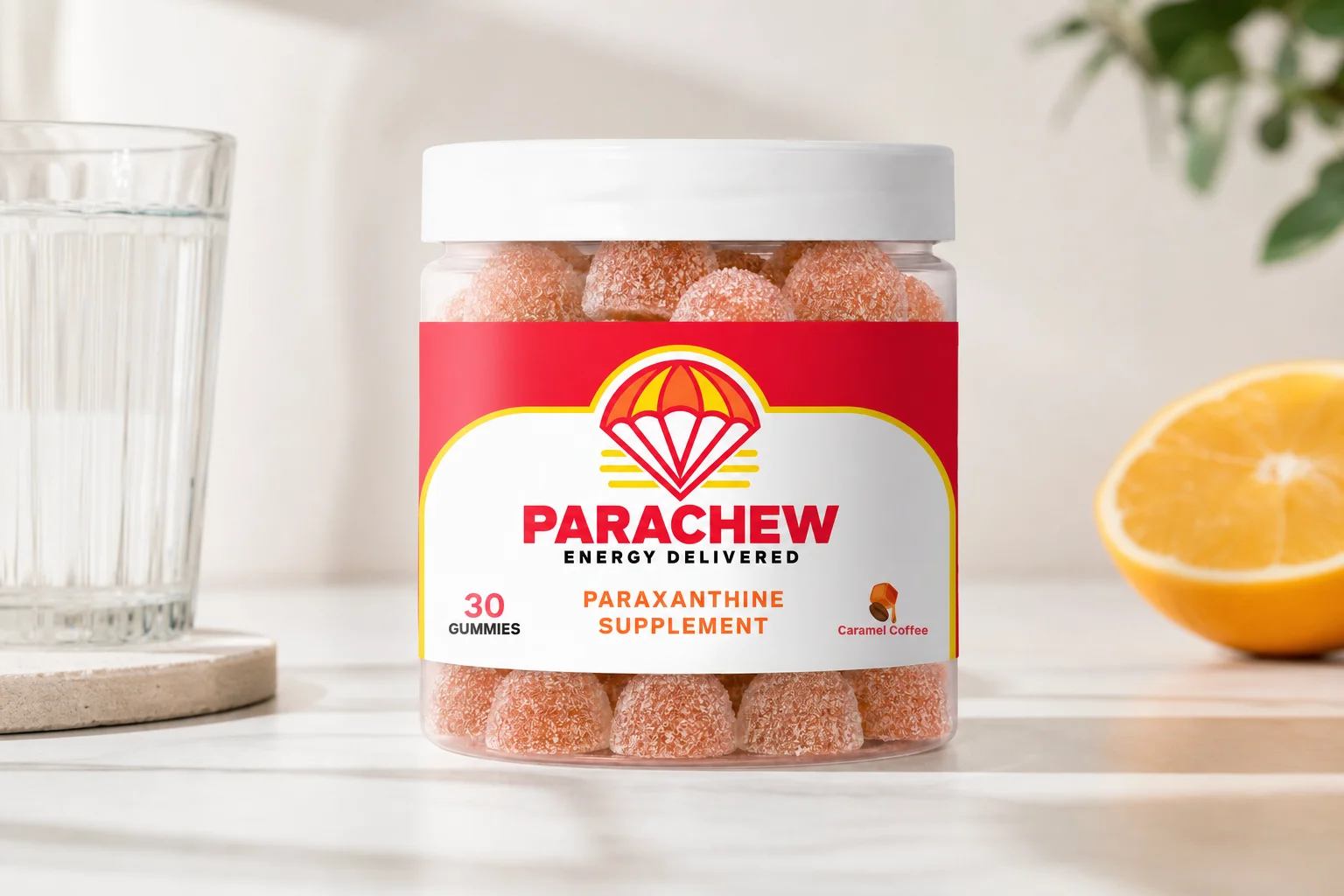
Paraxanthine and intermittent fasting are a natural pairing for anyone chasing clean, sustained energy during a fasted state. Unlike caffeine, paraxanthine (the primary metabolite caffeine converts into in your body) sidesteps the jitters and crash, making it ideal for use on an empty stomach. Parachew energy gummies deliver exactly that.
By Parachew Team, McAb Nutra
What Paraxanthine Is and How It Relates to Caffeine
When you drink coffee, your liver converts roughly 70 to 84 percent of ingested caffeine into three metabolites: paraxanthine, theobromine, and theophylline. The compound theobromine theophylline both contribute to caffeine's broader physiological effects, but the dominant share of stimulant activity comes from paraxanthine, which accounts for approximately 84 percent of caffeine's metabolite output in most people.
The caffeine paraxanthine distinction matters most in how each compound interacts with adenosine receptors. Caffeine binds broadly to adenosine receptors throughout the brain and body while simultaneously triggering cortisol and adrenaline release. Paraxanthine operates with considerably more selectivity: it blocks adenosine receptors to sustain energy and alertness without the same hormonal cascade. Researcher Tim Ziegenfuss and colleagues published findings in the Journal of the International Society of Sports Nutrition (2023) confirming that paraxanthine produced superior cognitive performance scores and fewer reported side effects compared to matched caffeine doses in a double-blind placebo-controlled crossover trial.
Why an Empty Stomach Changes the Stimulant Experience
Intermittent fasting creates a physiologically distinct absorption environment. With no food in the stomach, highly bioavailable compounds like paraxanthine absorb faster and reach peak blood concentrations sooner. For fasted high-performers, this means a quicker onset of alertness and cognitive sharpness precisely when it matters most: during the morning hours before the eating window opens.
Caffeine taken in a fasted state tends to amplify cortisol spikes, heightening anxiety and disrupting focus in sensitive individuals. Paraxanthine sidesteps this response entirely. Because it does not trigger the same adrenal stress reaction that caffeine does, the fasted state becomes an advantage rather than a liability when paraxanthine is the chosen stimulant. This single distinction is why the combination of paraxanthine and intermittent fasting has captured the attention of performance-focused biohackers.
The Research Behind Paraxanthine and Intermittent Fasting Performance
The evidence base for paraxanthine keeps expanding. Beyond the 2023 Ziegenfuss trial, earlier research by Bryan et al. (2019) published in Nutrition and Metabolic Insights demonstrated that paraxanthine at doses mirroring a standard caffeine serving improved sustained attention, processing speed, and working memory in healthy adults. These cognitive gains align directly with what paraxanthine and intermittent fasting practitioners are optimizing for: sharper mornings without relying on food for mental performance.
From a metabolic standpoint, fasting states elevate fatty acid oxidation, and emerging research suggests paraxanthine supports fat metabolism without blunting the body's fasted fat-burning signals. High-dose caffeine, by contrast, can raise cortisol in ways that promote muscle catabolism during extended fasting windows, working against one of the core goals of intermittent fasting protocols.
How to Time Paraxanthine with Your Fasting Window
Timing is straightforward. Most intermittent fasting protocols, whether 16:8, 18:6, or OMAD, push the eating window toward midday or later. The ideal intake window for paraxanthine is roughly 30 to 45 minutes before peak cognitive or physical demand. For most fasted athletes and entrepreneurs, that means early morning on an empty stomach.
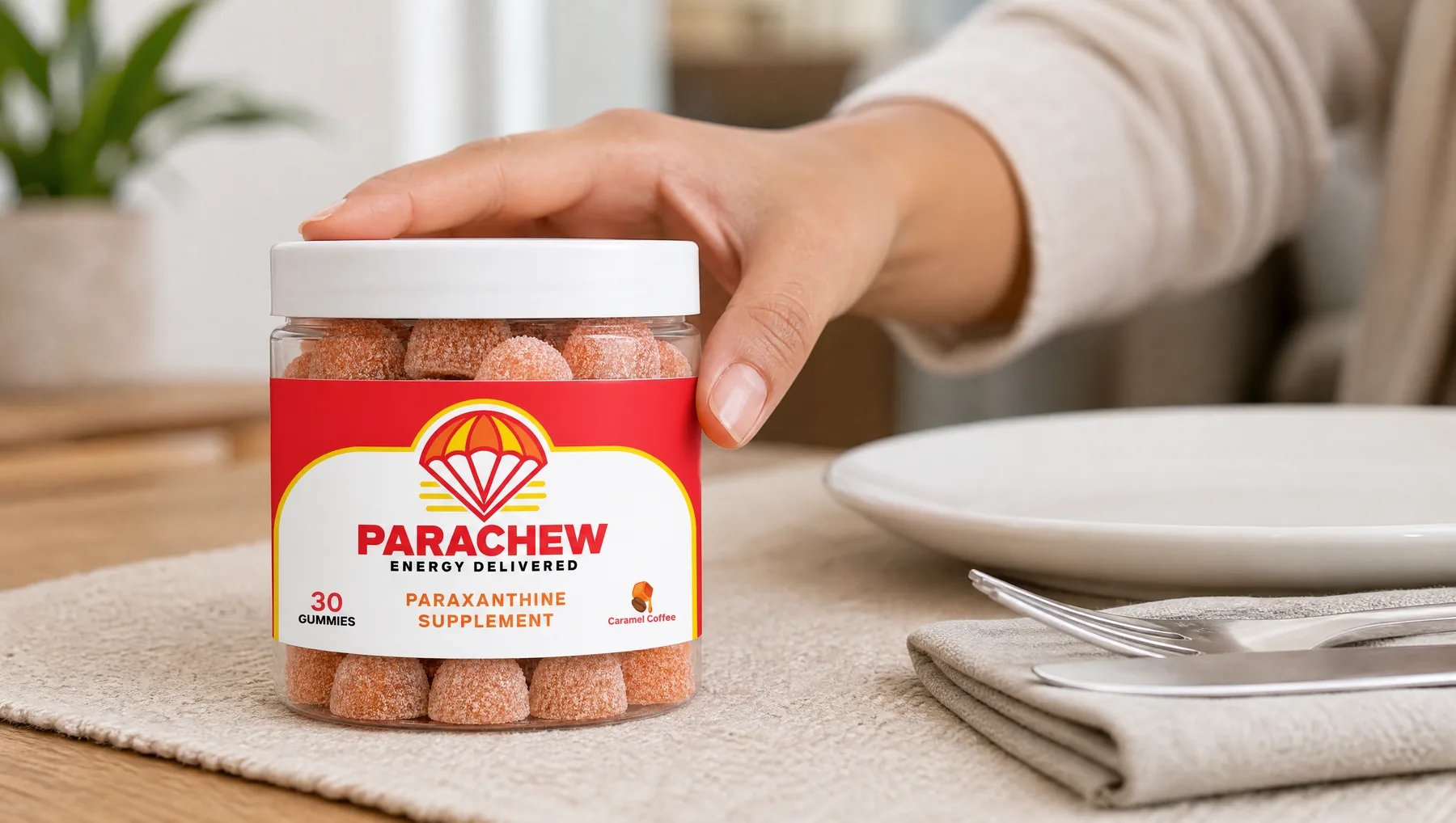
Each gummy in the Parachew paraxanthine gummies line contains 200mg of paraxanthine. For most users, 200mg is the sweet spot for clean, focused energy with no crash. Users with higher stimulant tolerance can take two gummies (400mg daily maximum per label guidance). Avoid combining with additional caffeine sources such as coffee or energy drinks to stay within safe daily limits and keep side effects from caffeine overload at zero.
Because paraxanthine has a shorter half-life than caffeine (roughly 3 to 5 hours compared to 5 to 7 hours for caffeine), it clears the body faster and causes less disruption to sleep architecture. For fasting practitioners also optimizing sleep and recovery alongside their nutrition protocols, this faster clearance is a meaningful practical advantage.
Cognitive and Physical Benefits for Fasted Performance
Paraxanthine targets three performance vectors that matter to fasted high-achievers. Cognitively, it sharpens alertness, working memory, and focus without the mid-morning anxiety spike that caffeine can trigger on an empty stomach. Physically, it supports endurance output by maintaining adenosine receptor blockade in muscle tissue, which delays perceived fatigue during fasted training sessions.
For body composition goals, paraxanthine's role in supporting fatty acid metabolism aligns with the fat-oxidation window most fasting practitioners aim to extend. The caffeine paraxanthine research literature consistently shows that paraxanthine delivers adenosine receptor benefits without the peripheral cardiovascular overactivation associated with high-dose caffeine and energy drinks. For the serious biohacker, paraxanthine is the precision stimulant that fasted performance routines demand.
Frequently Asked Questions
Does paraxanthine break a fast?
Paraxanthine delivered via gummy carries a small caloric load, so it may technically interrupt a strict water-only fast. For most fasting practitioners focused on metabolic and cognitive benefits, the minimal caloric content in a Parachew gummy will not disrupt ketosis or fat-oxidation goals. If you follow a medically supervised extended fast, check with your healthcare provider before adding any supplement.
Is paraxanthine safe to take on an empty stomach?
Yes. One of paraxanthine's core research-backed advantages over caffeine is that it does not trigger the cortisol and adrenaline spikes that make caffeine uncomfortable on an empty stomach. Multiple double-blind placebo-controlled trials consistently show fewer side effects with paraxanthine compared to caffeine at matched doses, making it well-suited to fasted use.
How much paraxanthine should I take while fasting?
Start with one gummy delivering 200mg of paraxanthine. The daily maximum is 400mg (two gummies per label guidance). Most users find 200mg delivers full alertness and cognitive sharpness without overstimulation. Avoid stacking with additional caffeine sources such as coffee, tea, or energy drinks to stay within safe daily limits.
What distinguishes paraxanthine from caffeine during a fast?
When you consume caffeine, your body must first convert it via the metabolite caffeine breakdown pathway before paraxanthine becomes active. Taking paraxanthine directly skips that conversion step along with the cortisol surge it produces, delivering a cleaner stimulant experience on an empty stomach with fewer side effects during a fasted state.
Will paraxanthine disrupt sleep if taken in the morning fasting window?
Paraxanthine clears faster than caffeine, with a half-life of roughly 3 to 5 hours versus 5 to 7 hours for caffeine. Morning use within a standard fasting window is unlikely to affect evening sleep quality for most users, making it a practical daily tool for high-performance fasted routines.
Fuel Your Fasted Routine with Clean, Precise Energy
Paraxanthine and intermittent fasting are purpose-built for each other, and the research backing that combination keeps growing. If you have questions about dosing, protocols, or how paraxanthine fits into your specific fasting schedule, reach Parachew support for personalized guidance.


