
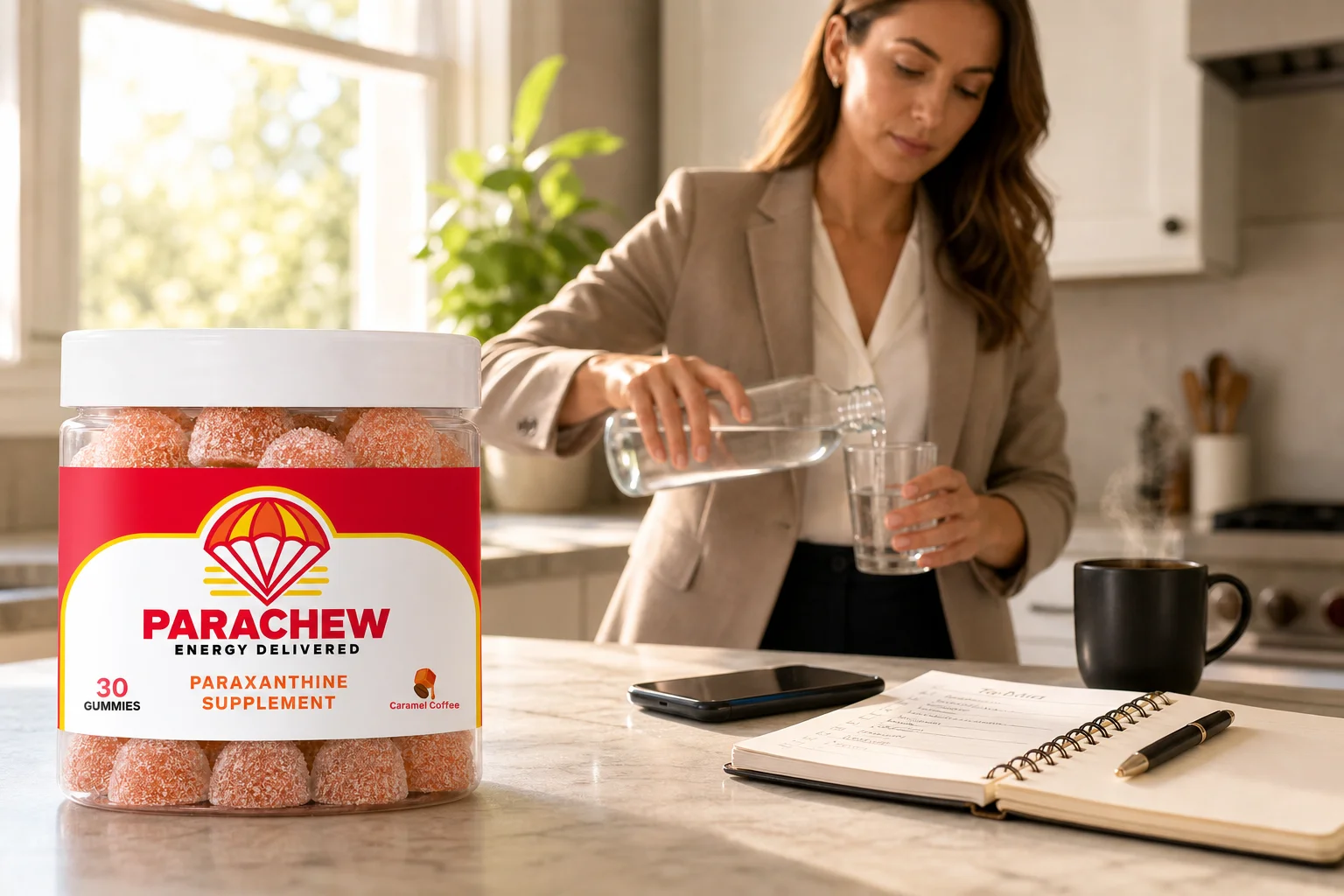
If you take an SSRI and you are wondering whether paraxanthine and SSRIs are safe to combine, the short answer starts with the receptor data: paraxanthine works on adenosine receptors, not the serotonin pathways SSRIs target. Before adding any supplement, including Parachew paraxanthine gummies, talk with your prescribing physician about your specific mix of medications.
By Parachew Team, McAb Nutra
How Paraxanthine Works Differently Than Caffeine in the Brain
Paraxanthine is the metabolite caffeine produces first and in the largest amount. Once the liver enzyme CYP1A2 gets to work, roughly 80 percent of ingested caffeine converts into paraxanthine. The paraxanthine caffeine pathway also branches into two minor byproducts, theobromine and theophylline, but paraxanthine is the one doing most of the work on energy and alertness in a healthy adult.
Like caffeine, paraxanthine is a stimulant that blocks adenosine receptors, the same receptors that build up sleep pressure across the day. Where the two compounds differ is in how broadly they bind. Caffeine binds a wider spread of receptor subtypes, which is part of why some people feel jittery or wired after a strong cup of coffee. Paraxanthine's narrower, more selective binding on adenosine receptors is associated with a cleaner lift, alert energy without the same overshoot, compared to caffeine at an equivalent dose.
What SSRIs Do and Why People Ask About Combining Them with Supplements
Selective serotonin reuptake inhibitors, the drug class that includes sertraline, escitalopram, and fluoxetine, work on an entirely different system than caffeine or its metabolites. SSRIs slow the reuptake of serotonin at the synapse, leaving more of it available to support mood regulation over weeks of consistent use. That mechanism has nothing to do with adenosine receptors.
People on SSRIs ask about paraxanthine and SSRIs for the same reason anyone on a daily prescription asks about a new supplement: they want to know if two compounds compete for the same enzyme, the same receptor, or the same clearance pathway in the body. It is a reasonable question, and it deserves a direct answer rather than a vague one. That question looks a little different depending on the medication: a stimulant raises concerns about overlapping stimulant effects, while an SSRI raises questions about enzyme pathways and mood regulation instead, which is why the specifics of your prescription matter more than a general rule.
The Receptor Science Behind Paraxanthine and SSRIs
Here is the direct answer. The published receptor data on paraxanthine center on adenosine receptors, primarily the A1 and A2A subtypes, not the serotonin transporter that SSRIs act on. Paraxanthine and SSRIs work through separate, non-overlapping targets, a very different picture than combining two stimulants or stacking an SSRI with another serotonergic compound.
That said, separate receptor targets do not automatically mean zero interaction anywhere in the body. Caffeine and its metabolites are processed largely through the CYP1A2 liver enzyme, and some SSRIs, fluvoxamine most notably, are known CYP1A2 inhibitors. In theory, a strong CYP1A2 inhibitor could slow how quickly paraxanthine clears the body, extending how long its effects last rather than changing what those effects are. This is a metabolism question, not a receptor conflict question, and it is exactly the kind of detail a prescribing physician or pharmacist can check against your specific SSRI and dose. Timing matters for other medications too. Spacing a paraxanthine dose away from a morning prescription can help reduce that overlap, an approach covered in more depth in paraxanthine and ADHD timing.
Human research directly studying paraxanthine alongside SSRIs is still limited. Most of the receptor binding and pharmacokinetic work available today comes from healthy adult volunteers studied for caffeine metabolism generally, with some earlier receptor function data originating in animal models before moving into human trials. That is a normal path for compound research, but it also means the honest answer, for now, is that the data supports low receptor level conflict while leaving room for a metabolism conversation with your doctor.

Why Paraxanthine's Clean Energy Profile Matters If You're on a Mood Medication
This is where paraxanthine's core distinction from caffeine becomes especially relevant. People managing mood health with an SSRI often already feel more sensitive to a racing heart or a wired, anxious feeling, symptoms nobody wants stacked on top of a daily prescription. Because paraxanthine's receptor profile sidesteps the broad spectrum binding that drives caffeine's jitters and crash, it is built to deliver alert energy and steady attention without adding that layer of overstimulation.
In placebo controlled research on methylxanthines generally, paraxanthine has been associated with steadier, more sustained energy and cognitive performance than caffeine at a comparable dose, without the same anxious overshoot. Many users report increased focus across a workday rather than a spike and crash pattern, and for someone already managing mood with medication, that steadier profile is the more relevant comparison point. Two Parachew energy gummies deliver 400mg of paraxanthine, the label's daily maximum, so there is a clear ceiling built into how the product is dosed. Choosing between a 200mg and a 400mg dose changes intensity and duration, a distinction worth weighing if you are balancing energy needs against a daily prescription, and one covered in more detail in paraxanthine dosing by workday.
Where This Receptor Data Comes From
We only cite research hosted on official websites, peer reviewed journals indexed through the National Library of Medicine and PubMed, both housed under gov websites operated by the National Institutes of Health, a government organization in the United States. If you want to check the primary sources yourself, look for the same cues you would expect from any official government organization page: a lock locked padlock icon in your browser bar and a URL that starts with https. Here is what https means in practice, your connection is encrypted, so any website share of your search activity stays private while you read about adenosine receptors and the effects caffeine has on the brain. Confirm you are on official, secure websites before treating any single source as the final word on paraxanthine and SSRIs.
Frequently Asked Questions
Can I take paraxanthine if I am on an SSRI? The available receptor data show paraxanthine acting on adenosine receptors, a separate target from the serotonin system SSRIs affect, but no supplement decision should replace a conversation with your prescribing doctor. Bring the Parachew label, your SSRI name, and your dose, and ask specifically about CYP1A2 interactions before combining the two.
Does paraxanthine cause the same anxiety as caffeine when mixed with medication? No. Paraxanthine's receptor binding is more selective than caffeine's, and it is specifically associated with alert energy that avoids the jittery, anxious edge caffeine can produce. That distinction is part of why people already managing mood with medication often look at paraxanthine first.
Which SSRIs are most likely to affect how paraxanthine is processed? Fluvoxamine is the SSRI most documented as a CYP1A2 inhibitor, the same liver enzyme pathway that clears paraxanthine and caffeine. That could extend how long paraxanthine's effects last rather than change what it does. Ask your prescriber whether your specific SSRI shares that property.
How much paraxanthine is in one Parachew gummy? Each Parachew gummy contains 200mg of paraxanthine, with a label maximum of 400mg, two gummies, per day. That fixed dosing makes it straightforward to discuss an exact amount with your doctor rather than estimating from a cup of coffee.
Is there human research on paraxanthine and SSRIs specifically? Direct human trials combining the two are limited right now. Most current data comes from separate research, paraxanthine's receptor and metabolism profile studied on its own, and SSRIs studied for their serotonin effects. That gap is exactly why a personalized check with your doctor matters more than general research.
Talk to Your Doctor, Then Choose Your Energy Source
Receptor data is a useful starting point, but your prescriber knows your specific SSRI, dose, and history. Once you have had that conversation, contact the Parachew team with any remaining questions about how 200mg per gummy dosing fits your routine.


