
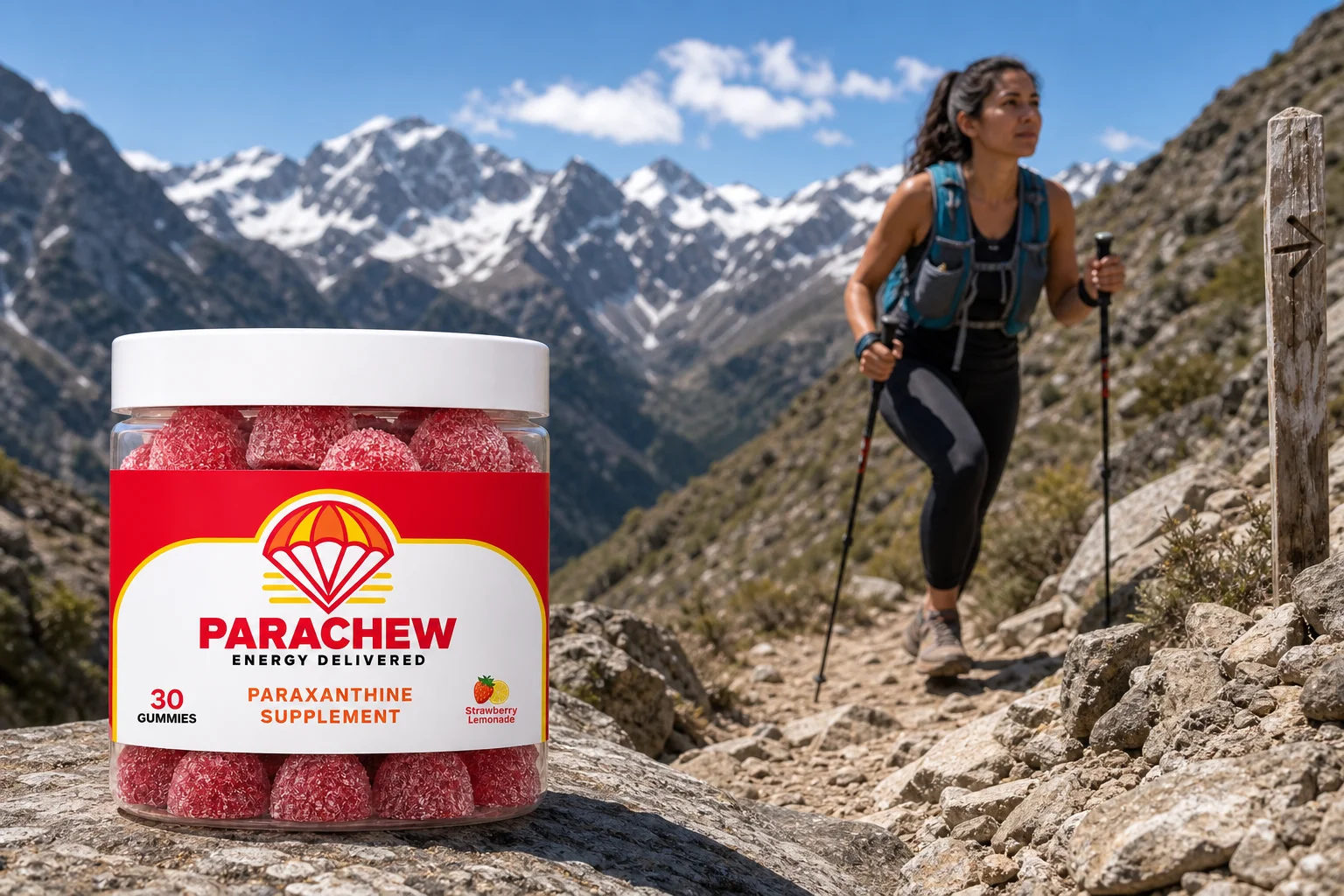
Training at altitude already taxes your body's oxygen delivery, so reaching for a stimulant that tightens blood vessels can work against you. Paraxanthine for high-altitude training offers focused energy without the vasoconstriction linked to caffeine, making Parachew energy gummies a practical fit for climbers, skiers, and endurance athletes at elevation.
By Parachew Team, McAb Nutra
Why Altitude Changes the Caffeine Equation
Climbing, skiing, or endurance training above 8,000 feet already puts your circulatory system to work overtime. Lower barometric pressure means less oxygen per breath, so your body compensates by widening blood vessels and increasing blood flow to working muscles and the brain. Caffeine works against that adaptation. It is a known vasoconstrictor, meaning it narrows blood vessels at the exact moment your body is trying to open them wider to move more oxygen where it is needed. Pair that with the jitters, elevated heart rate, and anxious edge some people get from a strong cup of coffee at altitude, and you have a stimulant that fights the environment instead of supporting it.
This is where paraxanthine for high-altitude training earns a real look. Paraxanthine is the primary metabolite your liver produces when it breaks down caffeine, but it does not carry caffeine's vasoconstrictive baggage. Athletes and outdoor performers who want alertness without narrowing the vessels that are trying to deliver oxygen have a genuine reason to swap sources, especially on multi-day trips where cumulative fatigue and thin air compound each other.
What Makes Paraxanthine for High-Altitude Training Different
Paraxanthine and caffeine both work by blocking adenosine receptors in the brain, which is what produces that feeling of heightened alertness and reduced perceived fatigue. Caffeine itself only sticks around briefly before your liver metabolizes it into three compounds: paraxanthine, theobromine, and theophylline. Compared to caffeine, paraxanthine caffeine research has shown that paraxanthine binds adenosine receptors with similar efficiency but produces less of the vascular tightening associated with the parent compound. That distinction, paraxanthine versus caffeine, theobromine, and theophylline, matters most in environments where your circulation is already under load, which is exactly what altitude does to the body.
Does paraxanthine cause the same rise in blood pressure that caffeine does? Available research suggests the two compounds diverge here, with paraxanthine showing a more favorable profile for users concerned about vascular tightening. That is the mechanism behind why paraxanthine for high-altitude training is gaining traction among people who used to rely on coffee or energy drinks before a climb or a day on the slopes. It also explains why some athletes report feeling alert without the tight, wired sensation that caffeine can produce once elevation is added to the equation.
Reaction Time, Focus, and Performance in Thin Air
Altitude does not just affect your lungs and heart, it affects your brain. Reduced oxygen availability at elevation has been linked to slower reaction time and reduced mental sharpness, both of which matter when you are route-finding on a ridge, timing a ski line through trees, or making split-second calls in any technical sport. This is squarely a sports nutrition problem, not just an endurance problem: performance at altitude depends on the brain getting the support it needs while the body manages a lower oxygen supply and a higher overall metabolic cost.
Paraxanthine's adenosine receptor activity supports alertness and focus in a way that is comparable to caffeine, without the same downstream vasoconstriction working against your circulation. For athletes who need clean mental output, quick reaction time, and sustained focus during a summit push or a long day of training at elevation, that combination is the appeal. It is also why Parachew paraxanthine gummies have found an audience among trail runners and mountaineers who train and compete well above sea level, where every extra half-second of reaction time can matter on exposed terrain.

Side Effects, Sleep, and the Crossover Trial Evidence
Any conversation about a stimulant-adjacent compound has to address side effects honestly. Caffeine is associated with jitters, anxiety, sleep disruption, and the familiar afternoon crash, largely tied to its vasoconstrictive action and its longer half-life in the body. Paraxanthine's shorter half-life and more favorable receptor profile are specifically why it sidesteps many of those same side effects, giving users a cleaner energy curve without the crash that follows caffeine, which matters even more when your body is already working harder just to move oxygen at elevation.
Human crossover trial data comparing paraxanthine to caffeine has reported that participants experienced alertness gains similar to caffeine with a reduced incidence of jitteriness, supporting the idea that paraxanthine is a distinct compound worth separating from its parent molecule rather than treating as interchangeable with it. Researchers studying the compound, including work published by groups examining paraxanthine's pharmacology, have noted its comparatively gentler profile relative to caffeine, theobromine, and theophylline, the three primary metabolites your liver produces during caffeine metabolism. That body of evidence is part of why paraxanthine for high-altitude training keeps coming up in conversations among endurance athletes looking for an alternative to coffee or pre-workout formulas built around straight caffeine.
Sleep is part of this picture too, especially for athletes training at altitude who already contend with disrupted sleep from elevation itself. Because paraxanthine clears the body faster than caffeine, it is less likely to linger into the evening and interfere with rest, which matters when recovery is already harder to come by at elevation. Taking your gummy earlier in the day, rather than right before you need to wind down, is the simplest way to keep that faster clearance working in your favor for sleep and recovery after a demanding day at elevation.
How to Use Parachew Gummies for Altitude Training
Each Parachew gummy delivers 200mg of paraxanthine, with a daily maximum of 400mg, or two gummies, per the label. For altitude training, many users find one gummy before a climb, ski day, or altitude training block provides enough alertness and reaction time support to get through technical terrain, saving the second gummy for a longer day or a second push later on. Timing the first gummy about 30 to 45 minutes before you start moving gives the compound time to take effect before you are on exposed terrain.
Paraxanthine pairs naturally with the rest of a sports nutrition routine built for elevation, including hydration, electrolytes, and adequate carbohydrate intake to support the higher metabolic demand altitude places on the body. It also fits alongside a broader strength or pre-workout routine, since paraxanthine's focus on alertness and reaction time complements rather than competes with compounds aimed at power output and muscle recovery.
For athletes coming from energy drinks or coffee as their go-to before a climb, the appeal of switching is the same clean energy curve described earlier, alertness without the crash, minus the caffeine load that works against your circulation at elevation.
Frequently Asked Questions
Does paraxanthine cause vasoconstriction like caffeine? Research indicates paraxanthine produces less vasoconstriction than caffeine, which is part of why it is being explored for use in situations, like high-altitude training, where circulation is already under stress. Both compounds block adenosine receptors similarly, but their vascular effects diverge in ways that matter for athletes at elevation.
Is paraxanthine safe to use at high altitude? Paraxanthine is a naturally occurring metabolite your body already produces from caffeine, and available research points to a favorable side effects profile relative to caffeine at typical doses. As with any supplement used at altitude, follow the label's 400mg daily maximum and consult a physician if you have a cardiovascular condition before your trip.
How is paraxanthine different from theobromine and theophylline? Paraxanthine, theobromine, and theophylline are the three primary metabolites produced when the liver metabolizes caffeine. Paraxanthine is typically the most abundant of the three in the bloodstream and is the one most associated with caffeine's alertness effects, while theobromine and theophylline appear in smaller amounts with different secondary effects on the body.
Will paraxanthine affect my reaction time the way caffeine does? Yes, paraxanthine supports alertness and reaction time through the same adenosine receptor mechanism caffeine uses, which is why athletes in reaction-dependent sports have started using it as a substitute for caffeine or energy drinks before training sessions and competition days.
Can I take Parachew gummies before a high-altitude hike or ski day? Yes, one gummy, 200mg, before activity is a common starting point, with a 400mg daily maximum across two gummies. Pair it with proper hydration and acclimatization practices for elevation, and give yourself a few days to adjust before pushing to a hard training day.
Fuel Your Next Climb With Cleaner Energy
If you are heading above the treeline this season and want alertness without asking your blood vessels to work against you, the Parachew product page has everything you need to get started on your next high-altitude training block.


