
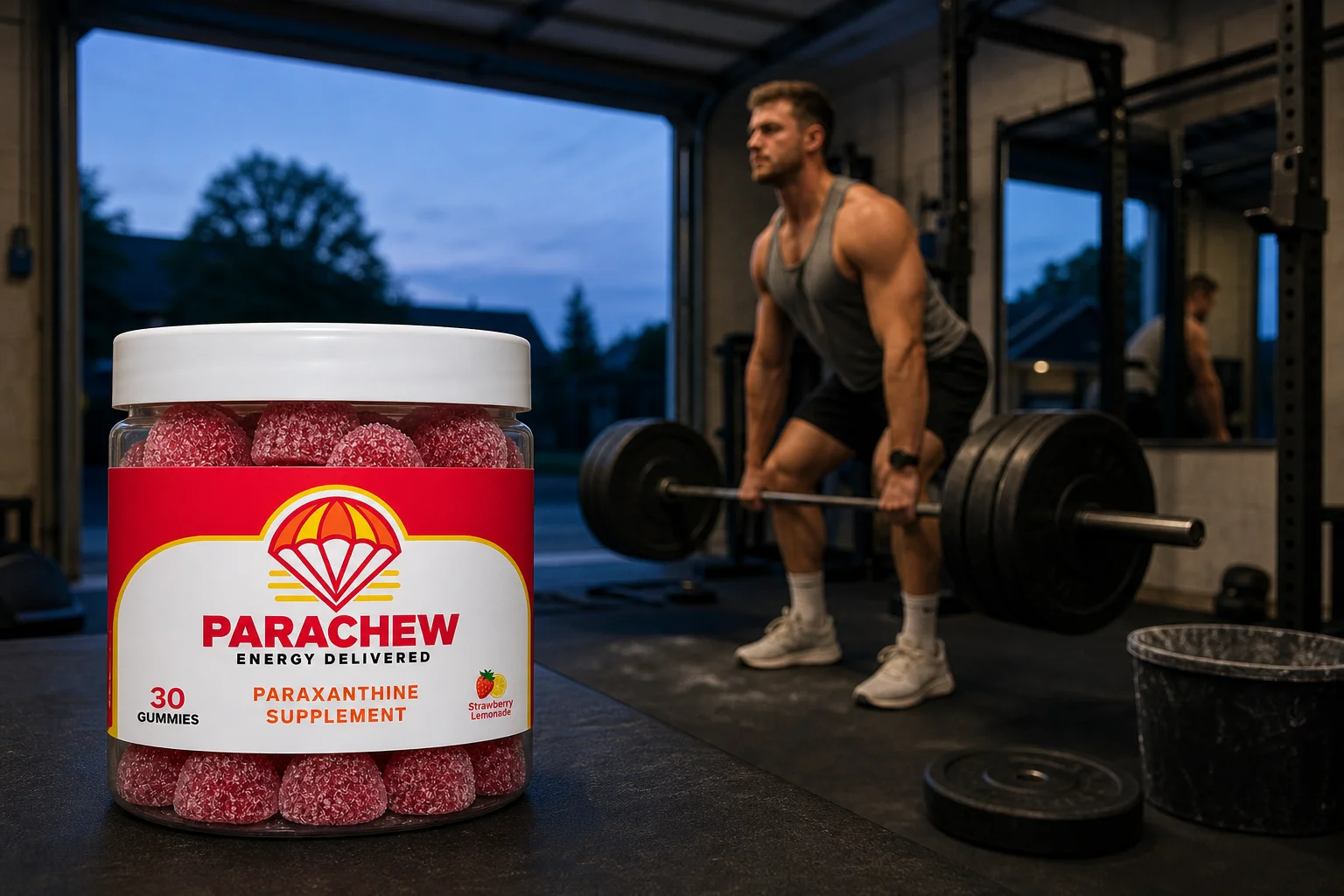
Paraxanthine before a fasted workout does not spike cortisol the way a cup of coffee does, which is exactly why athletes are trading their morning coffee for Parachew energy gummies before training on an empty stomach. Here is what the research on this caffeine metabolite actually shows about fasted performance.
By Parachew Team, McAb Nutra
What Happens to Cortisol During a Fasted Workout
Training before you eat asks more of your adrenal system than training after a meal. Blood glucose is low, glycogen stores are already tapped from the overnight fast, and your body leans on cortisol to mobilize stored energy for the workout ahead. That is normal physiology, not a problem to worry about. The issue shows up when people stack a jittery pre-workout or reach for one of the high-dose energy drinks on the market, both of which layer extra stimulants on top of an already elevated cortisol response. The result is a wired, anxious feeling that has nothing to do with the workout itself and everything to do with how much caffeine hit the bloodstream at once.
This is where the conversation usually turns to paraxanthine caffeine differences, since the two compounds handle that adrenal load in very different ways, and why a growing number of fasted athletes reach for a steadier drink instead of a double shot.
Paraxanthine Before a Fasted Workout: What Your Body Actually Does With It
Paraxanthine is not a synthetic add-on. It is the primary metabolite your liver produces when it breaks down caffeine, and understanding how the human body handles that process explains why it is actually responsible for most of the alertness and focus people credit to their morning coffee in the first place. The caffeine paraxanthine pathway starts the moment caffeine hits liver enzymes, and within a couple of hours paraxanthine is doing the heavy lifting: blocking adenosine receptors in the brain so the fatigue signal that adenosine normally sends gets muted.
Taking paraxanthine before a fasted workout means you get that adenosine block, and the mental clarity that comes with it, without asking your adrenal glands to also process a full dose of raw caffeine. For anyone who has felt their heart race during a fasted lifting session, that distinction matters. If you want the exact per-gummy dose, the Parachew product page breaks down the full paraxanthine amount alongside how it is meant to be used before training.
Paraxanthine Caffeine Compared: Why the Crash Doesn't Follow You Into Training
Athletes have long compared caffeine and paraxanthine's effect on training, especially the cortisol and anxiety response during a fasted session. Caffeine triggers a sharper adrenal spike because it hits every adenosine receptor at once and stays active in the body for hours, which is why a strong cup of coffee before a fasted run can leave someone feeling shaky by the second mile. Paraxanthine reaches those same receptors more selectively, so the stimulation feels steady instead of spiked.
Paraxanthine also sits in the same methylxanthine family as theobromine theophylline and caffeine itself, but it is the one your body actually favors for clean alertness once caffeine has been metabolized. That family relationship explains why people who switch from a caffeine pre-workout drink to Parachew notice the same lift in energy and cognitive sharpness, just without the wired, anxious edge that caffeine is known for. None of the jitters, sleep disruption, or crash that sometimes get blamed on stimulants come from paraxanthine itself, those are caffeine's signature effects, and paraxanthine before a fasted workout is specifically how people sidestep them.
That difference is not limited to workout mornings, either. The same gentler curve shows up across a full day of use, not just during a single training session.

Fat Loss, Focus, and Performance on an Empty Stomach
Fasted training is popular specifically because of what it can do for fat loss. Training in a low-insulin, low-glycogen state pushes the body to pull more from fat stores for fuel, and a clean source of alertness can help someone actually complete that session instead of cutting it short from low energy. This is one of the more practical reasons people reach for paraxanthine before a fasted workout instead of skipping stimulation altogether or risking the caffeine crash mid-set.
Beyond fat metabolism, paraxanthine's adenosine receptor activity supports the kind of focus and reaction time that matters when you are lifting heavy or pacing an interval on no food. Reaction time and mental sharpness both lean on the same brain pathways that caffeine affects, so a fasted athlete gets the cognitive edge without the adrenal spike that can make heavy training on an empty stomach feel worse instead of better.
For athletes building an entire pre-workout routine around this compound, the same focus benefits carry directly into training sessions, not just the quiet mental clarity beforehand. That pattern shows up clearly in pre-workout use cases built around exercise specifically.
Doses, Timing, and Side Effects Before You Train Fasted
Each Parachew gummy contains 200mg of paraxanthine, and the label caps daily intake at 400mg, or two gummies, so there is no need to stack a second dose for a fasted session. Taking one gummy roughly 20 to 30 minutes before training gives the compound time to engage adenosine receptors before you start warming up, and most fasted training doses stay well under that daily ceiling.
On the question of side effects, the research on paraxanthine is reassuring rather than alarming. Because it produces a steadier receptor response than caffeine, it is not associated with the jitters, anxiety, or afternoon crash that caffeine can cause, and it has not been shown to disrupt sleep the way a late caffeine dose does. That makes it a reasonable choice for someone training fasted in the early morning who still wants to sleep normally that night and stay on track with long-term health goals. As with any supplement, staying within the labeled amount is the simple way to keep the experience positive, and long-term users report the same clean energy pattern session after session, whether their fasted drink of choice used to be black coffee or a can from the energy drinks aisle.
Making the switch does not have to happen overnight. Swapping in a Parachew gummy for one caffeinated drink at a time, rather than cutting coffee out cold, gives the body room to adjust and pairs naturally with easing into a fasted training routine.
Frequently Asked Questions
Does paraxanthine before a fasted workout raise cortisol like coffee does? No. Paraxanthine engages adenosine receptors more selectively than caffeine, so it supports alertness during a fasted session without the same sharp adrenal spike that a strong cup of coffee can trigger. Most people describe the energy as steady rather than jittery, which is part of why it has become a common pre-workout choice for fasted training.
How many Parachew gummies should I take before training fasted? One gummy, taken about 20 to 30 minutes before your workout, delivers 200mg of paraxanthine, which is enough for most fasted training sessions. The label caps daily intake at two gummies, or 400mg, so there is no need to double up even on a harder training day.
Will paraxanthine before a fasted workout affect my sleep? Paraxanthine has a shorter, steadier presence in the body than caffeine and has not been shown to disrupt sleep the way a late caffeine dose can. Training in an early fasted window and taking your gummy that morning keeps the compound well clear of your system by bedtime.
Does paraxanthine support fat loss during fasted training? Paraxanthine itself is not a fat burner, but the alertness it provides can help someone complete a full fasted session, which is where the fat loss benefit of fasted training actually comes from. Pairing steady energy with a workout you can finish tends to matter more than any single supplement.
Get Your Fasted Training Routine Dialed In
Fasted workouts do not have to mean choosing between skipping energy support and risking a caffeine spike. If you are ready to build paraxanthine into your training routine, reach Parachew support with any questions about dosing or timing for your specific schedule.


