
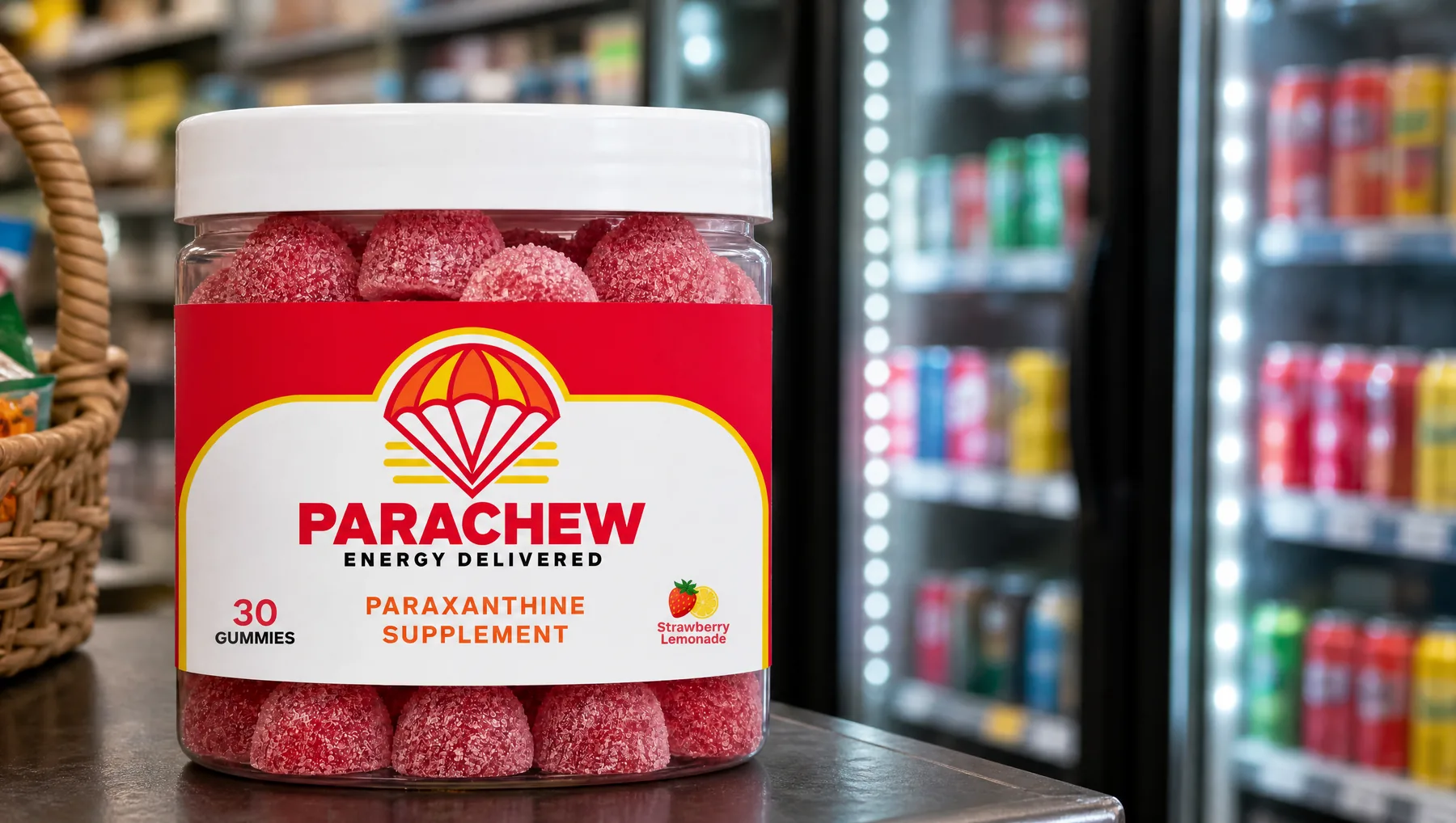
When comparing paraxanthine energy drinks vs Red Bull and Celsius, the deciding factor is what each formula does to your body after the energy boost fades. Paraxanthine delivers clean cognitive lift and endurance without triggering blood pressure spikes or the crash that follows caffeine, and Parachew energy gummies are built around that exact molecule.
By Parachew Team, McAb Nutra
What Is Paraxanthine and Why the Comparison Matters
The conversation around paraxanthine energy drinks vs Red Bull and Celsius starts with one metabolic fact: when your body processes caffeine, the liver converts roughly 84 percent of it into paraxanthine. That means the compound responsible for sharper focus, faster reaction time, and extended endurance is largely paraxanthine doing the work, not caffeine itself.
Where caffeine also produces theophylline and theobromine as metabolites, those additional methylxanthines contribute to the jitters, elevated blood pressure, and adenosine rebound that make high-caffeine products hard to use every single day without cycling off. Paraxanthine sidesteps those co-passengers structurally, not through dosing tricks.
Dr. Patrick Mumford and colleagues published a direct comparison in the Journal of the International Society of Sports Nutrition (2022), finding that purified paraxanthine improved cognitive performance measures at lower reported side effects than an equivalent dose of caffeine. For athletes and high-performers who rely on a daily stimulant for focus and output, that finding reframes the entire energy drink category.
Red Bull: Ingredients, Added Sugar, and What You Are Actually Getting
A standard 8.4-ounce Red Bull contains 80mg of caffeine per serving, 27g of added sugar, and 110 calories. Red Bull Sugar Free retains the 80mg caffeine per can but replaces the added sugar with aspartame and acesulfame-K.
The added sugar in original Red Bull matters for athletes tracking macros or managing blood glucose. The energy boost from Red Bull peaks quickly because of the combined sugar and caffeine spike, then drops off sharply. That pattern defines the crash most performance users are working to avoid.
Red Bull contains no green tea extract and no adaptogens. The taurine content, listed at 1000mg per can, is a prominent marketing point, but published research has not demonstrated a reliable standalone performance effect from taurine at that dose in a single serving (Gutiérrez-Hellín & Del Coso, Nutrients, 2020).
On blood pressure, a 2019 systematic review published in the American Journal of Medicine found that consuming a single energy drink raised average systolic blood pressure by 3.5 mmHg. For someone consuming multiple Red Bulls per day, that pressure effect compounds across each serving.
Celsius Energy Drink: High Caffeine, Green Tea, and the Trade-Off
Celsius has built one of the fastest-growing energy drink brands in gym retail by leaning into clean-label positioning. A 12-ounce Celsius energy drink contains 200mg of caffeine per can, green tea extract (EGCG), guarana seed extract, ginger root, and zero added sugar.
The green tea EGCG is a genuine functional addition. A 2013 meta-analysis in the International Journal of Obesity (Hursel et al.) confirmed that green tea catechins enhance fat oxidation during exercise at effective doses, supporting the thermogenic positioning Celsius markets.
At 200mg caffeine per can, a single Celsius energy drink delivers more stimulant than a typical double espresso. For someone who starts the morning with coffee before adding a Celsius before a workout, total caffeine per day can easily exceed 500mg. The FDA has commonly cited 400mg per day as the threshold for healthy adults, and Celsius itself recommends one can per day for new users, which acknowledges the stimulant ceiling.
The side effects that come with any high-caffeine product remain fully in play with Celsius: jitteriness at high doses, blood pressure changes, possible sleep disruption if consumed late in the day, and tolerance buildup over sustained use. Zero added sugar removes one concern but does not address the core stimulant profile.
Paraxanthine Energy Drinks vs Red Bull and Celsius: Head-to-Head on What Matters
When setting paraxanthine energy drinks vs Red Bull and Celsius side by side on the metrics that matter for daily performance users, a few clear differences emerge.
Caffeine dependency: Red Bull and Celsius both rely on caffeine, which builds tolerance and typically requires cycling off to restore sensitivity. Paraxanthine does not trigger the same adenosine receptor feedback loop, so the tolerance dynamic is fundamentally different.
Blood pressure: Caffeine-based drinks produce acute blood pressure elevation that compounds across daily servings. Research on paraxanthine shows it does not generate the same cardiovascular stimulation at equivalent cognitive-enhancement doses (Mumford et al., 2022).
Added sugar: Original Red Bull carries 27g of added sugar per can. Both Celsius and Parachew gummies contain no added sugar.
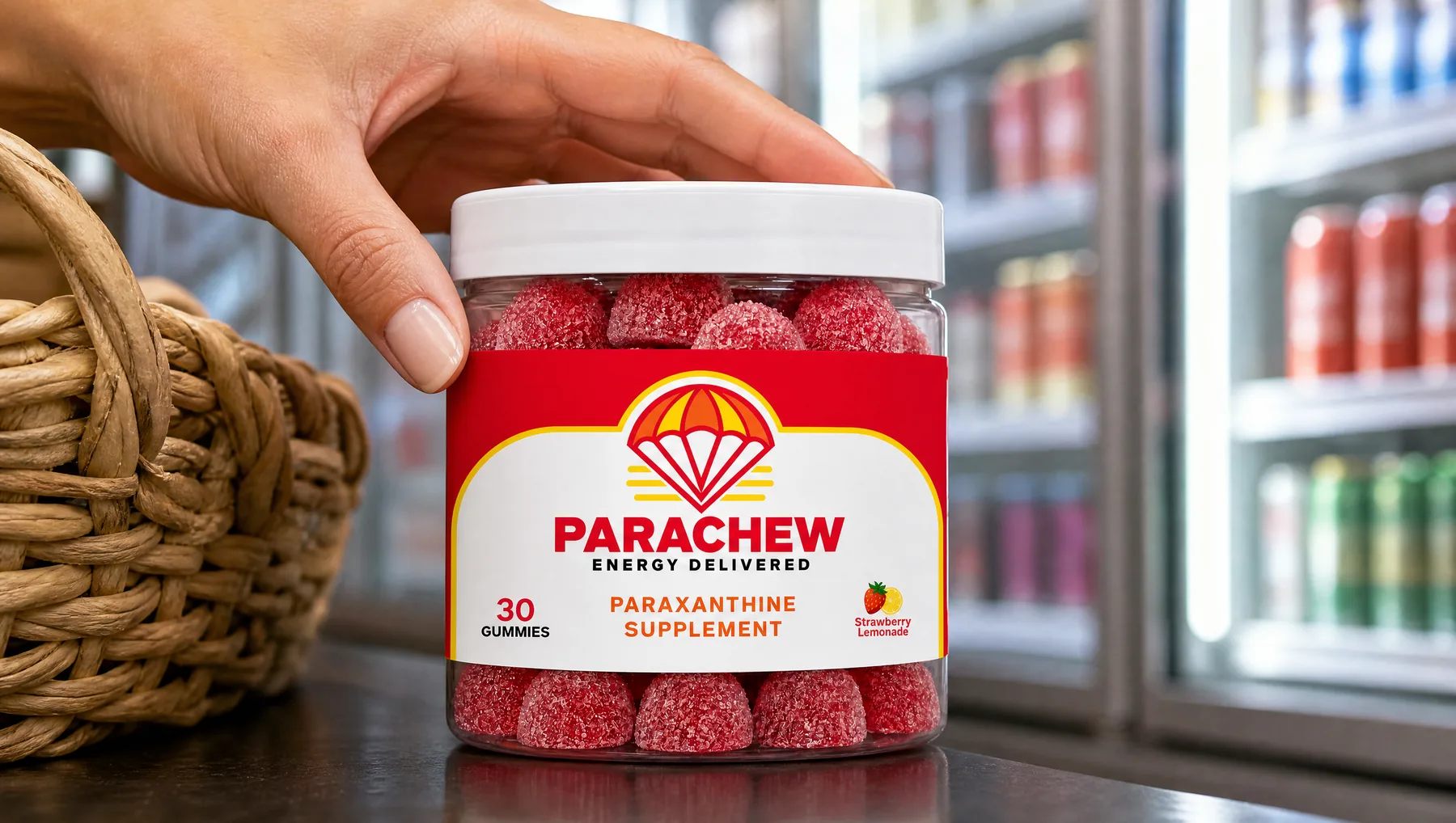
Caffeine per serving: Red Bull delivers 80mg caffeine per serving. Celsius delivers 200mg caffeine per can. Parachew delivers 200mg of purified paraxanthine per gummy with zero caffeine, and the label sets a daily maximum of 400mg per day (two gummies).
Side effects: The side effects most commonly attributed to energy drinks, including jitters, elevated blood pressure, cortisol stimulation, and the post-caffeine crash, are characteristics of caffeine's full metabolite profile. Paraxanthine is the fraction that produces focus and performance without those consequences, and the Parachew gummy formula delivers it in a precise, clean dose.
Frequently Asked Questions
How much caffeine per serving does Red Bull contain compared to Celsius?
Original Red Bull contains 80mg of caffeine per 8.4-ounce serving. Celsius contains 200mg of caffeine per 12-ounce can. Parachew gummies contain zero caffeine. Each gummy delivers 200mg of purified paraxanthine, with a recommended maximum of 400mg per day (two gummies per label guidance).
Does Celsius have added sugar?
Standard Celsius energy drink formulas contain zero added sugar. Original Red Bull contains 27g of added sugar per 8.4-ounce can. Parachew gummies also contain no added sugar, so the performance comparison between Celsius and Parachew comes down to caffeine versus paraxanthine as the active ingredient.
How does paraxanthine affect blood pressure compared to caffeine?
A 2019 systematic review in the American Journal of Medicine identified caffeine as the primary driver of blood pressure increases following single energy drink servings. Research by Mumford et al. in the Journal of the International Society of Sports Nutrition (2022) shows paraxanthine delivers comparable cognitive benefits with a more favorable cardiovascular profile, making it a cleaner daily option for athletes monitoring cardiovascular load.
Is green tea extract in Celsius enough to offset the caffeine side effects?
Celsius does contain green tea extract, which provides real thermogenic and antioxidant benefits via EGCG. However, 200mg of caffeine per can remains the primary active ingredient, and the side effects tied to high caffeine consumption apply regardless of EGCG content. Green tea extract adds genuine value but does not neutralize the core stimulant profile.
How many Parachew gummies can I take per day?
The Parachew label recommends a maximum of two gummies per day, delivering 400mg of paraxanthine per day. This aligns with the thresholds used in clinical performance research. New users should start with one gummy per day to assess individual response before scaling to the full daily dose.
Choose Your Energy Molecule With the Right Information
If you have been cycling through Red Bull and Celsius looking for the energy boost without the side effects that come with caffeine, the clean energy alternative already exists. For questions about the science, dosing, or how paraxanthine fits into your daily performance routine, contact the Parachew team directly.


