

Understanding why stacking paraxanthine and caffeine together is usually a mistake starts with how both compounds occupy the same adenosine receptors. Stacking them does not double your focus. It compounds stimulant load, raising blood pressure and nervous system strain that Parachew energy gummies are specifically formulated to help you sidestep.
By Parachew Team, McAb Nutra
How Paraxanthine and Caffeine Target the Same Adenosine Receptors
Caffeine paraxanthine share a direct biochemical lineage. When you drink coffee, tea, or a caffeinated pre-workout supplement, your liver metabolizes roughly 84% of that caffeine into paraxanthine, making it the dominant active metabolite by concentration. The remainder converts to theobromine and theophylline, two other xanthine compounds with distinct physiological profiles.
All three metabolites, caffeine included, block adenosine receptors in the brain. Adenosine is the compound that accumulates throughout your waking hours and signals fatigue. When any xanthine occupies those receptors, the fatigue signal is suppressed and alertness rises. The paraxanthine caffeine distinction matters here: research by Sherwood and colleagues published in Nutrients (2021, doi: 10.3390/nu13020405) showed paraxanthine produced significantly fewer cardiovascular side effects compared to caffeine at matched doses, with participants reporting lower anxiety and more sustained cognitive clarity.
Because caffeine naturally converts to paraxanthine in your body, adding an isolated paraxanthine product on top of caffeinated drinks means both compounds compete for the same receptor binding sites simultaneously, with no meaningful additive benefit.
Why Stacking Paraxanthine and Caffeine Together Is Usually a Mistake for Performance
This is exactly why stacking paraxanthine and caffeine together is usually a mistake when peak output is the goal. Once adenosine receptors approach saturation, additional stimulant molecules do not produce more alertness. Instead, they push nervous system activation further into the stress-hormone response range: elevated norepinephrine, accelerated heart rate, higher cortisol.
The effects caffeine produces in this overstimulated range work against performance. Mental clarity degrades into scattered, wired focus. Cognitive output drops even as you feel increasingly activated. Stacking does not give you 2x the benefit from two compounds. It pushes you past the receptor ceiling and into diminishing returns.
Enfinity, the trademarked paraxanthine ingredient used in clinical research applications, was designed as a standalone caffeine replacement, not a supplement add-on. Paraxanthine, paraxanthine specifically, performs best at a calibrated dose window rather than layered on top of additional caffeine sources.
What Stacking Does to Blood Pressure and Nervous System Load
Blood pressure is where the stacking risk becomes concrete. Caffeine is a well-documented vasoconstrictive agent that temporarily narrows blood vessels, producing an acute blood pressure increase. Paraxanthine not producing this cardiovascular response is one of its most cited advantages over caffeine in the published literature.
When you stack both, you reintroduce the blood pressure elevation that using paraxanthine as a standalone was designed to help avoid. The nervous system processes combined xanthine stimulation as cumulative load. A 200mg paraxanthine gummy on top of two cups of coffee pushes total receptor occupancy beyond what any single-compound dose covers.
Arnaud's pharmacokinetic analysis (Clinical Pharmacokinetics, 1993) confirmed caffeine carries a five to six hour half-life, and paraxanthine's half-life is nearly identical. Both compounds stay active in your blood simultaneously for most of your waking day, compounding their effects on the nervous system with no natural clearing window between doses.
How Paraxanthine Compares to Caffeine as a Direct Replacement
When researchers compared caffeine against paraxanthine in controlled performance trials, the metabolite consistently delivered equivalent or improved outcomes on the metrics that matter. The Sherwood et al. Nutrients (2021) trial showed reaction time, mood, and sustained focus all improved with paraxanthine, with performance results that matched compared caffeine conditions but without the post-dose crash or anxiety response.
The effects paraxanthine delivers on alertness and focus are the same effects that caffeine has always been providing through its primary metabolite. Caffeine is a delivery vehicle. Paraxanthine is the active compound doing the cognitive work once metabolism runs its course.
Paraxanthine not stacking with caffeine is the cleaner strategy. Like caffeine, paraxanthine occupies adenosine receptors and increases norepinephrine activity, but without the cardiovascular side effects and sleep disruption that high-dose caffeine intake is known to cause. Choosing paraxanthine as a replacement preserves all the benefits while removing the variables that undermine sleep quality and sustained performance.
The Side Effects That Emerge When You Overlap Both Compounds
The side effects of stacking are recognizable to anyone who has overdone caffeine. They include elevated heart rate, jaw tension, increased anxiety, a frantic rather than focused mental state, and reduced output quality despite feeling activated. These are not side effects associated with paraxanthine when used alone at recommended doses.
They are side effects caffeine is known to produce at high cumulative loads, and they appear when combined stimulant intake crosses the threshold that paraxanthine's cleaner profile was specifically designed to help you avoid. The compound is not the problem. The combined load is.
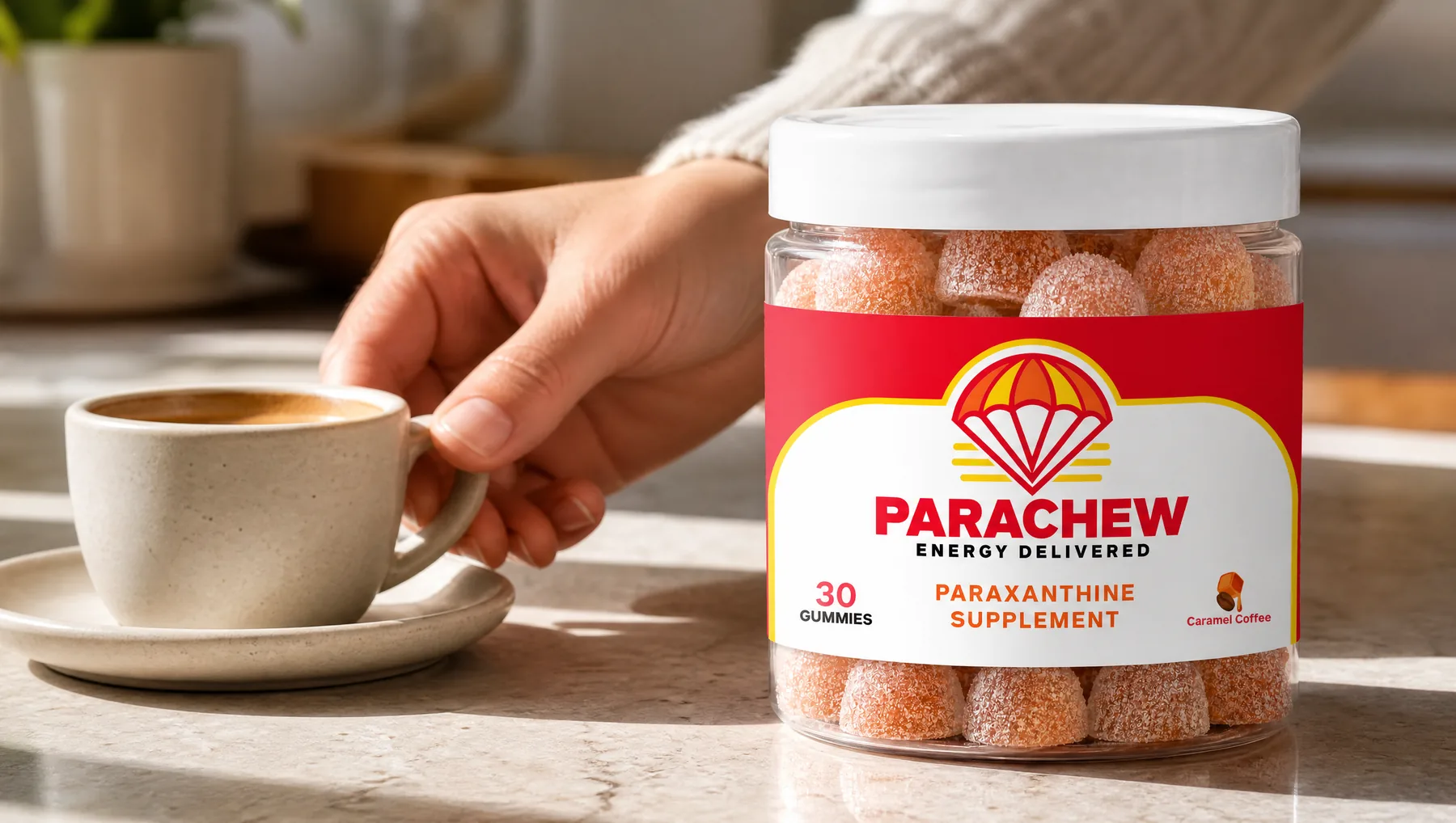
The Parachew gummy formula delivers 200mg of paraxanthine per gummy, with a daily maximum of 400mg (two gummies). That ceiling reflects the dose range validated in clinical research. Taking a single gummy on top of three cups of coffee effectively exceeds the studied performance window by stacking xanthines from multiple sources simultaneously.
Frequently Asked Questions
Can I drink coffee if I take Parachew?
If you drink coffee regularly, the caffeine in that coffee is already metabolizing to paraxanthine inside your body. Adding a Parachew gummy on top of a full cup of coffee means you are stacking stimulant load at the adenosine receptor level. The better approach is to replace your morning coffee with Parachew, or to time the gummy well away from caffeinated drinks to avoid overlap and feel the full benefit.
Does paraxanthine raise blood pressure?
Research shows paraxanthine produces significantly less cardiovascular response than caffeine at equivalent doses. Sherwood et al. (Nutrients, 2021) found no statistically significant increase in blood pressure from paraxanthine in clinical testing. Caffeine, by contrast, is a well-documented vasoconstrictor. Paraxanthine not triggering the same blood pressure response is one of the primary reasons it is studied as a safer, performance-focused alternative to caffeine.
What are the main effects caffeine metabolites have on cognition?
The three primary caffeine metabolites are paraxanthine, theobromine, and theophylline. Theobromine theophylline contribute mild stimulation and bronchodilation. Paraxanthine is responsible for the alertness, focus, and cognitive uplift that coffee and caffeine products are known for. Because paraxanthine is already the dominant active metabolite, isolating it gives you the cognitive benefits without the broader stimulant load of unmetabolized caffeine.
Is paraxanthine safe for daily use?
The available clinical evidence supports paraxanthine as well-tolerated at studied doses, with better safety markers than caffeine on cardiovascular and anxiety measures. Daily use at the recommended dose range of 200 to 400mg (one to two Parachew gummies) stays within the range evaluated in published research. As with any stimulant compound, avoiding stacking with additional caffeine sources maintains the best product response and safety profile over time.
What does Enfinity mean on a supplement label?
Enfinity is the trademarked name for research-grade, pharmaceutical-quality paraxanthine. When you see Enfinity on a label, it indicates the product uses the tested and standardized form of paraxanthine, not a generic compound. Parachew uses Enfinity to ensure dose and purity align with the clinical data showing paraxanthine advantages over caffeine in focus and energy, with fewer side effects than caffeine produces at comparable doses.
Choose the Compound That Works Without the Overlap
Paraxanthine is most effective when it operates as a standalone, not layered onto caffeine intake. If you want the energy and focus that high-performers depend on without the side effects of stacking, explore Parachew paraxanthine gummies to see the full formula, dosing details, and the research behind the product.


