
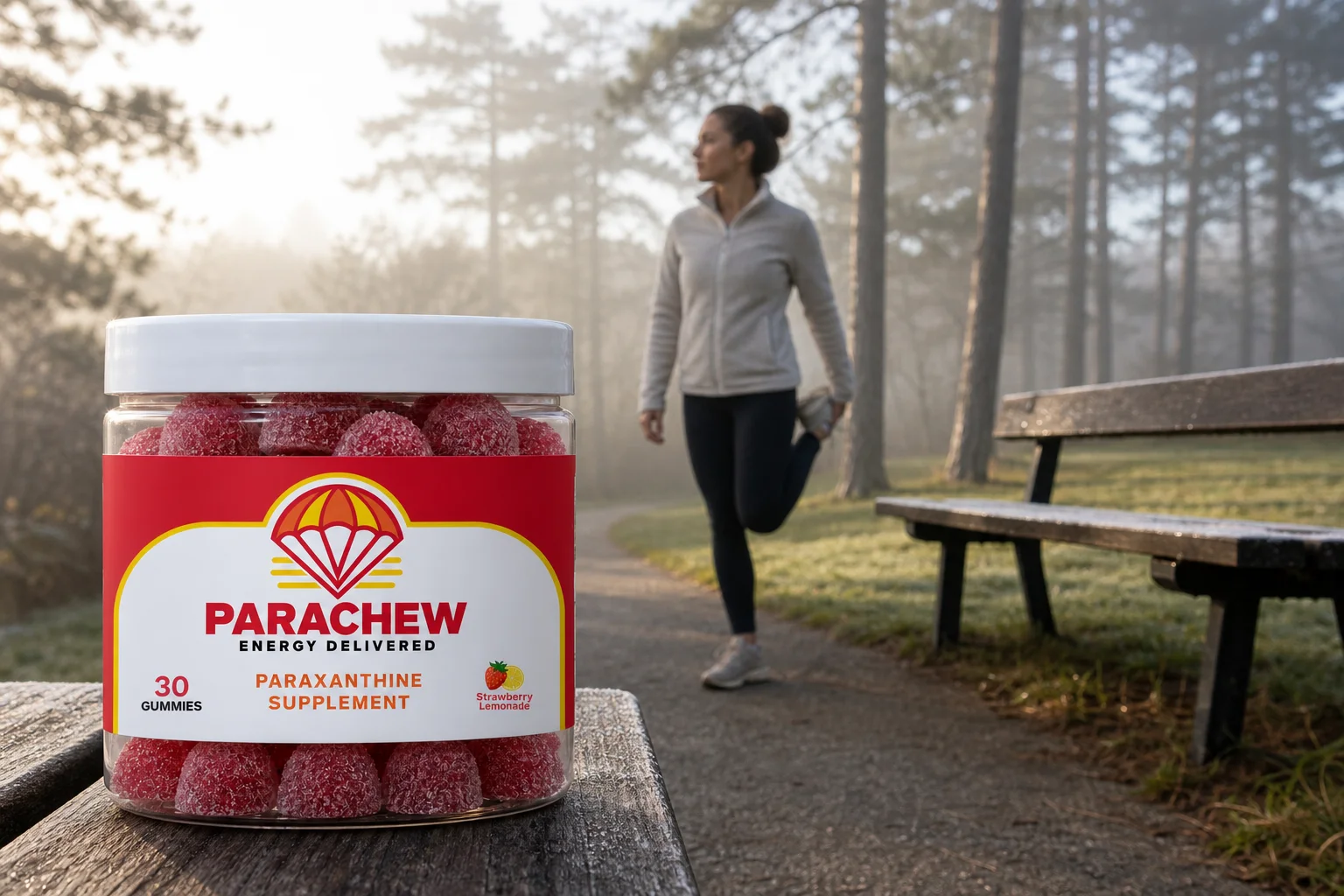
If you're a CYP1A2 slow metabolizer who gets wired and anxious after coffee, paraxanthine and anxiety disorders intersect in an important way: this caffeine metabolite delivers clean energy without triggering the same anxious spike. Parachew paraxanthine gummies give slow metabolizers a smoother alternative built around paraxanthine's distinct nervous system profile.
By Parachew Team, McAb Nutra
Understanding CYP1A2 and Slow Caffeine Metabolism
CYP1A2 is the liver enzyme responsible for breaking down caffeine, and it converts the large majority of ingested caffeine into paraxanthine. Genetic variation in the CYP1A2 gene means some people process caffeine quickly while others, often called slow metabolizers, take much longer to clear it from their system. For slow metabolizers, caffeine lingers, and the effects caffeine produces, elevated heart rate, restlessness, and a wired feeling, stick around far longer than they do for fast metabolizers.
This matters because slow metabolism is one of the more consistent predictors of caffeine-related anxiety symptoms. The longer caffeine circulates, the longer it keeps stimulating the central nervous system before your body converts it into paraxanthine and other metabolites. For CYP1A2 slow metabolizers, that lingering caffeine is precisely what tends to trigger anxious, on-edge symptoms. If coffee makes you jittery or unable to wind down at night, CYP1A2 slow metabolism is a plausible reason why.
Why Paraxanthine and Anxiety Disorders Are Linked at the Receptor Level
Both caffeine and paraxanthine work primarily by blocking adenosine receptors in the brain, which is what produces the alertness and energy people associate with either compound. But the way each molecule binds to those adenosine receptors differs, and that difference shapes how the nervous system responds.
Caffeine's broader receptor binding pattern, combined with its longer half-life in slow metabolizers, is associated with the anxious, over-stimulated feeling many people describe as jitters. Paraxanthine, by contrast, is the metabolite caffeine leaves behind once your liver has already done the work of processing it, and research suggests it produces a cleaner stimulant profile with less of the anxiety-provoking activity tied to caffeine itself. Some research also points to paraxanthine supporting dopamine activity in ways that favor mood and cognitive function without the anxious edge. Because paraxanthine already forms naturally in the body every time caffeine is metabolized, it doesn't need to clear the same bar a genuinely novel compound would; manufacturers generally rely on generally recognized as safe (GRAS) status, built on that existing presence in ordinary metabolism, rather than a lengthy novel-ingredient review process. That distinction between an already-circulating metabolite and a synthetic newcomer is central to paraxanthine's regulatory status as a supplement ingredient.
For someone managing an anxiety disorder or simply anxiety-prone tendencies, this distinction is the whole reason paraxanthine and anxiety disorders come up together in the first place: paraxanthine doesn't avoid anxiety by doing less, it engages the same energizing pathways more cleanly.
Paraxanthine vs Caffeine: Why the Difference Matters for Anxious Minds
When researchers compared caffeine and paraxanthine head-to-head, a pattern emerged: paraxanthine consistently produced fewer of the side effects people associate with caffeine, including anxious activation and the crash that follows once caffeine wears off. The paraxanthine caffeine comparison keeps surfacing in performance and nootropic circles for exactly this reason, people want the mental lift without the downside.

Part of this comes down to timing and specificity. Caffeine hits multiple receptor systems fast and hard, which is efficient for a quick jolt but rough on a nervous system that's already sensitive to stimulation. The caffeine paraxanthine conversion process that happens naturally in your liver essentially refines that stimulation, paraxanthine is what caffeine becomes once the more erratic elements of its activity have settled. Choosing paraxanthine directly, rather than waiting for your body to convert caffeine on its own timeline, is especially useful if you're a slow metabolizer whose CYP1A2 enzyme takes its time doing that conversion.
This is also where coffee falls short for anxiety-prone slow metabolizers. A cup of coffee delivers a large, immediate dose of caffeine and lets your body sort out the rest, which for a slow metabolizer means hours of lingering stimulation. Paraxanthine sidesteps that lag entirely.
What the Research Says About Paraxanthine and the Central Nervous System
Paraxanthine has been studied as a central nervous system stimulant in its own right, separate from its role as a caffeine byproduct. Human studies on paraxanthine, though still more limited than the decades of caffeine research, have generally found that it is associated with increased alertness and supports cognitive function at doses comparable to a standard cup of coffee, without producing the same magnitude of anxious, over-aroused activity that higher caffeine doses can bring in sensitive individuals.
Researchers have also looked at how paraxanthine affects dopamine signaling, since dopamine plays a meaningful role in mood, motivation, and focus. The working theory is that paraxanthine's more selective activity at adenosine receptors allows it to support dopamine-related alertness without over-driving the broader nervous system the way caffeine's less selective binding can. That same selectivity is what draws athletes to paraxanthine specifically: a stimulant that pushes heart rate and perceived exertion higher than an effort actually calls for works against performance rather than for it, and paraxanthine's narrower receptor activity tends to deliver alertness and focus without as much of that overshoot. The National Institutes of Health and other research bodies continue to study caffeine metabolites like paraxanthine for this reason, as interest in cleaner-feeling stimulants grows among athletes and high performers exploring paraxanthine and athletic performance as a pre-workout alternative.
Practical Guidance for Slow Metabolizers Considering Paraxanthine
If you're a confirmed or suspected CYP1A2 slow metabolizer looking to swap caffeine for a cleaner-feeling stimulant, starting with a measured dose matters. Each gummy in the Parachew gummy formula delivers 200mg of paraxanthine, and the label caps daily intake at 400mg, or two gummies, which gives slow metabolizers a controlled, repeatable dose rather than the variable hit they'd get from coffee or energy drinks.
Because paraxanthine is processed differently than caffeine itself, slow metabolizers often notice that two gummies feel more consistent day to day than a comparable amount of coffee, whose effects can compound unpredictably depending on how much caffeine is still circulating from earlier in the day. That fast/slow split traces back to a specific variation in the CYP1A2 gene: one version keeps enzyme activity high and stable, while the more common slow-acting version lets caffeine, and the stimulation that comes with it, circulate for hours longer than it does in a fast metabolizer. Understanding where you fall on the CYP1A2 metabolizer genetics spectrum is mostly a matter of noticing your own pattern: consistent jitteriness or restless sleep after an ordinary cup of coffee is a fairly reliable behavioral signal, even without formal genetic testing. Timing your dose consistently, especially if you work irregular hours, also helps: the goal isn't matching a specific clock time but keeping a steady gap between your dose and your intended sleep window, since alertness effects, even paraxanthine's comparatively gentle ones, work against rest if timed too close to lights-out. For rotating-shift workers whose sleep window moves every few days, that gap has to shift with it rather than staying fixed to a calendar time. Planning a rotating-shift dosing schedule around your actual sleep pattern, not the clock, keeps that consistency intact even as shifts rotate.
Anyone managing a diagnosed anxiety disorder should still loop in a healthcare provider before adding any stimulant, including paraxanthine, to their routine. That's standard practice for any supplement, not a red flag specific to paraxanthine, which research continues to support as the gentler option compared to caffeine on its own.
Frequently Asked Questions
Can people with anxiety disorders safely try paraxanthine? Many people managing anxiety look at paraxanthine and anxiety disorders together because paraxanthine produces alertness without the same anxious over-stimulation associated with caffeine. It's still a stimulant, so anyone with a diagnosed anxiety disorder should check with a healthcare provider first, but its cleaner receptor profile makes it a reasonable option to discuss.
Why does caffeine cause more anxiety in slow metabolizers than paraxanthine does? CYP1A2 slow metabolizers clear caffeine slowly, so it lingers and keeps stimulating the central nervous system for hours. Paraxanthine, the metabolite caffeine converts into, has a more selective effect on adenosine receptors and doesn't build up the same way, which is why it tends to feel calmer even at an equivalent dose.
What's the difference between paraxanthine and caffeine for anxious people? Caffeine binds broadly across multiple receptor systems, which can feel jittery and anxious, especially for slow metabolizers. Paraxanthine engages a narrower, more selective set of adenosine receptors, delivering similar alertness with less of the over-aroused activity that caffeine's side effects are known for.
How much paraxanthine is safe to take daily? Each Parachew gummy contains 200mg of paraxanthine, and the label sets a daily maximum of 400mg, or two gummies. That dose is designed to give slow metabolizers a controlled, predictable amount of stimulation without needing to guess how much caffeine they're actually absorbing from coffee or energy drinks.
Does paraxanthine affect cognitive function differently than caffeine? Both compounds support alertness and cognitive function, but research suggests paraxanthine does so with less of the scattered, anxious activity that higher caffeine doses can produce in sensitive individuals. For CYP1A2 slow metabolizers in particular, that translates to steadier focus without the anxious edge that caffeine sometimes brings.
Feel Alert Without the Anxious Edge
If you're a CYP1A2 slow metabolizer ready to trade caffeine's unpredictable stimulation for something steadier, paraxanthine offers a research-backed path forward. Contact the Parachew team to talk through dosing for your specific metabolism.


