
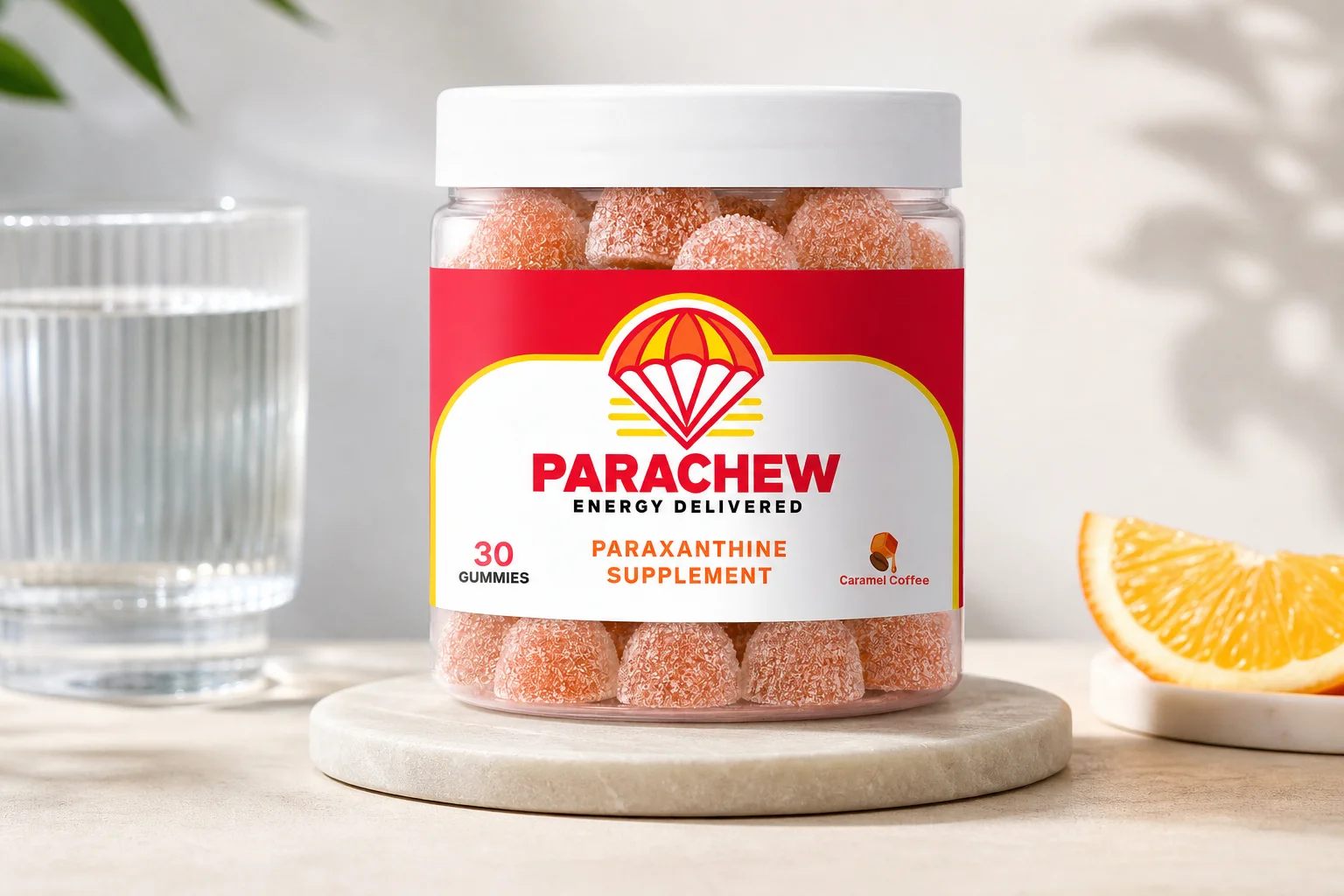
Paraxanthine is not FDA approved as a drug, nor does it need to be. It holds self-affirmed GRAS (Generally Recognized as Safe) status as a dietary ingredient, making it legally marketable in the U.S. For buyers asking is paraxanthine fda approved in products like Parachew paraxanthine gummies, the regulatory answer is clear: it qualifies.
By Parachew Team, McAb Nutra
What "FDA Approved" Actually Means for Supplement Ingredients
The phrase "FDA approved" has a specific legal meaning: it applies to pharmaceutical drugs that have cleared the FDA's New Drug Application process, a clinical pipeline that can take a decade and hundreds of millions of dollars. Dietary supplements follow an entirely different regulatory framework.
Under the Dietary Supplement Health and Education Act (DSHEA) of 1994, supplements do not require pre-market FDA approval. Manufacturers are responsible for ensuring their products are safe and accurately labeled before sale. The relevant compliance benchmark for a dietary ingredient is either a New Dietary Ingredient (NDI) notification submitted to the FDA, or GRAS status. So when people ask is paraxanthine fda approved, the more precise question is: does it meet the legal standard for dietary supplement use in the United States? The answer is yes.
How Paraxanthine Earned GRAS Status
GRAS, or Generally Recognized as Safe, is the FDA's framework for establishing that a substance is safe for its intended use in food and dietary products. GRAS can be established through formal FDA notification or through self-affirmation based on scientific consensus among qualified independent experts.
Paraxanthine, marketed commercially as enfinity by Compound Solutions, achieved self-affirmed GRAS status supported by a body of published safety research. The paraxanthine GRAS status documentation required a panel of independent scientific experts to conclude unanimously that the ingredient is safe at intended dose levels. That conclusion is documented and maintained on file under FDA guidance.
This process drew on multiple peer-reviewed studies examining paraxanthine's pharmacokinetics, tolerability, and safety margin in adult populations. The regulatory standing is well-supported, and paraxanthine continues to be used in compliant dietary supplements sold legally across the United States.
The Paraxanthine Caffeine Connection and Its Role in the Safety Record
The paraxanthine caffeine relationship is central to understanding why this ingredient has an unusually strong safety foundation for a relatively new standalone compound. Paraxanthine is the primary metabolite caffeine produces in the human body. When you consume caffeine, your liver converts roughly 80 percent of it into paraxanthine via the enzyme CYP1A2.
This metabolic relationship means decades of caffeine research indirectly document paraxanthine's behavior in human biology. Researchers building the GRAS case could reference an existing literature base rather than starting from zero. A 2021 study by Yoo et al., published in the Journal of the International Society of Sports Nutrition, evaluated paraxanthine's acute safety profile against caffeine in healthy adults, finding comparable cognitive and physical performance benefits with a notably cleaner tolerability record. That kind of independent clinical work strengthens the regulatory foundation for any dietary ingredient.
Side Effects, Safety Data, and Paraxanthine's Tolerability Record
Any honest supplement conversation includes a look at side effects. For paraxanthine, the available safety data is favorable compared to caffeine.
Paraxanthine does not produce the adenosine-receptor rebound associated with post-caffeine fatigue. It does not activate the adrenal axis the same way caffeine does, which is why the anxiety and jitteriness linked to high caffeine doses have not emerged as signals in paraxanthine clinical research at recommended dose ranges. The side effects commonly attributed to caffeine, such as elevated heart rate, sleep disruption, and withdrawal headaches, are characteristics of caffeine itself and not of paraxanthine at the dose levels used in commercial supplements.
This clean tolerability record carries regulatory significance beyond marketing language. A pattern of adverse event reports or a narrow safety margin would have created meaningful complications during the GRAS documentation process. Paraxanthine's data made the case straightforward to build.
What Smart Buyers Should Evaluate Before Purchasing
GRAS status and legal compliance are the floor, not the ceiling. Here is what separates a well-formulated paraxanthine product from one that just clears minimum requirements:
Dose transparency. Published research on paraxanthine has focused on the 200mg range per serving. Products should declare the exact milligram dose per unit, not bury it in a proprietary blend.
Ingredient sourcing. Look for brands that source paraxanthine from suppliers with documented self-affirmed GRAS status on file. Compound Solutions publishes its safety documentation publicly and the sourcing chain is traceable.
Third-party testing. For competitive athletes, an independent lab certificate of analysis (COA) confirms the absence of prohibited substance contamination.
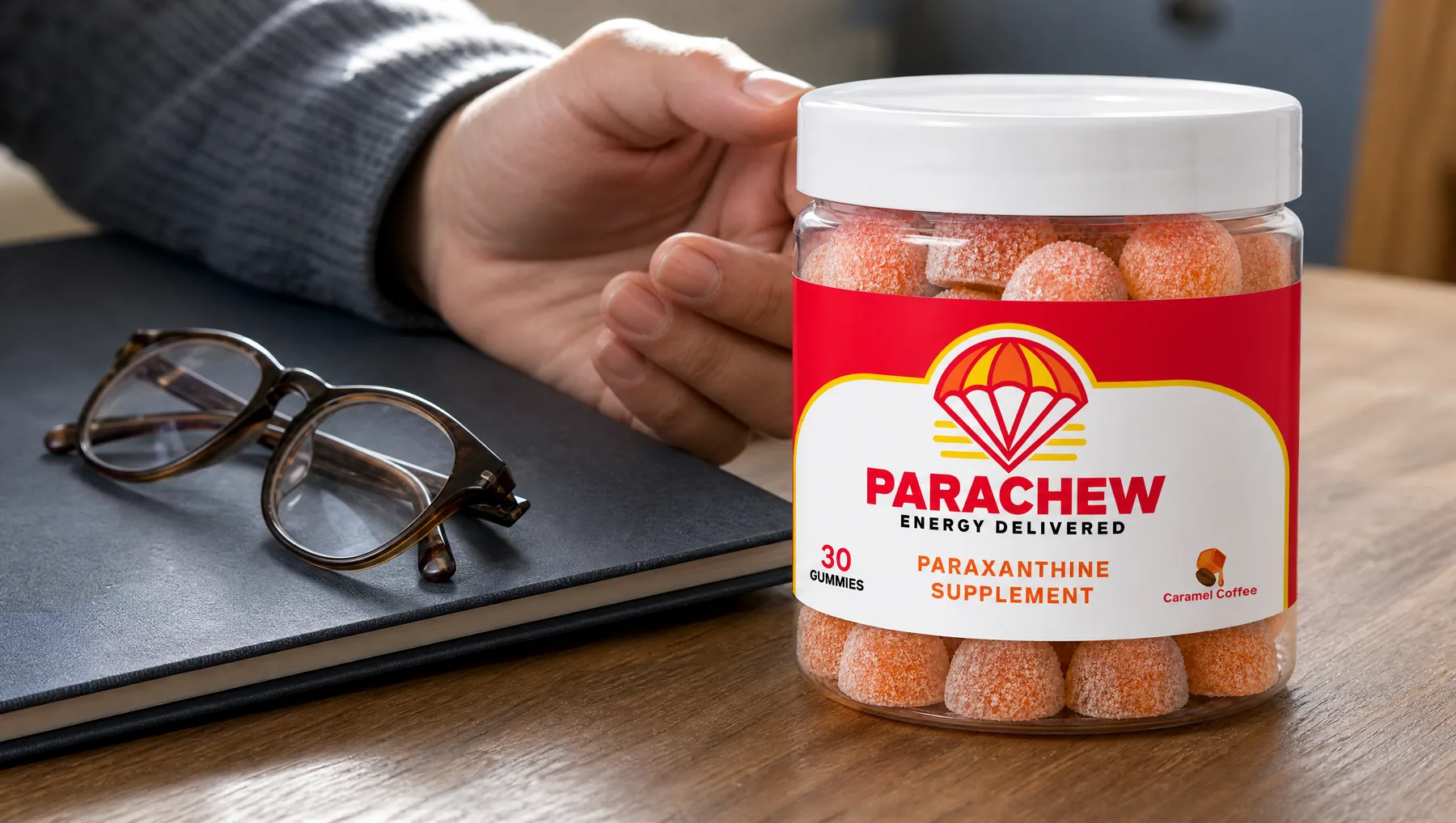
Honest label limits. Each Parachew gummy delivers 200mg of paraxanthine, with a clearly stated daily maximum of 400mg (two gummies). That kind of transparency reflects what responsible labeling looks like under DSHEA.
For questions about formulation or ingredient sourcing, you can reach Parachew support directly.
Frequently Asked Questions
Is paraxanthine FDA approved as a drug? No. Paraxanthine is not a pharmaceutical drug and does not follow the FDA's New Drug Application process. It is regulated as a dietary ingredient under DSHEA, with self-affirmed GRAS status that meets the legal requirements for dietary supplement sale in the United States. The question of whether is paraxanthine fda approved is best answered by understanding that dietary supplements and drugs operate under different legal standards.
What does GRAS status mean for a supplement ingredient? GRAS stands for Generally Recognized as Safe. It is the FDA's benchmark for establishing that a food or dietary ingredient is safe for its intended use. GRAS can be achieved through formal FDA notification or through self-affirmation by a panel of qualified scientific experts. Both routes require documented, peer-reviewed evidence of safety at the intended dose and use level.
Is paraxanthine legal to buy and sell in the United States? Yes. Paraxanthine with self-affirmed GRAS status complies with DSHEA requirements and is legally marketable in the United States as a dietary supplement ingredient. Individual products must also carry accurate labels, appropriate dosing information, and no unapproved drug claims in their marketing or packaging.
How does the paraxanthine caffeine safety comparison look in research? The paraxanthine caffeine comparison in clinical literature consistently shows that both are xanthine-class compounds, but paraxanthine does not produce the jitteriness, anxiety, or sleep interference that caffeine is associated with at equivalent doses. This distinction makes paraxanthine a preferred choice for performance-focused users who want clean energy without caffeine's drawbacks.
Does paraxanthine show up on drug tests? Paraxanthine is not on major prohibited substance lists, including WADA's current list. It is a naturally occurring human metabolite. Competitive athletes should still verify against their specific governing body's current prohibited substance list and request a COA from the manufacturer before use.
Choose a Paraxanthine Product Built on Transparent Science
Understanding the regulatory foundation behind an ingredient is part of making a confident, informed purchase. Paraxanthine meets the legal standard for U.S. dietary supplement use and the research supporting it continues to grow. Visit the Parachew product page for full ingredient details, dose information, and sourcing transparency.


