
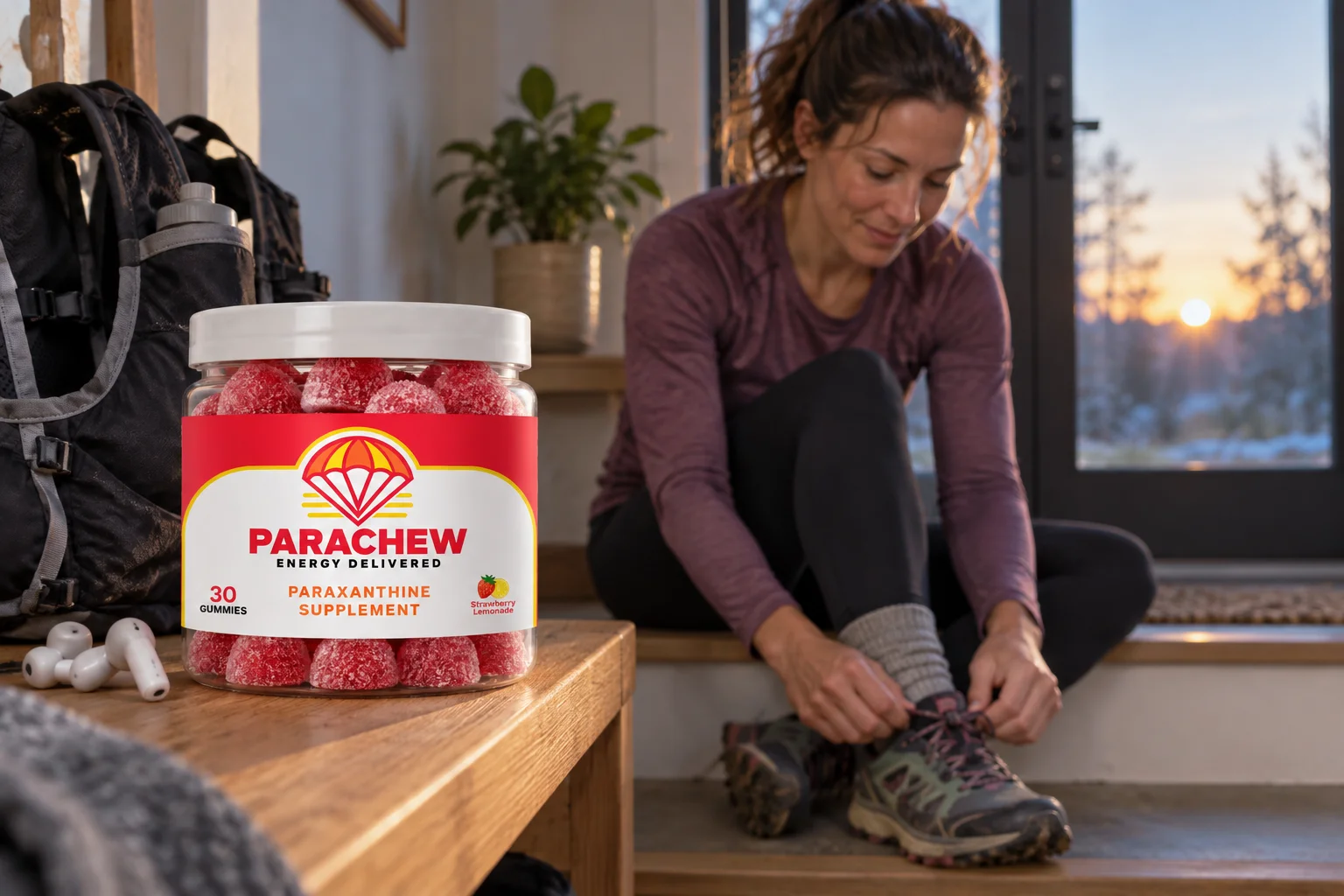
Energy chews are carbohydrate fuel that keeps a long run going. Parachew energy gummies do a different job: each gummy delivers 200 mg of paraxanthine, a clean stimulant, with only 5 g of carbohydrate. Runners often lump the two together. This guide shows which one belongs in your pack.
By McAb Nutra, McAb Nutra
| What you are comparing | Energy chews | Parachew energy gummies |
|---|---|---|
| Main job | Carbohydrate fuel for working muscles | Paraxanthine energy, caffeine free |
| Carbohydrate | Varies by brand, read it per serving | 5 g per gummy |
| Calories | Varies by brand, read it per serving | 20 per gummy |
| How often | Several times in a long run, on a plan | 1 to 2 gummies a day, 400 mg max |
| Best for | Runs and races past about an hour | Energy and focus before a workout or work day |
What Are Energy Chews and When Should Runners Use Them?
Energy chews are bite-sized snacks that deliver carbohydrate while you move. The fuel is usually a sugar such as glucose (the simple sugar your muscles burn first), and the pieces come in a packet small enough for a shorts pocket. Honey Stinger chews, Clif Bloks and Skratch are all names runners compare, so the label matters more than the logo. Carbohydrate, sodium and caffeine per serving can differ from one product to the next, and so can the ingredients and added vitamins.
Runners reach for chews when a session runs past about an hour. Shorter, easy runs rarely need fuel on the move, because your body already stores enough carbohydrate as glycogen. Past an hour those stores shrink and fatigue builds. Sports nutrition guidance, including position statements from the American College of Sports Medicine, supports taking carbohydrate during longer efforts to sustain performance. Chews fit that job because you can ration them: eat one piece, reseal the packet, and carry on. Some runners also like having a snack to bite late in a run, when sweet gel starts to feel heavy.
How Many Energy Chews Should I Take Per Hour When Running?
Count grams of carbohydrate, not pieces. Sports nutrition guidance usually points to about 30 to 60 g of carbohydrate per hour for efforts lasting one to roughly two and a half hours. Longer events can call for up to 90 g per hour, but only when the fuel mixes glucose with fructose, a second sugar that your gut absorbs through a different route. Divide your hourly target by the carbohydrate per serving printed on the label. If a serving lists 24 g, two servings an hour gets you to 48 g.
Spread the servings out, for example every 15 to 20 minutes, and sip water with them. Stomachs adapt to higher carbohydrate loads with practice, so build up in training and notice how well you digest each flavor. Never debut a new product on race day.
Electrolyte Chews: Do You Need Them on a Long Run?
Electrolyte chews add sodium and other minerals to the carbohydrate. Whether you need them depends on how long you run, how hard you sweat and how hot it is. Sodium (the main electrolyte you lose in sweat) loss varies widely from person to person, so no single rule fits everyone. On runs under an hour, water and normal meals usually cover it. In heat, or past two hours, the sodium mg per serving is worth tracking alongside your hydration.
Compare the sodium on a Skratch pack with the sodium on a Honey Stinger pack, because the numbers can differ by product and flavor. Drink to thirst, and take chews with water so the carbohydrate is easier to digest. Runners with blood pressure or kidney concerns should ask a doctor before raising sodium. Parachew is not an electrolyte product: the Caramel Coffee flavor lists 2 mg of sodium per gummy, and Strawberry Lemonade has no sodium row.
Do Energy Chews Work Without Caffeine?
Yes. The carbohydrate does the fueling, so a chew without caffeine fuels a run just as well. Caffeine is an optional extra, and runners split on it: some love the lift in the final miles, and others find it leaves them jittery. If you want a stimulant that skips caffeine, that is where paraxanthine fits. It is the caffeine metabolite behind energy without jitters, anxiety or crash.
The clean setup is caffeine-free chews for fuel and Parachew energy gummies for the stimulant. Do not combine caffeinated chews with Parachew, because the label says it is not for use with caffeine or other stimulants. Read the ingredients on every pack before you commit to a plan.
Energy Chews vs Energy Gummies: Carb Fuel or Clean Stimulant
The two products solve different problems. Energy chews fuel the engine: they bring grams of carbohydrate that your muscles burn. A Parachew gummy sets the dial on alertness. Each one carries 200 mg of enfinity paraxanthine plus 25 mcg of vitamin B12, and the rest of the label is small: 20 calories, 5 g of carbohydrate and 3 g of sugars, all added.
Do the math and the roles are clear. The label caps use at 2 gummies a day, which is 400 mg of paraxanthine and 10 g of carbohydrate. A runner aiming for 30 to 60 g of carbohydrate an hour cannot fuel a long run on that, and Parachew does not pretend to. It is a swap away from coffee, taken instead of it and never with it.

Parachew ships one form: a clear jar of 30 sugar-coated dome gummies in Caramel Coffee or Strawberry Lemonade. The label lists vegan, nut free, gluten free, soy free and dairy free, made in an allergen free facility, with GMP and Made in USA seals. Okendo holds 147 customer reviews at a 5.0 average (as of August 2026).
Chews suit the endurance athlete who needs hourly fuel on a long run. Parachew suits the athlete or busy professional who wants a caffeine-free stimulant before a workout or a long work day.
Are Energy Gummies the Same as Energy Chews?
No. Gummy describes a shape, not a job. Some gummies are carbohydrate snacks built to fuel exercise, the same role chews play. Parachew gummies are a paraxanthine supplement, so the label centers on 200 mg of an active ingredient instead of a carbohydrate payload. Ask one question of any gummy: is the headline number grams of carbohydrate or milligrams of an active? That answer tells you whether it fuels a run or sets your energy level before it.
Energy Chews vs Gels: Which Is Better for Running?
Both deliver concentrated carbohydrate, so the real difference is format. A gel arrives in one squeeze: a full serving in seconds, one hand, no chewing. Chews arrive in pieces, so you can take half a serving, pause and resume. Texture settles most arguments. Some runners find thick gel hard to swallow at a hard pace, while others find chewing hard when they are breathing hard. Neither format wins on carbohydrate alone, because the grams per serving depend on the product.
Chews suit runners who like to ration and enjoy something to bite. Gels suit runners who want fast, no-chew fueling.
What Is GU Energy Gel and How Does It Compare to Chews?
GU is a brand runners know for gels, and GU energy gel is its gel format: a concentrated carbohydrate fuel you swallow and follow with water. Carbohydrate, sodium and caffeine per serving change by flavor, so read the packet you actually carry, whether it is GU or a Honey Stinger pack. Against chews, a gel trades portion control for speed. You finish the serving in one motion, while chews let you split it. Some runners mix gels and chews in the same plan: gels when their hands are busy, chews when their stomachs want something to bite.
GU Liquid Energy vs Gel: Which Is Easier to Take Mid-Run?
The GU liquid energy vs gel choice comes down to thickness. A liquid-style fuel is thinner than a standard gel, so it usually goes down with less texture and less chasing with water. A standard gel is thicker and can feel sticky when your mouth is dry. Neither is easier for everyone. Test both on the same training route at race pace, then note how your stomachs digest each one by the final miles. Check each packet for its numbers per serving, and decide where you will carry it: a vest pocket, a belt or one of your hydration packs.
Can I Use Energy Chews Instead of Gels in a Race?
Yes, if you match the carbohydrate and rehearse it. Work out your hourly gram target, convert it to chew servings, and practice that plan in training. Check which products the aid stations stock, and carry your own for the rest, whether that is Skratch, Clif Bloks or Honey Stinger pieces. At race pace, chewing takes breath, so take your pieces on flat or downhill stretches and keep one gel in reserve for the final miles.
How to Choose Between Energy Chews, Gels and Parachew Gummies
Match the tool to the situation:
- Easy run under an hour: Water is usually enough. If you want a stimulant before the workout, Parachew fits within its label limit of 1 to 2 gummies a day.
- Run longer than an hour: Pick energy chews or gels and aim for 30 to 60 g of carbohydrate per hour.
- Chewing at pace feels hard: Pick gels, or a thinner liquid-style fuel.
- Gel feels sticky or too sweet: Pick chews and ration the pieces.
- Long, hot run: Pick an electrolyte chew or drink with the sodium figure on its label.
- You want a caffeine-free stimulant: Pick Parachew, and choose caffeine-free chews for your fuel.
If you train before breakfast, a fasted workout under an hour may need no chews at all, which leaves the stimulant as your only decision.
The Verdict: Energy Chews for Fuel, Parachew for the Clean Stimulant
For most runners the answer is a split plan, not a single winner. Pick energy chews or gels as your carbohydrate fuel for any run past an hour, because only grams of carbohydrate per hour fuel that distance. Pick Parachew energy gummies as your caffeine-free stimulant, swapped in where coffee used to be. If you can carry only one thing on a long run, carry the chews. If you want one thing before a workout or a work day, take the gummies.
Compare the 20 calories, 5 g of carbohydrate, 3 g of sugars and 200 mg of paraxanthine on the Parachew product page against the chews already in your pack.
Energy Chews: Your Questions Answered
Do energy gummies work?
It depends on what the gummy is built to do. Gummies made as carbohydrate snacks fuel exercise the way chews do. Parachew energy gummies have a different job: 200 mg of paraxanthine per gummy for energy without jitters, anxiety or crash. Okendo holds 147 customer reviews at a 5.0 average (as of August 2026). Take 1 to 2 gummies a day, never more than 400 mg.
Which Honey Stinger chew flavor is the best?
There is no single best flavor, because taste and texture are personal and you only eat fuel you enjoy. Buy a small amount of two or three flavors, test them on training runs, and note which one sits well in your stomach late in a session. Then read the label on that exact flavor for carbohydrate, sodium and caffeine per serving.
Do Honey Stinger energy chews have electrolytes?
The answer is on the pack in your hand. Sodium and other electrolytes differ by product and by flavor, so check the sodium mg per serving on the exact flavor and size you buy. On a long or hot run, pair your chews with water for hydration and consider an electrolyte chew or drink with the sodium figure printed on its label.
Where can you buy energy chews?
Running stores, outdoor retailers and brand websites are the usual places to buy energy chews, and stock varies by shop. Parachew energy gummies are a paraxanthine supplement rather than a carbohydrate chew. They are sold at parachew.com in a clear jar of 30 gummies, in Caramel Coffee and Strawberry Lemonade.
Ask Parachew Before You Build Your Fuel Plan
Questions about flavor, ingredients or how Parachew fits around your training week? Contact the Parachew team.


