
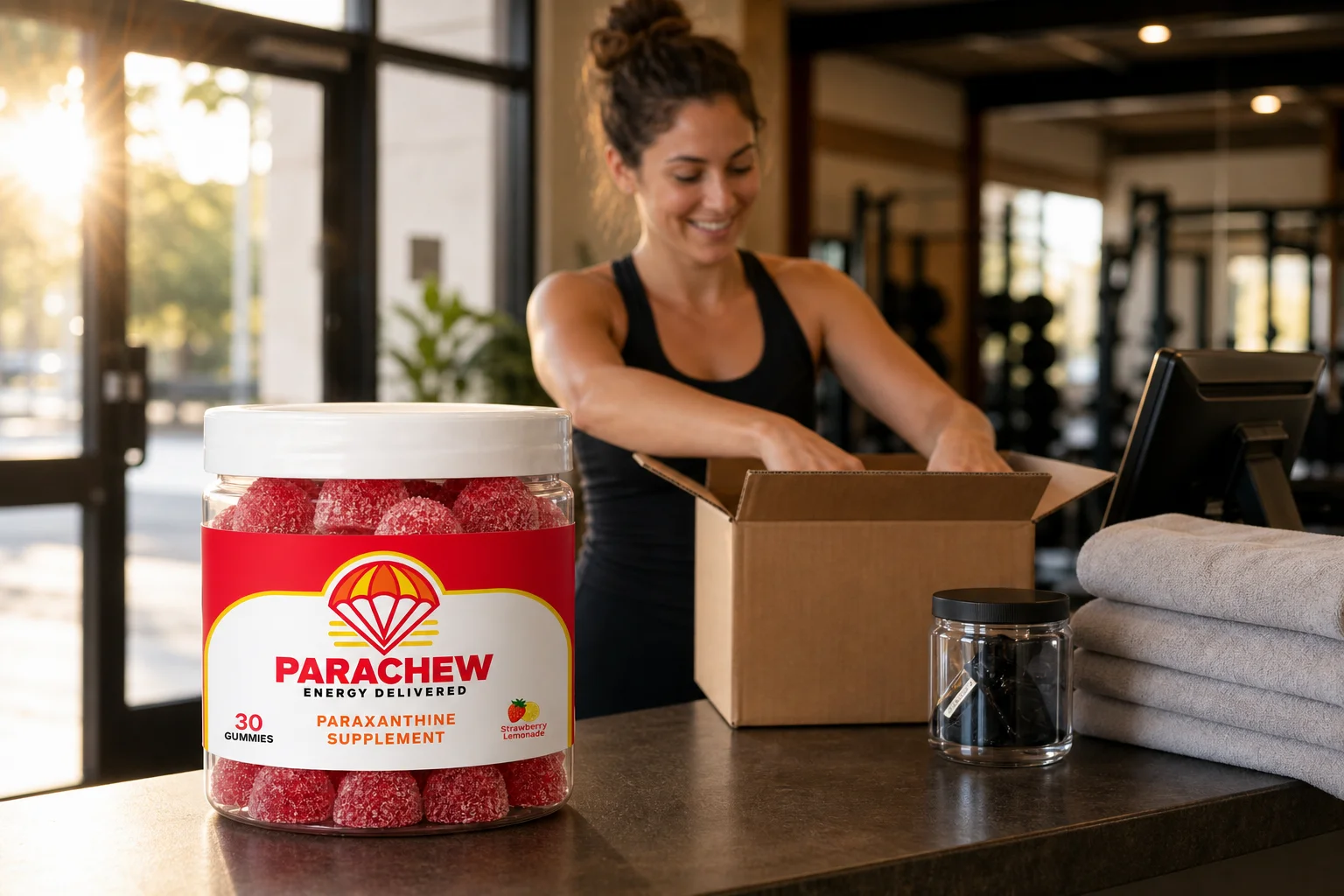
Choosing the best bulk energy options for gyms, studios and offices comes down to three numbers: cost per unit, profit margin, and shelf space behind the counter. Whether you stock canned energy drinks or something newer like the Parachew product page offers, this guide walks through the real case math front desk buyers need before they order.
By McAb Nutra, McAb Nutra
The Real Difference Between Bulk Energy Drinks, Shots and Gummies
Gyms, studios and offices stocking a front desk cooler or counter usually choose between three broad types: canned energy drinks, energy shots, and gummy formats. Canned energy drinks are the most familiar to members, but they sell best cold, so they compete for cooler space, and they add shipping weight to every case. Energy shots solve the space problem but read as a niche product to casual buyers who just want something quick. Parachew energy gummies sit in between: a shelf-stable jar a front desk can display without a cooler, built on paraxanthine instead of straight caffeine, so members get steady energy to power a workout without the jitters or crash that make some canned options a hard sell to repeat customers.
When you're choosing which type to carry, consider your traffic pattern first. A CrossFit box with early morning classes needs something a member can grab before work. A corporate office break room has more counter space and less urgency, so a shelf-stable option that survives a full quarter without refrigeration can outperform cans that lose quality faster once the case is opened. The best energy drink to sell at a gym front desk is rarely the cheapest one, it's the one members actually buy a second time.
How Many Energy Drinks Come in a Wholesale Case, and What Size Should You Start With?
A standard wholesale case of canned energy drinks typically holds 24 units, though some brands package in 12s to lower the up-front cost. Parachew ships by the case in jars of 30 gummies each, which changes the math: one case covers more individual servings than a 24-can case of traditional energy drinks, so shelf space and restocking frequency both drop.
For a first order, a single-location gym or studio setting should start small, one to two cases per flavor is enough to test demand without tying up budget in product that expires before it sells. A multi-location team or a business energy program covering several front desks can order bulk once flavor preference data comes in from that first case. Selecting a starter case size that matches your actual foot traffic, not your hoped-for foot traffic, keeps the first order from becoming dead stock behind the register.
Cost Per Unit: Bulk Pricing vs Buying Single Cans
Buying by the case almost always lowers the cost per unit compared to grabbing single cans off a retail shelf, since you're cutting out retail markup and paying closer to distributor pricing. The exact discount depends on the brand's wholesale pricing tier and how many cases you commit to, so it's worth requesting a pricing sheet before assuming a set percentage.
To reduce cost per unit further, many businesses combine mixed-case orders across two or three flavors instead of over-ordering one flavor some members won't touch. A small selection, two or three options, gives members a reason to choose your front desk stock over a gas station run, and that repeat purchase is what actually offsets wholesale cost, not the margin on any single case. Offering a mix instead of a single SKU is a real benefit when you're still learning which flavors your specific crowd prefers.

Profit Margin and the Best Bulk Energy Options for Gyms, Studios and Offices
Profit margin on front desk energy sales comes down to two numbers: your landed cost per unit (case price divided by unit count, plus any shipping) and the price you charge at the register. Subtract the first from the second, divide by your retail price, and that percentage is your margin. A studio pricing near typical retail while paying wholesale rates usually lands in a healthy range compared to most other add-on items a gym carries.
Is it profitable to sell energy drinks at a gym or studio front desk? For most locations with steady class attendance or daily walk-in traffic, yes, the product moves without needing its own marketing push because members are already there and already looking for something to power the rest of their day. The bigger risk to profit isn't wholesale cost, it's overordering flavors that sit past their sell-by window and eventually get written off. Whichever mix you land on, the best bulk energy options for gyms, studios and offices come down to shelf life, margin, and how fast members restock.
Setting Up a Wholesale or Reseller Account
Setting up a wholesale or reseller account usually starts with an application through the brand's business or wholesale page, where you provide your business license or resale certificate, expected order volume, and delivery address. Most brands review the application within a few business days and follow up with pricing tiers based on case volume.
For Parachew specifically, front desk buyers who want to carry the Parachew gummy formula can reach Parachew support directly to ask about wholesale account setup, minimum order quantities, and available flavors for commercial accounts. Busy office and gym managers can skip the marketing content and go straight to a one-page pricing sheet by reaching out directly. Have your business details ready, entity name, tax ID, and the delivery schedule that fits your restock cadence, so the account gets approved without a second round of questions.
Shelf Life, Storage and Flavors That Actually Sell
Bulk energy drinks in cans typically carry a shelf life of about one to two years unopened, per the manufacturer's printed date, though flavor and carbonation can drift well before that date. Parachew gummies are shelf-stable and don't need refrigeration at all, which removes the cooler-space problem entirely and lets a front desk display jars directly on the counter where members can see them.
Refrigeration matters most for canned energy drinks, since cold product tends to sell better on sight, but jars and shots don't need a cooler to move. That's a real benefit in a smaller studio where counter space is limited and a mini-fridge isn't in the budget.
Selecting the right flavors matters more than stocking every option available. Front desks that carry two flavors usually outsell locations that carry five, because members decide faster with less shelf clutter. Parachew's Caramel Coffee and Strawberry Lemonade cover both ends of the preference spectrum, a coffee-forward flavor for members who want something familiar and a fruit-forward flavor for members who skip coffee entirely, a natural type split for a two-SKU front desk setup.
Can an office buy energy drinks in bulk for employees the same way a gym buys for members? Yes. Offices typically skip the retail markup and order directly from a wholesale account, treating it as a break room supply plan rather than a resale program, since there's no register transaction involved, just a standing order that facilities or HR manages on a recurring schedule.
Frequently Asked Questions
What is the best energy drink to sell at a gym front desk? There's no single best energy drink to sell at a gym front desk, it depends on your traffic and cooler space. Canned energy drinks work well when refrigeration is available and members expect something cold. Shelf-stable options like Parachew energy gummies work better in smaller studios without cooler space, since they display directly on the counter and don't need daily restocking from a fridge.
How many energy drinks come in a wholesale case? Most wholesale cases of canned energy drinks hold 24 units, with some brands offering 12-count cases at a lower up-front cost. Parachew ships by the case in jars of 30 gummies each, so a single case covers more individual servings than a standard can case, which can reduce how often a front desk needs to reorder.
Do bulk energy drinks need refrigeration or special storage? Canned energy drinks generally need refrigeration or a cool, dry storage area to stay at peak quality until they're sold cold. Gummies and shots don't need refrigeration at all, they just need a dry spot out of direct sunlight, which makes them easier to display at a front desk that doesn't have cooler space.
Is it profitable to sell energy drinks at a gym or studio front desk? Yes, for most locations with steady class attendance or daily foot traffic. The product usually sells itself since members are already looking for energy before or after a workout, so it needs little to no additional marketing. Profitability mostly depends on ordering a flavor mix your specific members actually buy, rather than overstocking one option that sits unsold.
Can an office buy energy drinks in bulk for employees? Yes. Offices can set up a wholesale account the same way a gym does, then order cases directly for a break room instead of running it as a resale program. There's no register transaction involved, just a recurring order that facilities or HR manages on a schedule that matches how quickly employees go through it.
Order Your First Case of Parachew Energy Gummies
If your front desk is ready to stock something members actually restock, Parachew paraxanthine gummies ship by the case in Caramel Coffee and Strawberry Lemonade, no cooler required, so you can start with one case that matches your traffic and grow the order from there.


