
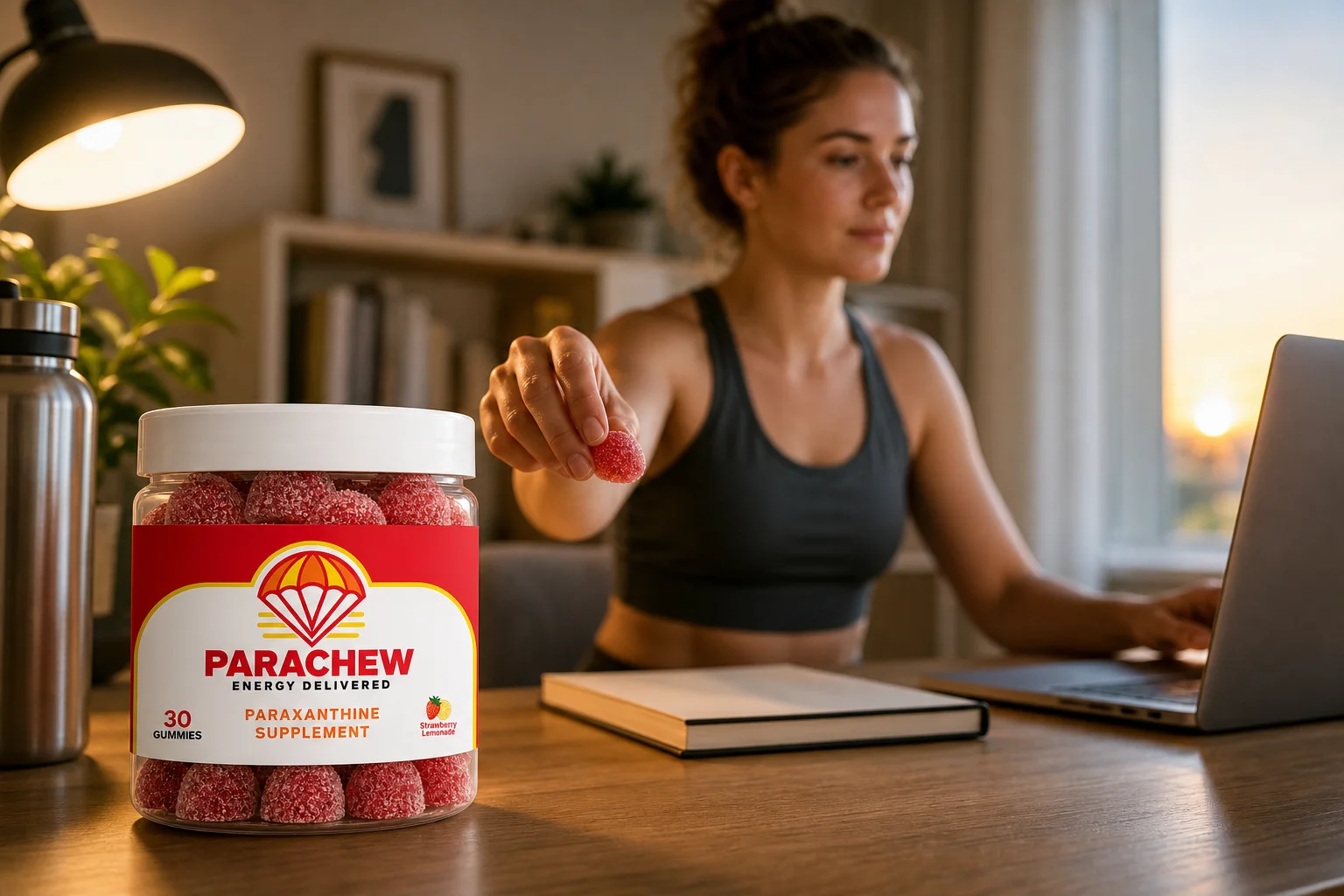
Choosing between 5-hour energy vs a paraxanthine chew comes down to format and how your body handles what's inside it: a fast caffeine shot, or Parachew paraxanthine gummies built on paraxanthine, caffeine's own metabolite, for steady focus without the jitters or crash a shot can bring.
By McAb Nutra, McAb Nutra
Picking a side in the 5-hour energy vs a paraxanthine chew comparison starts with understanding what each format actually does once it's in your system. A 5-hour Energy shot is a caffeine-based liquid in a 1.93 fl oz bottle, and its label suggests half a bottle for moderate energy or a whole bottle for maximum energy. It sits in the same energy drink category shoppers reach for during a slow afternoon. A paraxanthine chew is a different format entirely, a gummy dosed with paraxanthine, the compound caffeine converts to as your liver processes it. That distinction matters more than the delivery method alone. Caffeine converts to paraxanthine as your body breaks it down, and paraxanthine caffeine research points to the metabolite doing much of caffeine's heavy lifting on alertness, without producing the same swing in heart rate that a concentrated caffeine dose can bring. Athletes, entrepreneurs, and anyone leaning on sports nutrition products for a competitive edge are increasingly comparing the two, not just for the initial lift, but for what happens after it fades. A shot format front-loads a dose of caffeine your body then has to clear. A chew format works with a compound your body already produces as a byproduct of caffeine, so the energy curve looks different from the first bite to the last hour of the day, and comparing formats ultimately means comparing doses, not just delivery.
Speed of Onset: Which Works Faster, the Shot or the Chew
A liquid moves through the stomach faster than something you have to chew and digest, so a caffeine shot typically reaches the bloodstream within minutes. A paraxanthine chew works on a slightly longer curve, since a gummy has to break down before the compound absorbs, so the lift builds gradually rather than hitting all at once. That slower runway is not a downside for most people, the benefits show up in a steadier climb rather than a sudden jolt. Caffeine's fast spike is also what produces its fast drop, while paraxanthine's more gradual rise tends to translate into a steadier response in alertness and reaction time. If you need energy in the next five minutes before you walk on stage or start a set, the shot format wins on raw speed. If you are planning ahead, whether that's a workout in thirty minutes or a shift that starts at the top of the hour, a paraxanthine chew's onset lines up just as well without asking your nervous system to absorb the full dose all at once.
Crash, Jitters, and Anxiety: How the Comedown Compares
The Crash
A caffeine crash happens when adenosine, the compound responsible for making you feel sleepy, floods back onto adenosine receptors once the caffeine blocking them clears out. The bigger and faster the caffeine dose, the harder that rebound tends to land, which is part of why a shot format gets tied to an afternoon dip for some users. Paraxanthine also works on adenosine receptors, but the research on the compound describes a gentler unwind rather than a hard stop, which is one of the main reasons people switch from a shot to a chew for sustained energy through a workday.
Jitters and Anxiety
Jitters and anxious energy are caffeine hallmarks, not paraxanthine ones. Paraxanthine is caffeine's own metabolite, and research on the compound describes it producing alertness and focus with a lower incidence of the shaky, wired feeling that a concentrated caffeine dose can bring on. If jitters are the reason you are looking at a paraxanthine chew instead of another energy drink, that is precisely the gap paraxanthine is formulated to close.

Ingredient Differences: Caffeine Blend vs a Paraxanthine Metabolite
5-hour Energy is a caffeine shot: each Regular Strength bottle lists 200 mg of caffeine inside an 1,870 mg energy blend with taurine, tyrosine and citicoline, plus B vitamins. A paraxanthine chew skips that caffeine-first approach entirely. Each Parachew gummy is dosed with paraxanthine, not caffeine, so instead of relying on a stimulant dose alone, the formula works directly with a compound your body already makes. Caffeine sits in a family of related stimulant compounds, alongside theobromine, theophylline, and paraxanthine itself, all of which interact with adenosine receptors in different ways. Paraxanthine is the primary one your body produces as it breaks caffeine down. When compared to caffeine, paraxanthine reaches many of the same adenosine receptors responsible for alertness, without pulling in the same secondary effects tied to caffeine's own chemical structure. That is the core ingredient difference: one format is a caffeine delivery system, the other delivers caffeine's own downstream compound directly. For exact current formulation details, the Parachew gummy formula is documented on Parachew's own product page rather than estimated here.
How Long the Energy Lasts: Duration Compared, Shot vs Chew
A caffeine shot delivers its full dose in one swallow, and 5-hour Energy's label allows up to two bottles a day taken several hours apart. A paraxanthine chew is built for a longer runway. Because paraxanthine clears more slowly than caffeine itself, the energy from a single 200mg gummy can hold for several hours rather than dropping off sharply. For a longer day, some people compare a single dose against the label's 400mg maximum, choosing one gummy for a shorter push or two gummies, staying inside the daily limit, for a longer stretch. That 200mg versus 400mg dosing tradeoff is its own decision worth thinking through before you decide how many gummies your day needs. Hour for hour, compared side by side across a workday, both formats let you adjust: 5-hour Energy's label suggests half a bottle or a whole bottle, while a Parachew dose is one or two 200 mg gummies.
Which Wins for Everyday Use, 5-Hour Energy vs a Paraxanthine Chew?
Whether a shot or a chew fits into daily use comes down to what your body is handling and how you want to feel on the other side of it. A paraxanthine chew is formulated for regular use within the label's 200mg per gummy, two gummy daily maximum, and because paraxanthine does not carry caffeine's typical jitters or crash, many people fold it into a daily routine the same way they would a cup of coffee, without needing to cycle off it. A caffeine shot can also be part of a daily routine for many people, but daily caffeine intake is worth tracking against your overall diet, including coffee, tea, and other energy drinks, and anyone with a heart condition, anxiety history, or caffeine sensitivity should check with a doctor before making any caffeine source, shot or otherwise, a daily habit. When it comes to 5-hour energy vs a paraxanthine chew for daily use, consistency and how you feel afterward matter more than raw strength. If your goal is switching a daily shot habit over to something gentler, doing it dose for dose, one paraxanthine gummy in place of one shot, and watching how you feel over a week or two is a reasonable way to make the change.
Frequently Asked Questions
Is paraxanthine safer than the caffeine in 5-hour Energy? Paraxanthine and caffeine share the same general safety profile as widely used stimulant compounds, but paraxanthine is caffeine's own metabolite, and research on the compound describes it acting on adenosine receptors with less of the jittery, anxious response caffeine can bring on at a comparable dose. That does not make caffeine unsafe, it simply means paraxanthine tends to produce a smoother experience. Anyone with a heart or anxiety condition should still check with a doctor before adding either to a daily routine.
Can I take 5-hour Energy and a paraxanthine chew together? Because paraxanthine chews and 5-hour Energy shots both act on the same stimulant pathway, stacking them adds to your total daily intake rather than doubling the benefit. Parachew's label caps daily paraxanthine at 400mg, two gummies, and that limit should hold even on a day when you've also had a caffeine-based shot. If you're combining energy sources, track the total and lean toward one format at a time.
Does a paraxanthine chew have less caffeine than 5-hour Energy? A paraxanthine chew does not contain caffeine at all. Parachew's energy gummies are dosed with paraxanthine directly, the compound caffeine converts into once your liver processes it, so there is no caffeine in the formula to measure against a milligram figure. That is the core difference from a shot format, which is built around a caffeine dose from the start.
Which is cheaper, 5-hour Energy or a paraxanthine chew? Pricing on both varies by retailer, package size, and promotions, so a specific dollar comparison changes too often to be reliable here. A shot is priced per bottle (5-hour Energy sells 6, 12 and 24 packs), while a paraxanthine chew's jar spreads its cost across 30 servings, so the per-day math depends on how many shots you would otherwise use. Checking current listings for each product is the most accurate way to compare cost for your own habits.
Make the Switch to a Paraxanthine Chew
If you're ready to trade a caffeine shot for a steadier, clean, jitter-free lift, contact the Parachew team with any questions about switching your daily routine over to a paraxanthine chew.


