
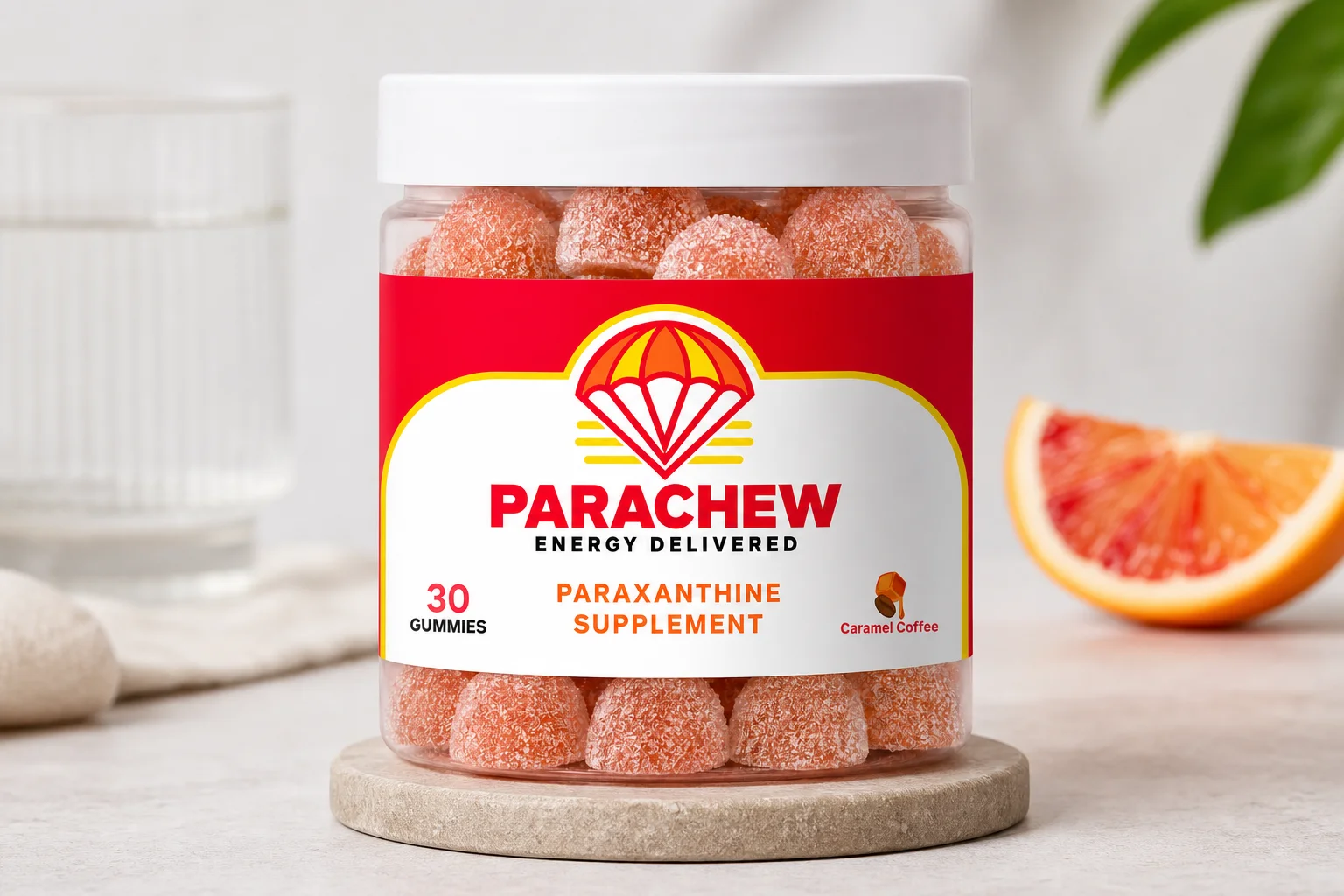
Caffeine-sensitive adults who discover paraxanthine often run into a wall of misinformation: it is just another stimulant, it spikes blood pressure, or it will ruin sleep. These 7 paraxanthine myths caffeine-sensitive adults hear constantly get cleared up below, backed by published research, so you can make a clear call about Parachew paraxanthine gummies.
By Parachew Team, McAb Nutra
These 7 paraxanthine myths caffeine-sensitive adults hear constantly circle the same familiar themes: that paraxanthine is caffeine relabeled, that it carries identical cardiovascular risks, or that the research base is too thin to trust. Every one of them collapses under scrutiny.
Myth 1: Paraxanthine Is Just Another Name for Caffeine
Caffeine, paraxanthine, and theobromine are all methylxanthines, but they are not the same compound. When your liver metabolizes caffeine, it produces three metabolites: paraxanthine (roughly 84%), theobromine (about 12%), and theophylline (about 4%). Paraxanthine has its own molecular structure and a distinct receptor binding profile. Calling it caffeine is like calling a metabolic byproduct identical to its precursor.
Myth 2: Energy Drinks Already Deliver Paraxanthine, So There Is No Point
Energy drinks deliver caffeine. Your body then converts it over 30 to 90 minutes into paraxanthine, alongside theophylline and theobromine. During that conversion window, you are carrying the full caffeine load and all the effects caffeine brings: the blood pressure spike, the jitter window, and the downstream crash. Taking paraxanthine directly bypasses the caffeine step entirely. The paraxanthine caffeine conversion means the metabolite is what your neurons actually work with for most of the session, so why not start there?
What the Science Says About Side Effects and Blood Pressure
Myth 3: Paraxanthine Spikes Blood Pressure the Same Way Coffee Does
The relationship between caffeine and blood pressure is well-documented. Caffeine triggers vasoconstriction and adrenal stimulation, raising systolic and diastolic readings short-term. Paraxanthine operates differently. A 2021 review by McLellan, Caldwell, and Lieberman published in Nutrients noted that caffeine metabolites diverge significantly in their cardiovascular effects, with paraxanthine showing a cleaner hemodynamic profile in healthy adults.
Myth 4: The Side Effects Are Identical to Caffeine
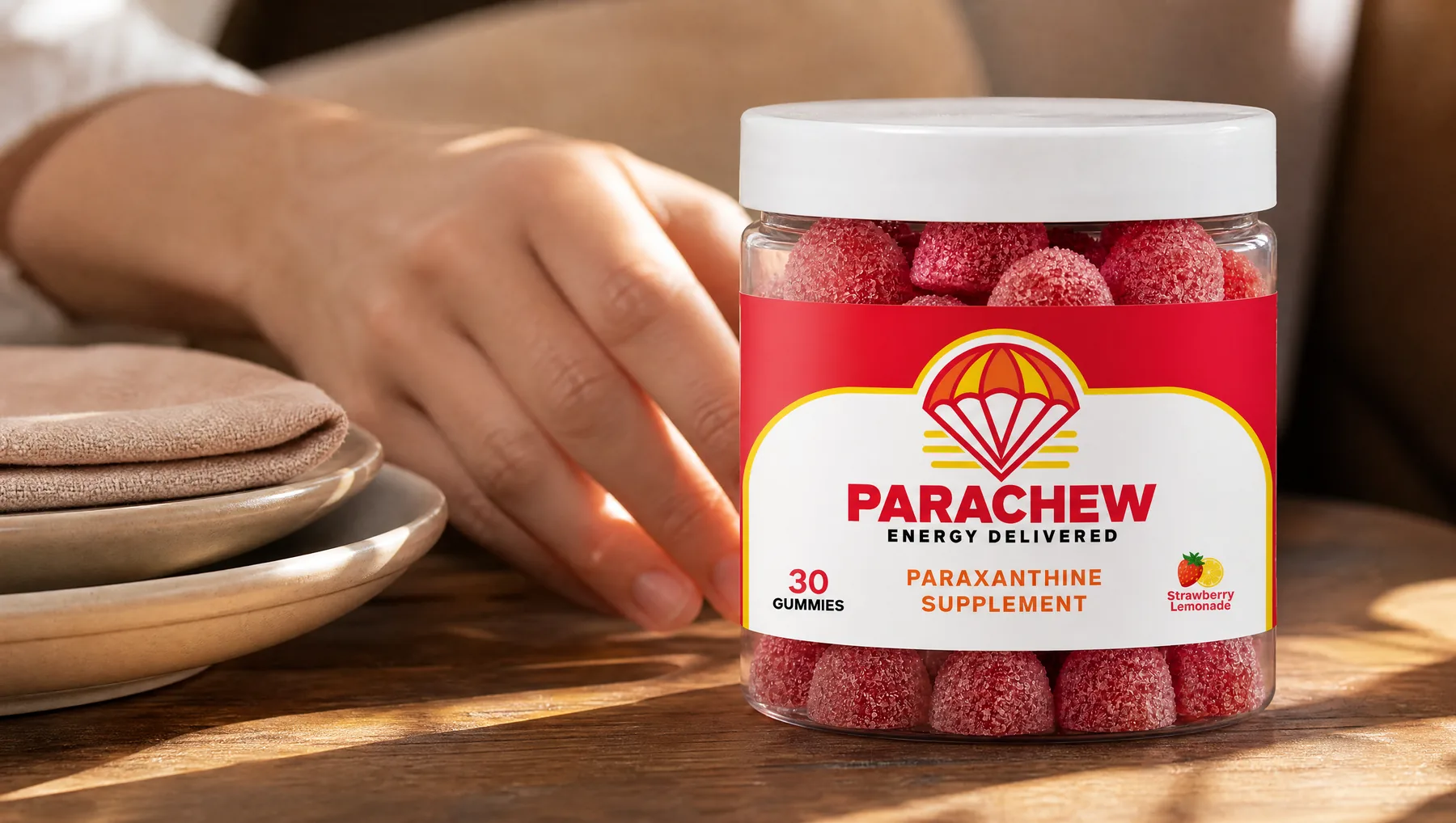
The side effects caffeine users report most, including jitters, restlessness, and anxiety, are tied to caffeine's broad stimulation of the central nervous system and its activation of cortisol and adrenaline pathways. Paraxanthine does not engage those same mechanisms. Research by Yoo et al. (2021, Journal of Caffeine and Adenosine Research) found that subjects using paraxanthine reported significantly fewer jitter-related side effects than those using caffeine at comparable doses. The Parachew gummy formula delivers 200mg of paraxanthine per gummy, within the studied dosing range for clean, focused energy.
Myths About Research, Sourcing, and Sensitivity
Myth 5: There Is No Serious Research Behind Paraxanthine
Paraxanthine has been studied as a caffeine metabolite for decades. Research indexed on PubMed covers its interaction with adenosine receptors, dopamine modulation, metabolic clearance, and cognitive performance. Work by Barone and Roberts (2005, Regulatory Toxicology and Pharmacology) documented caffeine metabolites in depth, and subsequent research by Yoo et al. explored paraxanthine as a standalone compound. The caffeine paraxanthine distinction has been present in pharmacology literature since at least the 1990s. What is newer is its formulation as a direct supplement, not the underlying evidence.
Myth 6: Paraxanthine Offers No Real Advantage Over Caffeine for Performance
Caffeine's broad stimulatory reach delivers the benefits caffeine seekers are after, but it also activates pathways tied to heart rate elevation, blood pressure changes, and cortisol release. Paraxanthine provides the focus and energy lift associated with adenosine receptors blockade while bypassing much of that physiological noise. For caffeine-sensitive adults, that narrower mechanism is the entire advantage, not a minor footnote.
Myth 7: Caffeine-Sensitive People Should Just Avoid All Stimulants
Caffeine sensitivity is specific to caffeine, not to every compound that acts on the nervous system. Most people who react poorly to coffee or energy drinks are responding to the broader effects caffeine has on the adrenal axis, not to adenosine receptor antagonism as a category. Paraxanthine as an alternative caffeine source targets wakefulness and mental clarity without triggering those stress pathways. It gives caffeine-sensitive adults access to the same effects caffeine delivers to tolerant users, without the stimulant friction.
Frequently Asked Questions
Is paraxanthine safe for people who react badly to caffeine? Paraxanthine produces most of the benefits caffeine users seek without activating the adrenergic pathways responsible for jitters and anxiety. Caffeine-sensitive adults typically react to caffeine's broad nervous system stimulation, not to adenosine receptor antagonism as a mechanism. Research by Yoo et al. (2021) shows a more favorable side effect profile compared to caffeine at equivalent doses. Anyone with existing cardiovascular or blood pressure concerns should consult a physician before starting.
How does paraxanthine differ from caffeine at adenosine receptors? Both caffeine and paraxanthine block adenosine receptors to promote wakefulness and reduce perceived fatigue. Paraxanthine binds with more selectivity to the A1 and A2A subtypes linked to cognition and energy. Caffeine's broader receptor activity generates the cardiovascular and adrenergic effects tied to heavy caffeine intake. That narrower binding profile is what produces cleaner, steadier energy without the physiological overstimulation caffeine often causes.
Can I use paraxanthine if I still drink coffee daily? Each Parachew gummy contains 200mg of paraxanthine. The daily maximum per label guidance is 400mg (two gummies). Adding coffee or energy drinks on top introduces additional caffeine load and adenosine receptor antagonism, which may reintroduce the jitter-related effects caffeine-sensitive adults are trying to sidestep. If you are highly sensitive, consider substituting paraxanthine for your usual caffeine source rather than layering the two.
Does paraxanthine clear the body faster than caffeine? Caffeine has a half-life of five to seven hours, meaning an afternoon dose can still delay sleep onset. Paraxanthine clears faster and has a more targeted mechanism at adenosine receptors. Timed appropriately, paraxanthine is less likely to push back sleep compared to equivalent caffeine doses, making it a better fit for those who are sensitive to caffeine's effects later in the day.
Where does theobromine fit among the caffeine metabolites? Theobromine is another caffeine metabolite found in high concentrations in dark chocolate. Like paraxanthine, it acts on adenosine receptors and the central nervous system, but with a gentler, longer-duration profile. Paraxanthine is faster-acting and more targeted for cognitive performance, which is why it has attracted attention from athletes and high-performers seeking a cleaner stimulant option.
Make the Switch to Cleaner, More Targeted Energy
If caffeine has been creating more friction than focus, paraxanthine addresses the root cause directly. It delivers the performance output your body was already converting caffeine into, without the adrenergic side effects. See how the formula is built on the Parachew product page.


